
Losing the family dairy, working in town, reimagining a cow/calf operation keeps the fifth generation on the land
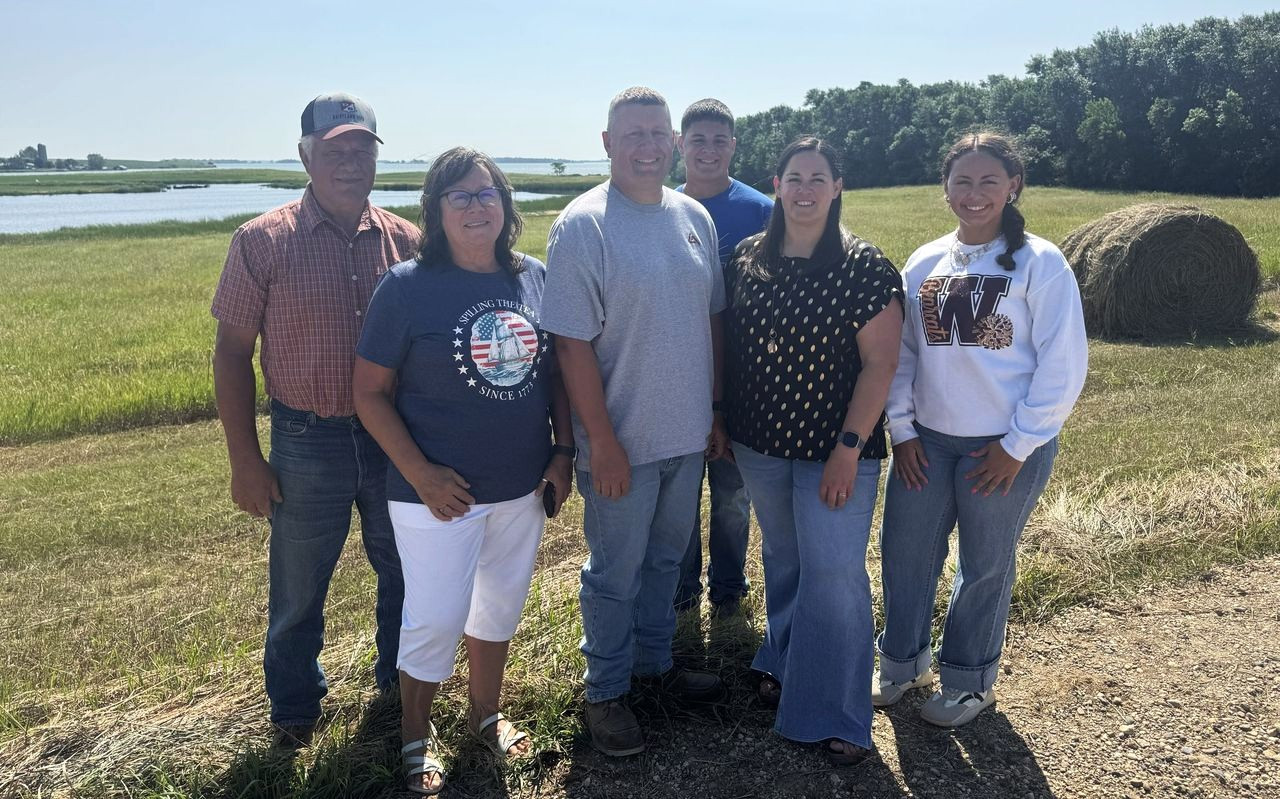
WEBSTER, S.D. – The small porch of Mike and Sandy Rumpca’s farmhouse is full of sunbathing kittens. Groggy with sleep, they barely look up when Lennox, 15, and Jocelyn, 17, run up the steps.
Sandy has donuts and scotcheroos waiting for her grandkids.
“Grandma always has good food,” said Jocelyn, a Webster High School senior. “If I’m ever hungry, I can just walk over.”
It’s one of the perks to living next door, explained Sandy’s daughter-in-law, Chelsy. “When the kids were little, if I made something they didn’t like for supper, they would come over to Grandma’s.”
Sandy loves having her son and his family next door.
“I love watching them grow from the time they were babies to where they are now,” Sandy said. “I love that they include me on things from school and having them around to play with the cats – words cannot express how grateful I am to have them live by me.”
Raising their children on the farm is one of the many reasons Chelsy and Tyler decided to move from their home in Webster to Tyler’s family farm seven miles outside of town.
“I wanted them to experience the quiet living where they have plenty of space to play and they can learn responsibility,” Chelsy explained.
As she prepares for life after high school, Jocelyn would agree with her mom. “There was a time when Lennox and I had 12 bottle calves to take care of. It taught me responsibility and how to prioritize what needs to be done first. If I wanted to do something, I knew I needed to feed the calves first.”
Seeing the fifth generation of Rumpcas enjoying farm life makes Mike smile.
“This is home. My grandparents started it. Then my parents. Now the next generation comes to take care of it,” said the third-generation Day County farmer. “We are stewards of the land. This is our part of the world, and we have to keep it. My main goal was to hang on to it forever.”
Achieving this goal has been a struggle.
Milking cows is the best life
Farming was all Mike ever wanted to do. “It’s all I knew. It’s what life was.”
After high school, Mike got a diesel mechanics degree from North Dakota State School of Science and returned to Webster to work for a local farm implement/John Deere dealership. He farmed on the side with his parents, Bernard “Barney” and Joan. He married Sandy Gruba and 10 years later they moved on to the farm.
In 1991, Barney’s health was in decline, so Mike quit his job in town and he and Sandy bought the farm. Mike was following the family farming tradition. His dad purchased the farm in 1961 from his grandpa, Bernard Sr., who purchased the farm in 1941 from a neighbor.
The Rumpca family has been farming in Day County since emigrating from Poland in the late 1800s.
When Mike purchased the farm, the Rumpca farm was one of many small dairy farms in Day County.
“Milking cows is the best life,” Mike said. “Cows don’t talk back. You don’t have to answer to anybody. You start milking around six in the morning and then you’re done around eight and then you start your day on the farm, haying or whatever needs to be done.”
Sandy agreed. “I thought it was the best, getting up early and seeing what God created while you slept. You bring the cows in and the birds are singing.”
The water kept coming and coming
And then everything changed.
“In 1993 there was a 100-year-rain up north. They got 10 inches of rain in one day. Pickerel Lake flooded, and it drained into Waubay Lake, and it flooded,” Mike said. “The water just kept coming and coming.”
“I took the kids out to the pasture near our house and the water was knee deep. We started catching fish with our hands. I never saw anything like it in my life,” Sandy said.
“We had a slough by our barn that always dried up. And we thought, ‘it will never get to the slough,’ because we could see ridge rocks east of the slough which we always figured was the ancient shoreline from the days when Noah built the Arc. But it just kept coming and coming,” Mike recalled. “Today it’s all under deep feet of water.”
Preserving the farm through determination
The Rumpca farm story has two chapters:
Chapter 1 – Before the Water; and
Chapter 2 – After the Water.
“When the water came, it changed things because we had to go to town to work because we had to quit milking,” Mike said.
The initial flooding swallowed up 80 acres.
And the water just kept coming. By 1997 it was slapping up against the milk barn’s foundation.
“The cows had to swim through muddy water to get to the barn to be milked in the morning,” Sandy said. “That’s when we knew we could not keep doing this.”
The dairy herd is what financially sustained the farm.
Tyler was 14 when his parents sold the milk cows.
“Everything was different because I was so used to milk chores and then Dad and Mom had to work off the farm,” said Tyler of Mike going to work as a mechanic for Harlow’s, a school bus repair shop in Webster, and Sandy managing a convenience store in Roslyn.
“My parents taught me a lot about determination,” Tyler said. “No matter what gets thrown at you, you don’t quit. I watched them struggle when the water first came, and they always made sure there was food on the table and that this was a nice home for my sister and I. And they managed to keep the farm.”
Today about 15 feet of water covers nearly half of what was Rumpca pasture, hay acres and cropland.
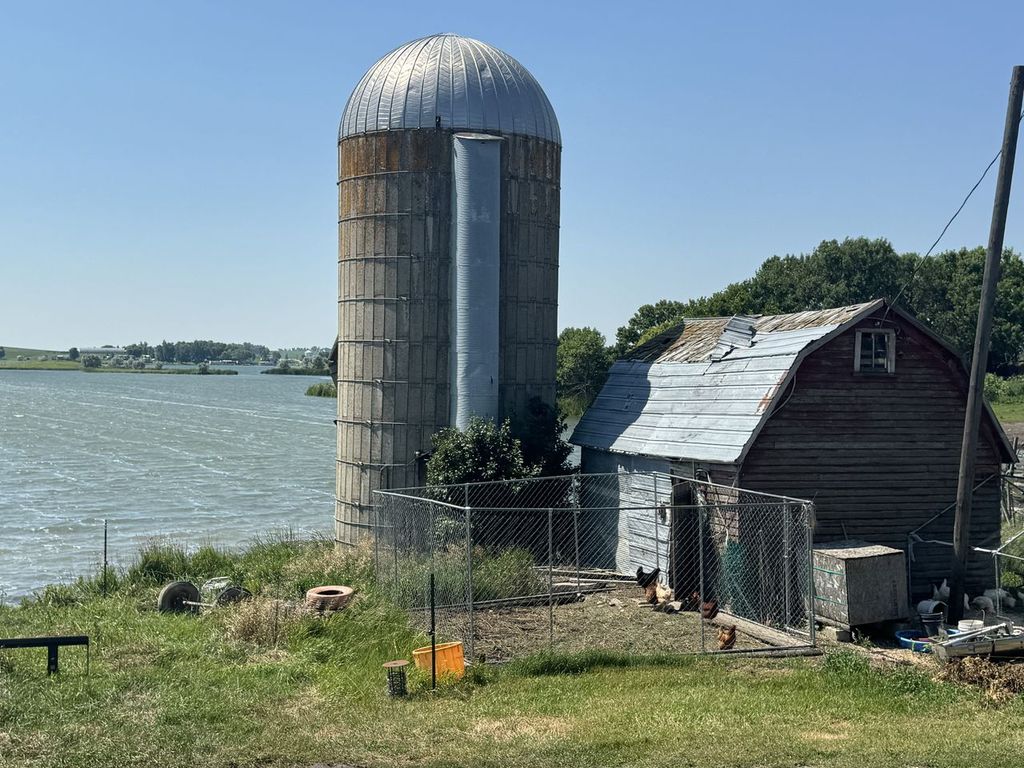
Evidence of what they lost is in plain sight. The farmhouse used to face a century’s old hip-roofed dairy barn. Today, it looks out over an expansive body of water. The old milk barn was taken out in a windstorm several years ago, leaving a lone silo and small red shed that used to house the bulk tank behind.
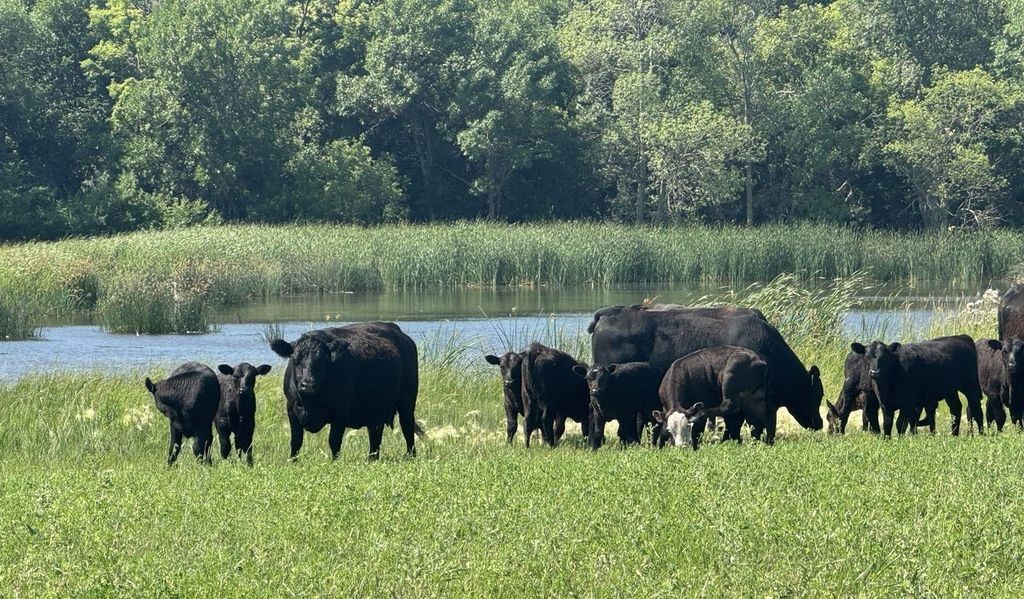
To make best use of the land out of the water’s reach, the family raises a small commercial cow/calf herd and enough hay and corn to feed them. They also raise soybeans.
Tyler and Mike got into stock cows after they sold their dairy cows. “It started out as my FFA project and we just kept expanding the herd,” explained Tyler, who followed in Mike’s footsteps, getting a diesel tech degree at Lake Area Technical College and working for Harlow’s.
Although he knew he would not be able to farm full time, Tyler said the way of life his parents provided for him and his sister, Jennifer, is one that he loved and wanted for himself and his family.
“This family farm is a neat thing to continue and with the size that the herd is, it is manageable with my work,” explained Tyler, who now works as a diesel mechanic instructor at Lake Area Technical College.
“There’s nothing like coming home and going out to the field and getting to work. Some days you feel like you are working 24 hours a day, but there is such a feeling of accomplishment when your day is done.”
To stretch their feedstuffs further, the Rumpcas began buying Aberdeen Angus cows. At about 1,100 pounds and 5-feet tall, the breed is much smaller than traditional Angus, which means they consume less feed. But when bred to a conventional bull, these small cows can raise typical weight calves.
“At a certain point, the calves are almost as tall as their mothers, so it is difficult to tell which are the cows and which are calves,” Tyler said.
Today, Tyler and Mike’s herd includes some cows owned by Lennox and Jocelyn. Like his dad, Lennox is raising cattle as part of his FFA supervised agricultural experience.
“I’m excited to be the fifth generation on this farm because when I’m 30, this will become a century farm,” Lennox said.
In addition to FFA, Lennox is also actively involved in Farmers Union youth programming and currently serves as a member of Junior Advisory Council. In this role, Lennox works with a team of teens from across South Dakota to help plan and facilitate Farmers Union State Jr. and Sr. Leadership Camps.
Lennox went through an interview and election process to be selected to serve on the Junior Advisory Council.
“I learned my leadership skills from my dad and my fellow campers,” Lennox said.
Lennox began attending Farmers Union Camp three years ago. “He was always saying he wanted to go to summer camp. And I was reading the Farmers Union newsletter and saw something about their camps and I was like, ‘hey, here you go,’” Tyler said.
“I was devastated it was only three days,” Lennox added.
Mike retired in 2023 and Sandy retired in 2024 from their off-farm jobs.
“It’s nice to be able to farm full time and enjoy this stage of life because we are not worried about losing the farm,” Mike said.
Sandy agreed. In addition to helping Mike and Tyler with the crops, cattle and haying, in retirement, she also cares for several cats and kittens – decedents of the original barn cats.
When floodwaters cut the barn off from dry land, a few dozen barn cats were stranded. “They all migrated up to the house, so we built them their own little barns,” Sandy said. “I love my cats.”
Like the family who cares for them, Mike said cats have been a part of the farm since the beginning. “We always had a lot of barn cats to keep the mice out of the grain. Whenever my mom thought there was a mouse in the house, she would have us bring up a big gray cat. When the cat caught the mouse, he would bring it to Ma and show her.”
The kittens are another reason for Jocelyn and Lennox to visit. “They are getting so busy, I feel like we need an appointment to see them these days. But if they see their favorite kitty, they can’t help but stop over,” Sandy said.
To learn more about the Rumpca family, view more photos and watch a video, visit www.sdfu.org and click on the SD Farm & Ranch Families link under the About Us Tab.


