

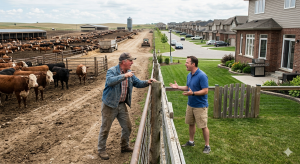
As more concentrated animal feeding operations bump up against communities and homeowners, there are first-steps to take, including a better understanding of CAFO’s
HURON, S.D. Managing the environmental footprint of Concentrated Animal Feeding Operations (CAFOs) requires a deep dive into agricultural science, chemistry, and ecology. To bridge the gap between livestock production and environmental stewardship, South Dakota State University (SDSU) Extension is hosting a specialized environmental training session on Tuesday, June 23, at the Crossroads Convention Center in Huron.
While the training is mandatory for CAFO operators fulfilling state and federal permitting requirements, Bob Thaler, SDSU Extension swine specialist, emphasizes that the event is fully open to the public. The goal is to provide anyone interested—including neighboring residents—with objective, science-based insight into how modern livestock facilities manage their impact on the surrounding ecosystem.
The one-day session will unpack the complex ecological variables that CAFO operators must balance to protect local natural resources. Key areas of focus include:
- Water Quality Preservation: Addressing the critical science of preventing nutrient runoff. Because CAFOs nationally and locally have faced citations for manure leaks into waterways, the training will highlight rigorous containment and monitoring techniques.
- Soil Health and Agronomy: Exploring how manure can be precisely utilized as a nutrient-rich organic fertilizer to improve soil structure and quality without overloading the ecosystem.
- The Chemistry of Odor: Livestock odor is a complex scientific challenge, composed of more than 200 different gases. This chemical complexity makes odor difficult to measure and regulate objectively, meaning total elimination is rarely possible.
Rather than treating environmental impacts as inevitable, the training will highlight engineered and biological solutions designed to significantly reduce a facility’s footprint.
Science shows that what goes into an animal directly dictates what comes out. By scientifically altering livestock diets and optimizing nutrient absorption, operators can fundamentally change the chemical composition of manure, directly lowering subsequent odor levels.
For swine facilities, the integration of biofilters—which route barn exhaust through organic media like woodchips or compost—allows micro-organisms to break down volatile organic compounds (VOCs) before they escape into the atmosphere.
For dairy operations, utilizing physical or synthetic covers on manure lagoons traps gases, significantly mitigating ambient odor and preventing greenhouse gases from escaping freely into the air.
“What works well for a thousand-animal unit are going to be the same things that are important for a 500- or 100-animal unit operation,” Thaler noted, emphasizing that peer-reviewed environmental management principles apply universally across all scales of farming.
The session aims to foster transparent communication between producers and neighbors, grounded in shared scientific reality rather than misconceptions.
The session runs from 8:45a.m. to 4:45p.m., CT. Secure a spot online through the official SDSU Extension website. There is a cost to the session.


