EDITORS NOTE: This tile originally had “Non-White” Jury, this was inacurate. It has been changed to “Non-Black Jury”.
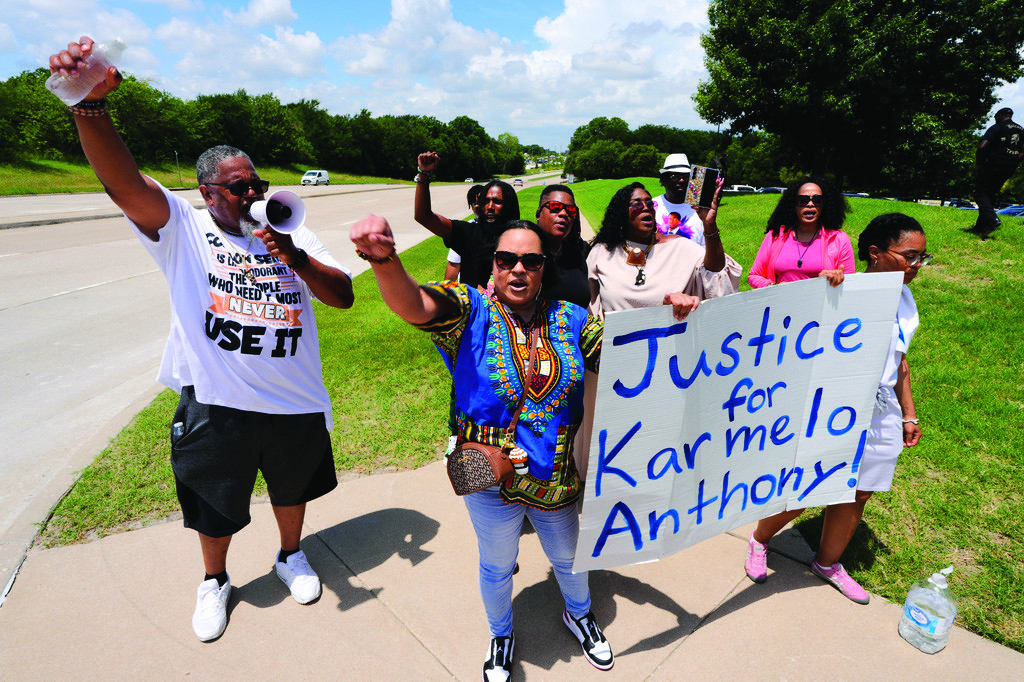
In McKinney, Texas, the murder trial of 18-year-old Karmelo Anthony in McKinney has generated national news coverage. Today, Tuesday June 9, a jury found Anthony guilty of Murder, which means he will likely be sentenced to life in prison. The jury rejected Anthony’s claim of self-defense. During the jury selection process, the prosecutor dismissed three qualified Black jurors. As a result, the fate of a young black man charged with murder was decided by a jury composed of no black jurors, even though black members of the community were included in the jury panel. The Anthony case has generated many interesting legal questions, including: Is an black Defendant entitled to have black persons included in the jury hearing his case? The answer is not a simple yes or no, as explained in this week’s column. While there is no per se right to a set number of minority members on the jury, a criminal defendant is entitled to have a jury pool drawn from a fair cross-section of the community, which, in turn, may include minority representation. Furthermore, the prosecuting authority may not arbitrarily exclude members of the jury panel based on race.
Trial by Jury
The right to trial by jury is recognized in the U.S. Constitution and the South Dakota Constitution. It exists for both criminal and civil cases, but there are nuances for each.
Criminal Cases
In a criminal setting, the right to jury trial is automatic. A defendant cannot be deprived of a jury trial unless he or she specifically waives it. The verdict in a criminal case must be reached unanimously by all 12 jurors. If unanimity cannot be obtained, a mistrial is declared and the case may be retried, at the option of the prosecutor’s office.
The Sixth Amendment guarantees every criminal defendant the right to a jury drawn from a fair cross-section of the community. This applies to the jury venire (the pool from which jurors are selected), not to the composition of the final petit jury itself. Both the U.S. Supreme Court and South Dakota courts have addressed how this requirement operates with respect to racial minorities, including African Americans and Native Americans. South Dakota’s significant Native American population has made it a particularly active jurisdiction for litigating these claims.
Even though there is no constitutional right to a set percentage of racial composition on the chosen jury, if a prosecutor systematically strikes members of a specific race, this may violate the Defendant’s rights under the Equal Protection Clause. See Batson v. Kentucky, 476 U.S. 79 (1986). The Batson rationale was applied by the U.S. Supreme Court less than a month ago, on May 28, to grant a reprieve to a death row inmate in Mississippi. In Pitchford v. Cain, 2026 WL 1485608, the prosecutor dismissed four black jurors, apparently on the basis of race, during the jury selection process. This decision was a 5-4 ruling, with opinion authored by Justice Kavanaugh.
It has also been held that the “right to a fair-cross section” may be invoked by any Defendant, regardless of race. Thus, a white Defendant is entitled to a jury pool selected from a fair cross-section of the community, as well as a Native American Defendant.
Civil Cases
Both plaintiffs and defendants are guaranteed a jury trial in most civil cases, but unlike the criminal setting, non-action by a party may result in the denial of a jury trial. Both South Dakota state court rules and federal court rules require parties to make a prompt written demand for trial by jury. If not made, the right is waived.
In federal court, the verdict of the jury in a civil case must be unanimous. In South Dakota state court, however, the verdict in a civil case need only be reached by 10 out of 12 jurors.
There are some situations where a jury trial is not guaranteed. Generally, the right to a civil jury trial has been preserved only in the same types of cases where the right to jury existed when the 7th Amendment was adopted (in 1791). The most common examples of civil cases where a jury is not available are those in which “equitable relief” is sought. Modern day examples of equitable relief include suits for specific performance, rescission, reformation, and injunctions.
The “fair cross-section of the community requirement” discussed above for criminal cases does not directly apply in civil cases, but the U.S. Supreme Court has found a similar protection for some civil litigants through application of the Equal Protection clause.
Authorities: 6th & 7th Amendments, U.S. Constitution; Art. VI, § 6, South Dakota Constitution; SDCL 23A-18-1; SDCL 15-6-38; FRCP 38; Ross v. Bernhard, 396 U.S. 531 (1970); SDCL 15-14-25. Berghuis v. Smith, 559 U.S. 314 (2010); State v. Plenty Horse, 85 S.D. 401 (1971); St. Cloud v. Leapley, 521 N.W.2d 118 (1994); Pitchford v. Cain, 2026 WL 1485608; Batson v. Kentucky, 476 U.S. 79 (1986); Edmonson v. Leesville Concrete Co., Inc., 500 U.S. 614 (1991); Georgia v. McCollum, 505 U.S. 42 (1992)
Note: In regard to the preparation of this week’s column, the author would like to thank attorney Sarah Baron Houy for her assistance and input.
Anyone desiring to communicate with the Author, may do so by sending an e-mail to the author at rogermbaron@gmail.com .
About this column: Roger Baron is a former professor of Law for 40 years. This Column is designed to provide readers with similar summaries, in non-legalese language, and to also provide a forum for other observations (notes) about relevant legal issues.
Roger Baron is a guest columnist for the Rapid City Post. Opinions expressed may not necessarily represent the views of the Rapid City Post, its affiliates, or advertisers.