
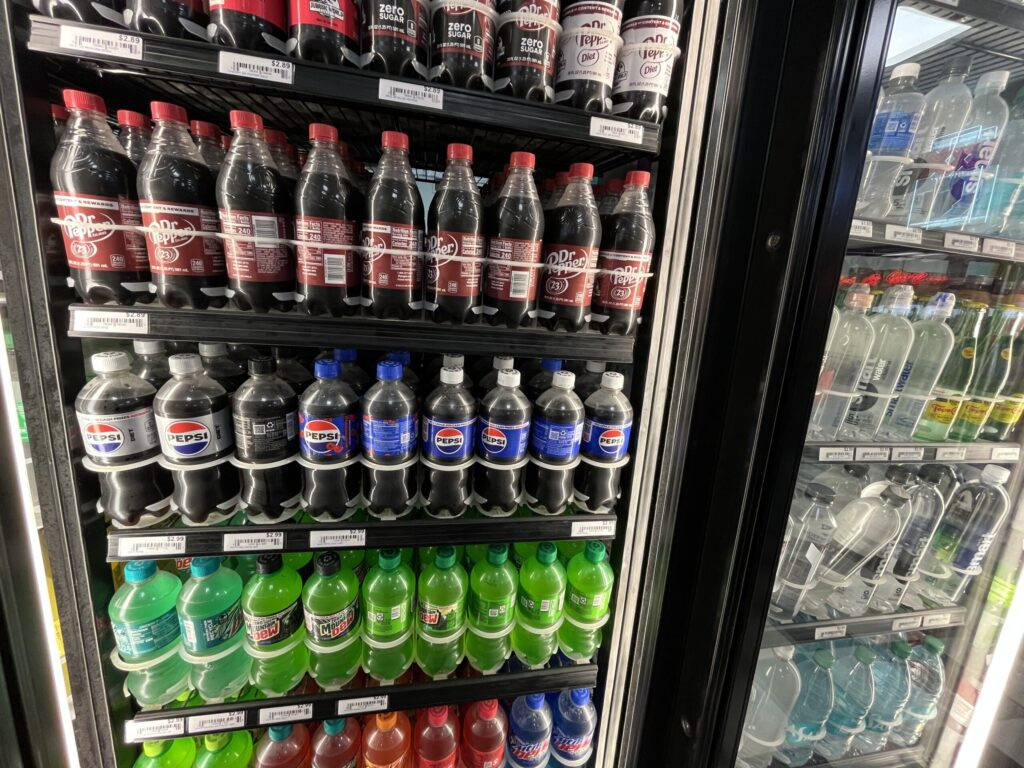
Bottles of soda and water are stacked inside a refrigerator at a convenience store in Shawnee, Oklahoma, on June 8, 2025. (Photo by Janelle Stecklein/Oklahoma Voice)
On Dec. 1, Sen. Sydney Davis, R-Burbank, and Rep. Taylor Rehfeldt, R-Sioux Falls, announced legislation to reform the Supplemental Nutrition Assistance Program by restricting the purchase of sugary drinks with SNAP benefits. Their release stated that “currently, a growing number of both Republican and Democratic-led states are stepping up to reform SNAP.”
Some may think the government shouldn’t pay for sugary drinks. I understand that initial reaction. But let’s dig a little deeper.
Elon Musk has received over $38 billion in contracts, subsidies, tax credits and loans from the U.S. government — our tax dollars. Emphasis on subsidies and tax credits.
From 1995 to 2024, South Dakota ranked eighth in the nation for reliance on farm subsidies. Of the $25 billion that came to South Dakota, former Gov. Kristi Noem’s family collected $4.9 million.
Two SD lawmakers join push to ban soda and candy purchases from food assistance program
Meanwhile, some legislators say a single mom of three working two jobs and receiving $109 a month in SNAP benefits shouldn’t be able to buy a diet Coke.
And yes, of course we might wish her cart was filled with fresh fruits and vegetables. But let’s be honest — I hope you’re not judging my shopping list today, either.
What also stood out to me was the claim that “many states are reforming SNAP,” with no detail about how. For example, Michigan’s “Double Up” program allows government food benefits to double in value when healthier choices are made. Studies show that bans will only increase administrative costs and create more stigma around poverty while not making any behavioral changes.
Restricting items doesn’t help families. The path to meaningful assistance is through incentives and support, not punishment. I shared Michigan’s program with Davis, who is my state senator. Perhaps the political optics mattered more than what would actually help her constituents.
This type of legislation helps no one. It adds stigma. It won’t reduce poverty, it won’t improve educational outcomes, and it won’t improve health, because the people being targeted still won’t be able to afford health insurance. But that 99-cent soda? That’s what we’re controlling.
Considering both Davis and Rehfeldt are health care providers and moms, what about legislation to expand free and reduced school lunch, lower health care costs or make women’s health more accessible for rural communities?
We’re angry at the wrong people.
We’re restricting the wrong things.
We’re catering to the wrong individuals.
And in 2026, we need to start changing that.


