
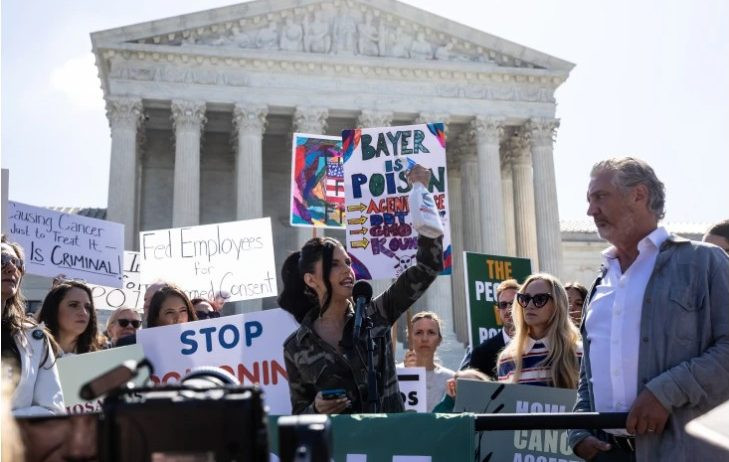
The case, Monsanto v Durnell, specifically dealt with claims that the company failed to warn users of product risks
WASHINGTON, D.C. – The U.S. Supreme Court recently ruled in favor of Bayer’s subsidiary Monsanto, stating that the company cannot be sued for failing to warn of weedkiller Roundup’s cancer risks. The 7-2 decision that finds states cannot require more information on the pesticide label than required by federal regulation, is expected to block thousands of lawsuits against the company.
While considered a win for the Trump administration, the ruling deals a devastating blow to the administration’s “Make America Healthy Again Movement” (MAHA) by blocking a path for users of the popular Roundup weedkiller to secure payouts from Monsanto for failing to disclose the product’s cancer risk.
Roundup users have argued that the product’s key ingredient, glyphosate, is carcinogenic. EPA has determined that the chemical does not pose a cancer risk if used according to the label’s instructions, a finding that Monsanto and Trump officials said blocks states from reaching their own determinations about what information should appear on the weed killer’s label.
Justice Brett Kavanaugh, writing for the majority, emphasized that companies cannot be held liable under a patchwork of state laws when they comply with federal labeling regulations. Justice Ketanji Brown Jackson authored the dissent (joined by Justice Neil Gorsuch), arguing that while FIFRA limits state authority to regulate labels, it does not completely eliminate it or bar failure-to-warn claims
The fight over pesticides has helped grow the MAHA movement, even as some of Health Secretary Robert F. Kennedy Jr.’s allies have criticized him for not going far enough to advance their priorities on pesticides and vaccines. Grassroots supporters, for example, have pushed to rid the House farm bill of language that would protect pesticide makers against liability.
But they’ve failed to win the full support from the White House and congressional Republicans on their anti-pesticide efforts. The Trump administration has needed to strike a balance of supporting a traditionally loyal constituency — farmers — and pleasing a relatively new part of the MAGA coalition, MAHA advocates.
A growing body of scientific evidence suggests that glyphosate, the active ingredient in Roundup, is linked to cancer. That has long alarmed Health Secretary Robert F. Kennedy Jr. and his followers, known as “MAHA moms,” who want to eliminate chemicals from the food supply.
In February, Trump angered some of the movement’s leaders when he signed an executive order invoking the Defense Production Act to boost the supply of glyphosate. Kennedy backed the move, saying it was a way to increase domestic agricultural production, but he called pesticides “toxic by design.” Kennedy told senators at a hearing in April that he believes glyphosate causes cancer. Before he joined the federal government, Kennedy sued Monsanto as a lawyer representing plaintiffs who alleged that Roundup had caused their non-Hodgkin lymphoma.
Thursday’s ruling gave new fuel to worries within the movement that the Trump administration has prioritized the interests of the agrochemical industry.
“The decision is sickening and would have never happened had the administration not given Bayer Monsanto a favor,” Vani Hari, a high-profile MAHA voice who goes by the moniker “Food Babe,” said in a text message. Bayer bought Monsanto, the original manufacturer of Roundup, in 2018.
Bayer said it expects the ruling to contain the Roundup litigation after decades of litigation and noted that Monsanto is continuing to pursue final approval of a $7.25 billion class-action settlement to resolve glyphosate cancer claims. That settlement guarantees compensation to Roundup victims regardless of the Supreme Court ruling.


