
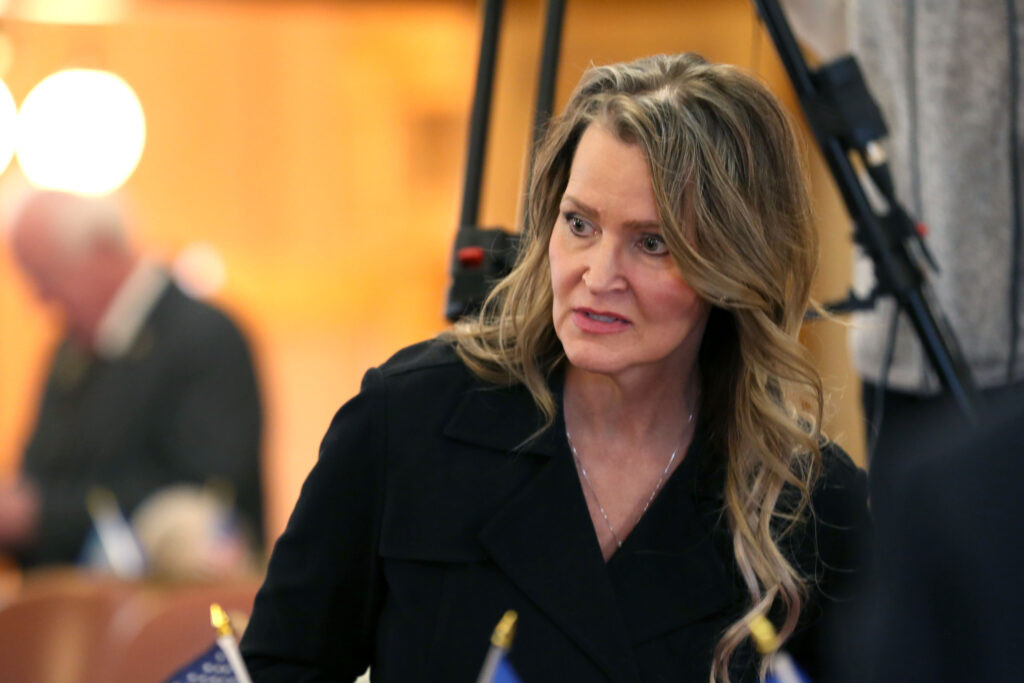
State Rep. Bobbi Andera, R-Sioux Falls, is sponsoring a bill with liability protections for South Dakota doctors and pharmacists who prescribe and dispense two medications that have gained popularity as alternative treatments for COVID-19 despite not being approved for that purpose. (Photo by Makenzie Huber/South Dakota Searchlight)
A South Dakota legislative panel greenlit a bill Tuesday that would protect doctors and pharmacists who issue or fill off-label prescriptions for antiparasitic and antimalarial drugs from liability.
House Bill 1068 is specific to ivermectin — which is approved by the Food and Drug Administration to treat blood parasites in humans — and hydroxychloroquine, approved for the treatment of malaria, lupus, and rheumatoid arthritis.
The drugs caught on as alternative treatments for COVID-19, though neither is authorized for use as a treatment for the disease by the FDA. President Trump promoted hydroxychloroquine in 2020, and said he’d used it himself as a preventative measure against COVID-19. U.S. Health and Human Services Secretary Robert F. Kennedy Jr. has endorsed the use of both drugs as COVID treatment alternatives.
The FDA in 2020 cautioned against the use of hydroxychloroquine for COVID-19. Ivermectin, the agency said, is not approved for the treatment of COVID-19, but “health care professionals may choose to prescribe or use an approved human drug for an unapproved use when they judge that the unapproved use is medically appropriate for an individual patient.”
RFK Jr. ends COVID vaccine recommendation for healthy children, pregnant people
Poison control calls tied to the misuse of the medications spiked during the pandemic, but some patients and providers have maintained that the drugs helped ease the symptoms of COVID-19.
Rep. Bobbi Andera, R-Sioux Falls, said at the height of the pandemic, some pharmacists refused to fill prescriptions for the medications as COVID-19 treatments over fears of lawsuits or disciplinary action from licensure organizations.
“Patients and their families were asking, ‘Why? Why are we being forced to accept a certain type of treatment? Why can’t we try something else? We don’t understand,’” Andrea said.
Under the bill “a physician, acting in good faith” in prescribing the medication “is not criminally or civilly liable, or subject to disciplinary or adverse action.”
Pharmacists, meanwhile, would be immune from liability if they dispense the drugs “in accordance with a written protocol, developed by a physician.”
Lobbyists for the South Dakota State Medical Association, South Dakota Trial Lawyers Association and South Dakota Department of Health are among those opposed to the bill. State Health Department Secretary Melissa Magstad said there are already protections for doctors who prescribe medications off-label under South Dakota law and that the bill creates a separate carve-out for two medicines.
Tim Rave, who represents the South Dakota Association of Health Care Organizations, said the bill’s protections for good-faith providers are welcome for physicians. But he cautioned that there’s danger in removing a patient’s ability to sue doctors who prescribe recklessly.
“What if you have a physician that writes a protocol for a dose that causes side effects?” Rave said. “We know that side effects range from neurological deficits all the way to death.”
Supporters said the current law doesn’t offer enough protection to doctors who might use the drugs properly and framed the bill as a bulwark against government or corporate interference with health care decisions.
“This is a good bill for medical freedom,” said Rep. Dylan Jordan, R-Clear Lake, who said he “had family members” who benefitted from ivermectin after catching COVID-19.
The committee passed the bill on to the full House of Representatives on an 8-4 vote.
GET THE MORNING HEADLINES.
YOU MAKE OUR WORK POSSIBLE.


