
A common law marriage is one where the parties do not have a formal wedding or marriage ceremony, but the law recognizes their relationship as a marriage because of their conduct. Conduct that could give rise to a common law marriage includes the parties introducing each other as husband and wife, filing joint tax returns, and cohabiting (i.e., living together) for an extended period.
Historically, most states recognized common law marriages, but many have since abolished them – including South Dakota, in 1959. Currently, only ten or eleven states and the District of Columbia permit the formation of a common law marriage, including Colorado, Montana, Iowa, Kansas, Oklahoma, Utah, Idaho, and Texas. Several countries throughout the world also allow the creation of a common law marriage.
Although South Dakota no longer permits the formation of a common law marriage within its borders, it will accept a common law marriage that was validly created in another state (or country). For example, if a couple is common law married in Iowa and they subsequently move to South Dakota, their marriage will be recognized as valid in South Dakota. See Estate of Duval, 2010 SD 2. In one early case, the SD Supreme Court held that a marriage between first cousins that took place in California (where such marriages were valid) would be deemed valid in South Dakota when they moved here – even though such marriages are prohibited by law in this State. Garcia v Garcia, 25 S.D. 645, 127 N.W. 586 (1910). See also SDCL 25-1-6 (prohibiting incestuous marriages in SD).
When the issue arises in a court proceeding, it may be difficult to prove the existence of a common law marriage in a contested setting. This frequently arises when one party to the relationship has died and the other party asserts a right to spousal benefits under a retirement plan or from the deceased party’s estate.
Importantly, aside from the manner in which the marriage is created, there is no legal difference between a valid common law marriage and a licensed, ceremonial marriage. Further, there is no such thing as a common-law divorce. Once a valid marriage had been created, it can only be terminated by death, divorce decree, or judicial annulment.
Folklore
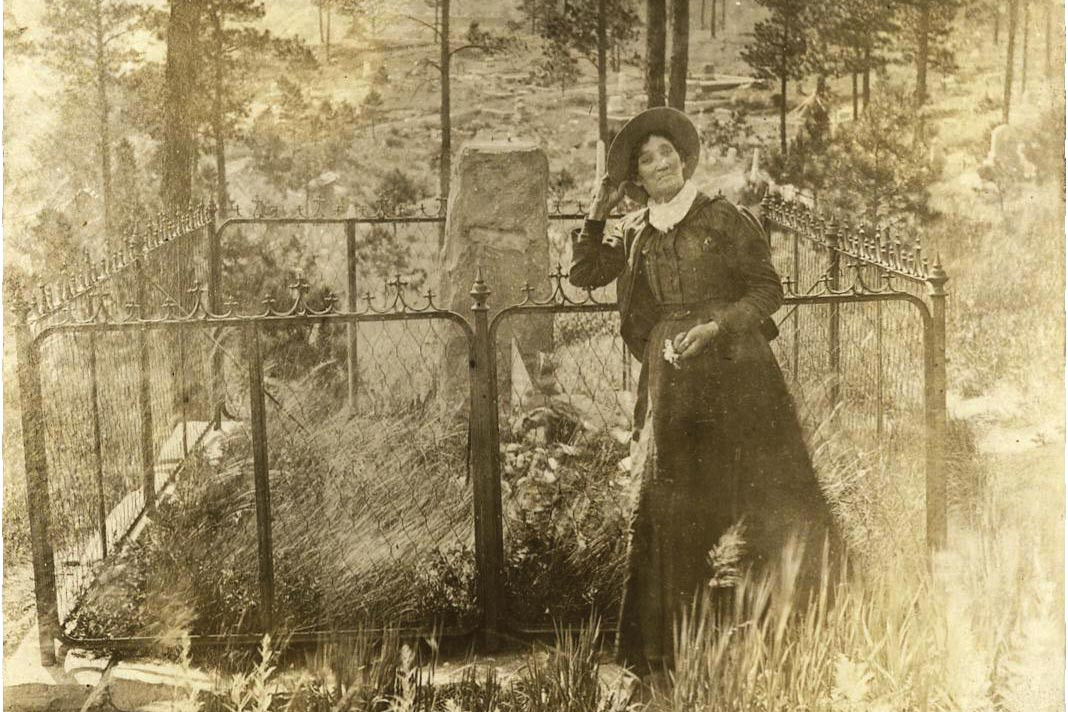
Local myth suggests that Calamity Jane and Wild Bill Hickok entered into a common law marriage. A romantic interest is depicted between them in the 1915 silent film, The Days of’75-’76. Current research suggests otherwise. Even if there was a romantic interest, such a marriage would not be possible because Hickok had married Agnes Thatcher Lake (who owned a Circus in Cheyenne, Wyoming) in March, 1876 – some 5 months before he was killed by Jack McCall. A few months after this marriage, Wild Bill left Agnes in search of better fortune (gold) in the Black Hills. Hickok’s existing marriage would have been a disqualifying factor for the formation of a common law marriage. Nonetheless, Calamity Jane always maintained she had a connection with Wild Bill, being proudly photographed next to his grave in the 1890s. And, the two are buried next to each other in Mount Moriah Cemetery in Deadwood.
Note: In regard to the preparation of this week’s column, the author would like to thank attorney Sarah Baron Houy for her assistance and input.
Anyone desiring to communicate with the Author, may do so by sending an e-mail to the author at rogermbaron@gmail.com .
About this column: Roger Baron is a former professor of Law for 40 years. This Column is designed to provide readers with similar summaries, in non-legalese language, and to also provide a forum for other observations (notes) about relevant legal issues.
Roger Baron is a guest columnist for the Rapid City Post. Opinions expressed may not necessarily represent the views of the Rapid City Post, its affiliates, or advertisers.


