

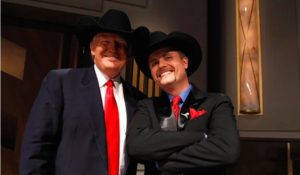
Appointing a highly partisan figure to a federal advocacy post will exacerbate divisions rather than solve complex land-use issues, critics say
WASHINGTON, D.C. – President Donald Trump’s appointment of country music singer-songwriter John Rich as the USDA’s Special Envoy for American Landowners has drawn distinct lines of criticism from environmental advocates, renewable energy proponents, and political commentators.
While the administration and agricultural groups frame the role as a necessary defense of private property rights, critics focus heavily on Rich’s lack of formal agricultural policy background and the specific anti-renewable mandate of his position.
The primary criticisms of his appointment center on several key areas:
1. Pushback from the Renewable Energy Sector
The USDA explicitly stated that a key focus for Rich will be “advocating for landowners facing pressure related to large-scale solar and wind development.” Renewable energy groups and climate advocates criticize the appointment as a weaponization of the USDA to stall the green energy transition. They argue that:
- Framing green energy developments solely as “outside interests” or “activist pressure” misrepresents the transition.
- Many farmers actually welcome wind and solar leases as a vital, steady stream of supplemental income that keeps generational family farms financially viable during tough crop years.
2. Lack of Traditional Policy Qualifications
Critics point out that Rich, best known as one-half of the country duo Big & Rich and owner of a whiskey brand, lacks formal training or professional background in agricultural science, land management, or federal policy. Detractors view the high-profile appointment as a political reward for a loyal celebrity surrogate rather than a merit-based selection of an agricultural expert.
3. Concerns Over “Lawfare” and Partisanship
Rich has previously rallied against federal agencies and utility companies, explicitly aligning himself with Agriculture Secretary Brooke Rollins’ “Farmer and Rancher Freedom Framework,” which aims to fight what they call “politically motivated lawfare.”
Critics argue that appointing an outspoken, highly partisan figure to a federal advocacy post will exacerbate divisions rather than solve complex land-use issues. They worry his office will serve to litigate culture-war grievances against federal conservation efforts and environmental regulations (such as the Clean Water Act or wildlife listings) rather than fostering cooperative, sustainable land stewardship.
The Counter-Argument (Why He Was Appointed)
To understand the friction, it helps to look at why his supporters defend the choice. Proponents point to his successful grassroots activism in Tennessee—where he helped local landowners successfully block a Tennessee Valley Authority (TVA) pipeline and power-line corridor—as proof that he understands how to fight government and corporate overreach on behalf of rural citizens who often feel voiceless in Washington.


