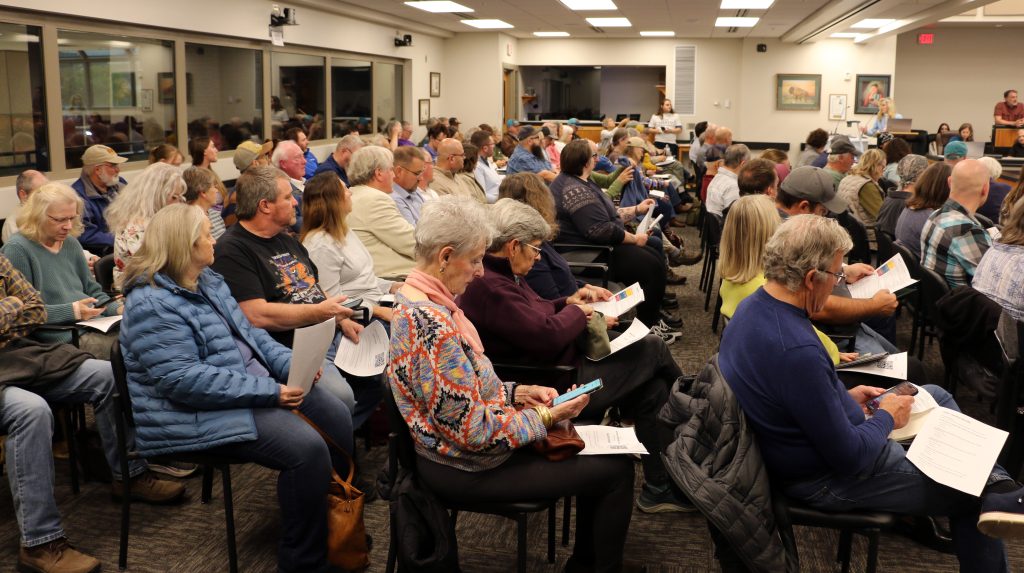
RAPID CITY, SD – Community concern about data centers was clear Wednesday night as the council chambers and adjoining community room at City Hall filled during public comment for a data center ordinance open house.
Rapid City’s Community Development department held the informational open house to gather public comment on the ordinance. The proposed ordinance, survey, and other information is available on the city website for comment before the proposal is back on the city calendar for consideration Nov. 5.
While Rapid City has had regulations addressing zoning for data centers in city limits since 2024, as community concerns increase and new data is available, the city chose to revisit its data center ordinance to address concerns about water use, water quality, power, noise and vibration.
As a result, the proposed ordinance was developed and heard by the City Planning Commission in September.
The commission didn’t act on the proposed data center ordinance, however, instead continuing the proposal until its Nov. 5 meeting to allow time for working sessions and public input.
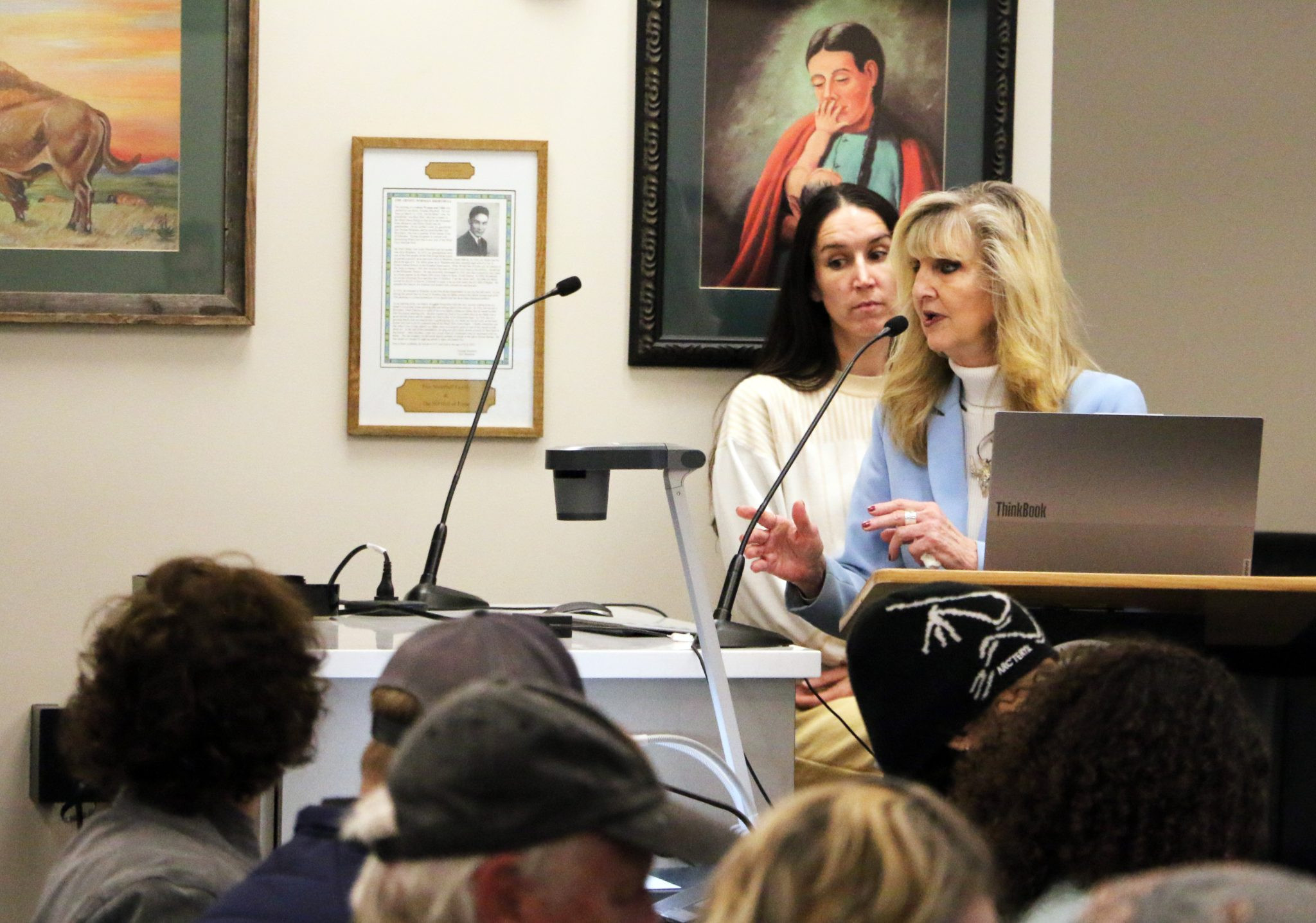
“In December of 2024, the city actually adopted a data centers ordinance which permitted them outright in the light industrial and heavy industrial districts,” Jessica Olson, City of Rapid City Planning Manager said. “So today we’re looking at changing these requirements to strengthen them and to address some issues that we know exist in the world today that we want to get ahead of as a community.”
Generally, survey answers taken during the Wednesday open house showed the majority of respondents favored more restrictions on data centers than the proposed ordinance put in place and, many respondents favoring no data centers at all.
There are several types of data centers – small centers serving a single user or small serving several end users, and larger centers where multiple companies rent space. The proposed ordinance addresses each type regulating water use, power generation, location and noise.
Hyperscale data centers would be prohibited under the proposed ordinance. Hyperscale is defined as using 50 MW or more of energy and 10,000 gallons of water per day.
Smaller data centers would face fewer restrictions. Micro data centers – using a maximum of 10 MW of power and 4,000 gallons of water per day – would be permitted. Large-scale centers – using more than 10 MW of power and a maximum of 10,000 gallons per day would require a conditional use permit.
Other stipulations in the proposed ordinance would require micro data centers be at least 500 feet from a residential zoning district (closer requires a conditional use permit), and more than one micro data center on property would require a conditional use permit.
Large-scale data centers would be required to be at least 1,000 feet from a zoning district that allows residential, closer than that would require a variance, and more than one data center on a property would require a conditional use permit.
During city planners’ research, noise was found to be an issue several communities dealt with prompting both sound studies and distance requirements in the proposed ordinance.
“So, when you look at the actual ordinance itself and looking at what other communities did wrong, we saw that noise was just really one of the biggest negative impacts in a community,” Vicki Fisher, Rapid City Community Development Director said. “You feel these data centers if you don’t do this right.”
Fisher said the proposed ordinance had guidelines to address noise, requiring sound studies unique to the location both before the project is approved and once it’s operational.
Distance requirements are also built into the proposed ordinance placing micro data centers 500 feet from residential and larger centers 1,000 feet from residential locations.
“We try to put them at the outskirts of the community,” Fisher said. “If we are going to allow a data center, we need to make sure that we are pushing them to the greatest degree possible to those heavy industrial sites.”
The City’s data centers PowerPoint presented Wednesday night, the data center handout and ordinance and public hearing information is on the city’s website. The proposed ordinance will be back on the city calendar Nov. 5.