
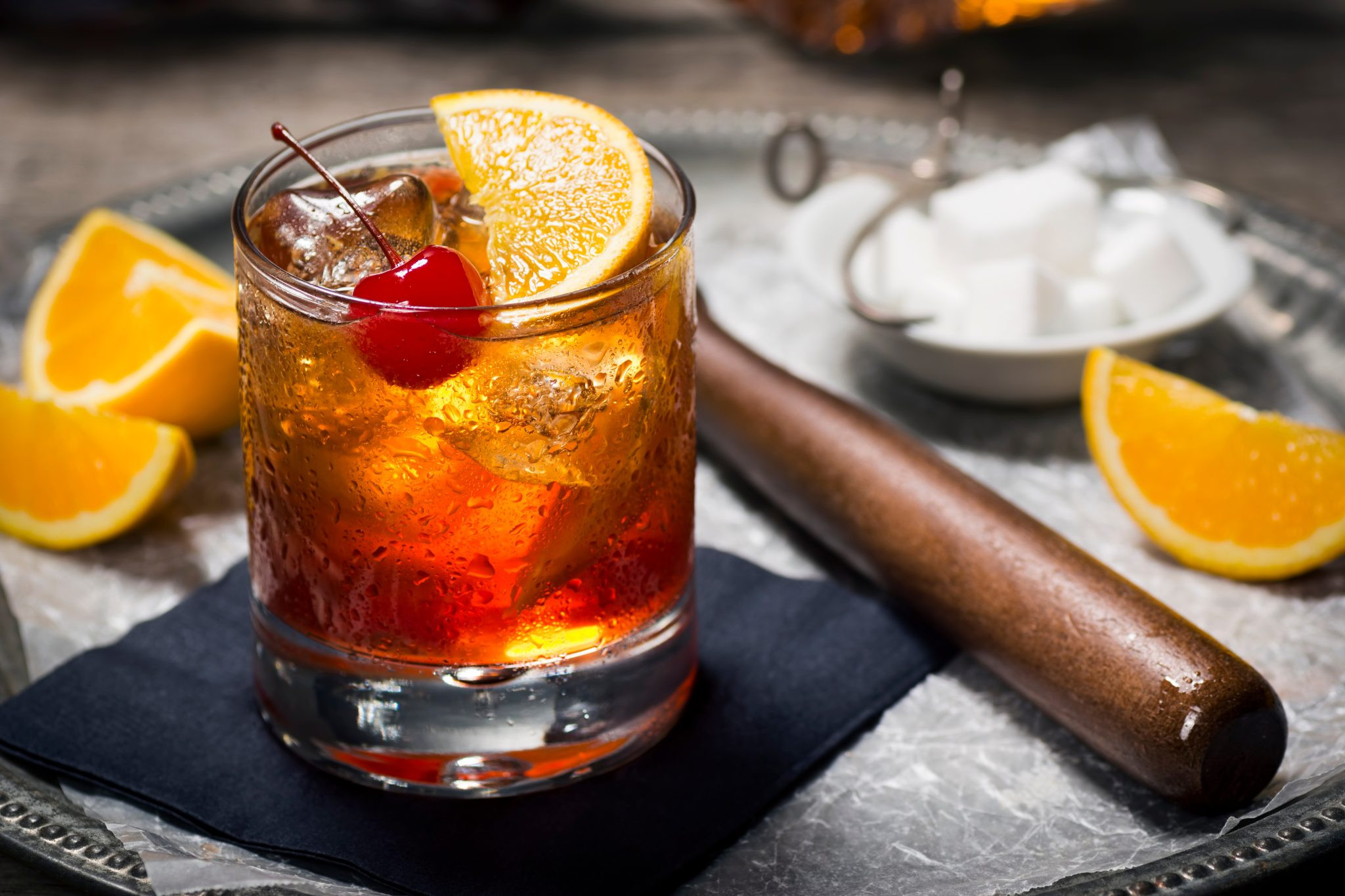
Order an Old Fashioned tonight and nobody’s going to say the name James E. Pepper. The bartender will muddle or won’t, add a cherry or skip it, and slide you a glass that looks about like it did in 1890. Pepper wanted the world to know he was responsible.
The paper trail has other ideas.
Third generation, and he lost the family distillery
Pepper’s grandfather Elijah was making whiskey in Kentucky by the late 1790s. His father Oscar expanded the operation on Glenn’s Creek in Woodford County and hired Dr. James Crow, who dialed in the sour mash process bourbon still leans on. That’s the ground James inherited when Oscar died in 1865.
He didn’t hold it. Money trouble in 1877 forced him to sell the family distillery to Colonel E.H. Taylor. That site is Woodford Reserve today. In 1879 Pepper started over in Lexington at the old Henry Clay Distillery and built the Old Pepper name back into a brand people asked for.
The Louisville story he loved telling
The legend goes like this. A bartender at Louisville’s Pendennis Club mixed whiskey, sugar, bitters and water for Pepper, he liked it, and he carried it east to the Waldorf-Astoria in New York, where it caught on and spread as the Old Fashioned.
Two problems.
The Pendennis Club opened in 1881. The phrase “old-fashioned cocktails” turns up in the Chicago Daily Tribune in February 1880, a year before the club had a door to walk through.
And the drink was never a recipe somebody dreamed up. Spirit, sugar, water and bitters was the printed definition of a cocktail as far back as 1806. By the 1870s, drinkers who didn’t want the maraschino and absinthe creeping onto bar menus asked for theirs “old fashioned”. Any decent bartender could hand you one.
The bartenders nobody credits
The Pendennis had real talent behind the bar, and none of them backed the story.
Jacques Straub came through the club’s kitchen around 1889 and worked his way up to manager. His 1913 drink manual lists a Pendennis Toddy. No Old Fashioned, no claim of invention.
Tom Bullock tended bar there starting around 1892, then went to the St. Louis Country Club and wrote The Ideal Bartender in 1917, the first cocktail book published by a Black American author. It has an Old Fashion recipe in it. It says nothing about the Pendennis inventing anything.
Two men who actually stood in that room, both writing it down, neither taking credit.
Where the legend actually comes from
Club records show Pepper joined the Pendennis in 1893, so he was there. He was at the Waldorf too, drinking alongside Rockefellers and Vanderbilts.
The story itself traces to a book called Old Waldorf Bar Days, written by Albert Stevens Crockett and published in 1931. Crockett says the drink was “introduced by, or in the honor of, Col. James E. Pepper” and “was said to have been the invention of a bartender at the famous Pendennis Club.”
Read the hedging. “Said to have been.” Printed 25 years after Pepper was in the ground, gathered from bartender talk. That’s the foundation the legend sits on.
What he really pulled off
Pepper deserves credit for something bigger, and this part is documented. In 1890 he pushed Kentucky to change its law so distillers could bottle on site instead of shipping by the barrel, which is where middlemen cut the whiskey with water and sold it as the real thing. He sealed his corks with a paper strip stamp so you could see if a bottle had been opened. The federal government borrowed the idea for the Bottled-in-Bond Act of 1897.
Every sealed cap you twist off owes him a nod.
He died in the room
On December 24, 1906, James E. Pepper died at the Waldorf-Astoria. Heart and lung trouble after a broken leg, at 56, in the hotel where he’d spent years telling people about a drink he didn’t invent.
His Lexington distillery outlived him by decades. It ran medicinal whiskey through Prohibition, got bought by Schenley, stopped distilling in 1958 and closed in 1967. Amir Peay revived the brand and fired the stills back up in 2017.
The Old Fashioned never needed reviving. It sits third on Drinks International’s 2026 ranking of the world’s best-selling classics, it’s been Louisville’s official cocktail since 2015, and the city throws it a two-week party every June.
Pepper talked it up in the right rooms, and that’s a real contribution. The drink was already ours.


