RAPID CITY, S.D. – Western Dakota Regional Water System (WDRWS) will be launching a public facing campaign in January to bring awareness to water availability in Western South Dakota’s future.
WDRWS has spent the last five years defining the looming problem, studying solutions, and engaging local, state, and federal officials as part of the development of a multi-billion dollar water pipeline project.
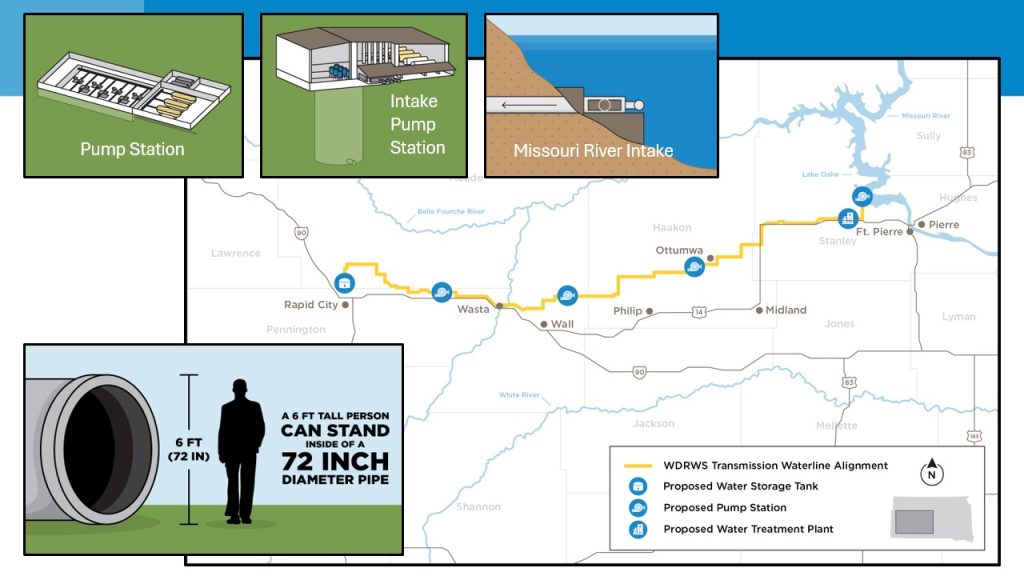
The solution to West River’s impending water shortage is anything but simple – construct a 165 mile long, $4.5 billion, 72-inch, pipeline from the Oahe Dam to West River.
“This is generational – we have to do it,” said WDWRS Executive Director Kristin Conzet. “There’s no alternative right now – find me an alternative and I’d be happy to look at it. But this is the solution.”
If you haven’t heard of WDRWS, don’t worry, Conzet said the vast majority of people in West River don’t know what WDRWS is or what the group has been doing for the past five years.
That’s going to change.
Conzet said the years 2027 through 2029 are the Advocacy Years focusing on the public facing campaign – Western Dakota Regional, Just Add Water. In the next couple of years, WDRWS will be securing support and informing the public about the strain on the region’s aquifer and how that’s impacted by the rapid growth of the area and expansion at Ellsworth.
“What you’re finding is the aquifer below the Black Hills is really important and right now you’re using a lot of the aquifer resources,” said Sen. Mike Rounds who, along with Senate Majority Leader John Thune, moved a bill through Congress supporting a feasibility study for the long-term pipeline project.
“We’re going to have challenges elsewhere as well, we’re going to need more power,” he said. “But water, no matter what else happens we know we’re going to need more water out here.”
The Water Problem
West River gets a majority of its water from aquifers and uses what’s available at a rate of about 109 gallons per person, per day, according to WDRWS. The problem is, West River population increases by about 1.5 percent a year, meaning, in the near future the area runs drastically short of water supply assuming no prolonged droughts decrease aquifer water levels.
“When you look at the data, just based on population growth, if we were to have … any term of drought, we would be in a deficit,” Conzet said. “We would be taking out more than we would be putting in.”
How WDRWS Started
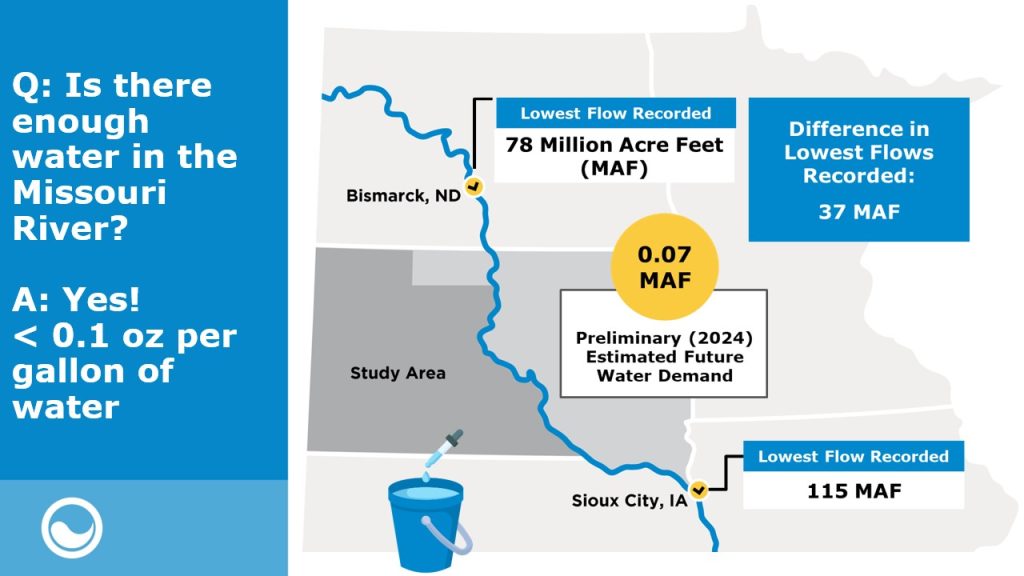
In 2017, West Dakota Water Development District (WDWDD) was due to renew their Future Use Permit on the Missouri River for 10,000 acre-ft/year. To better inform the decision to renew the permit, WDWDD commissioned South Dakota Mines (SDM) to conduct a water use study. The 2019 study from South Dakota Mines showed Western South Dakota could face water shortages sooner than expected.
“That’s what really kicked it off,” Conzet said. “Once they had this she (Cheryl Chapman) was able to go to the state and say, ‘Western South Dakota does not have any regional water (system), there are seven in Eastern South Dakota, we have none.”
As a result, Western Dakota Regional Water System was formed in 2021 and communities, Tribes, and rural water systems met to explore working together to plan a collaborative project to deliver bulk water to western South Dakota.
In March 2025, Gov. Larry Rhoden signed SJR 501, a future use permit allowing access to up to 20,776-acre feet of water from the Missouri River to be used per year. The Water Management Board issued the Future Use Permit on May 7, 2025.
WDRWS’ mission was simple: Provide a solution for clean, reliable water in Western South Dakota.
The Solution
The solution is multifaceted: get local, state, and federal approvals to build a 165 mile long, $4.5 billion pipeline from the Oahe Dam to the Black Hills, successfully engineering it to transport water through four pump stations along the way to accommodate for the 2,000-foot elevation increase. In addition, work with multiple landowners and member water districts which provide existing infrastructure to carry and distribute water.
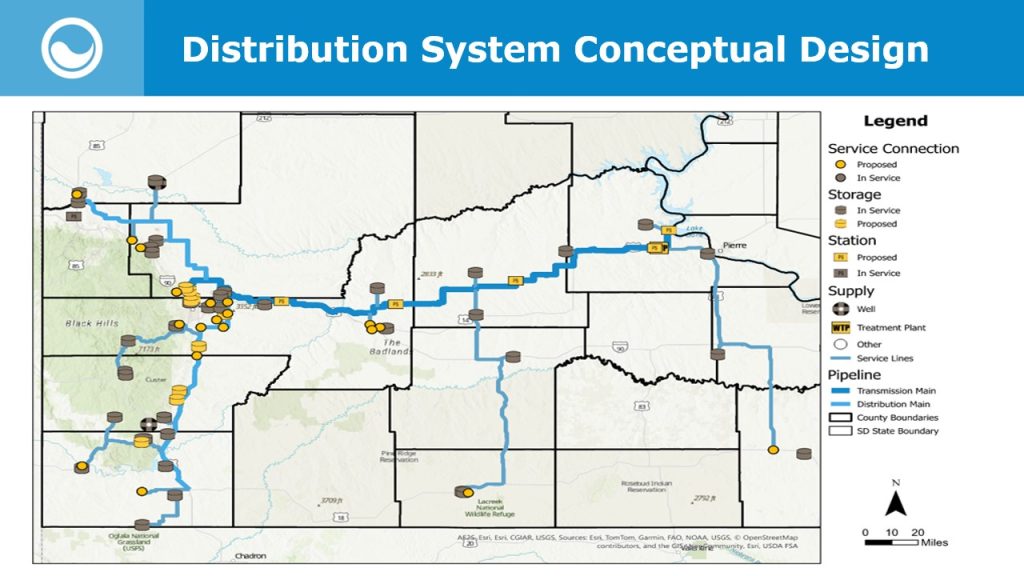
“We are supplemental,” Conzet said. “We are the bulk water, we provide bulk water to existing water systems.”
Moving Forward
Moving forward with the project will take an act of Congress. Conzet said a Bureau of Reclamation feasibility study necessary to take the next steps needs Congressional support. Senator’s Mike Rounds and John Thune have moved a bill in the Senate, and Rep. Dusty Johnson has done the same in the House.
“I think (the bill) will be fine, I think it’s moving in the right direction,” Rounds said. “This is good economic development for South Dakota and that’s what this is all about.”
The Senate bill has moved through committees, legal and reviews and waiting for a hearing on the Senate floor. The House bill is in committee.
Once the bills clear the federal hurdles, an appropriation is attached for the feasibility study. That may happen by the end of the year. Once that’s done, federal appropriations need to be secured and plans put in place.
“Five years ago would have been better starting, but today is the next best day. Kind of like planting a tree,” Rounds said.
Funding
It’s estimated the pipeline project will cost $4.5 billion. Conzet said she anticipates the federal government would cover about 70 percent of that cost, with the other 30 percent – about $1.35 billion – coming from state sources and WDRWS members.
Already, millions of dollars have been invested in studies and research. There are several local partners supporting the $13 million plus WDRWS assessments and needs studies including the City of Box Elder, Meade and Pennington counties, the South Dakota Community Foundation and others. Funding realized is still in the millions – $8 million in grants through the American Rescue Plan Act of 2021, $2 million from the State Water Resource Management System, $2.1 million from the state Board of Water and Natural Resources, and another million from the South Dakota Water and Environment Fund.
What’s happening now?
Congressional authorization for the feasibility study is in the works. WDRWS will also be tasked with completing conceptual designs for distribution and treatment systems, completing a drought resiliency analysis for local aquifers, and developing additional water supply alternatives for feasibility study analysis.
It’s a long list with multiple pieces in each step along the way. And the clock is ticking.
“Most people view water as ‘I turn on my tap and it’s there… I think people need to be aware,” Conzet said. “The greatest natural resource that we have is water, you cannot live without water.”