
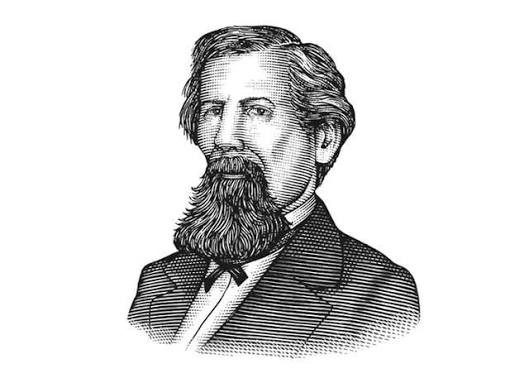
He was a shoe salesman.
That’s where this starts. Not in a distillery, not in a grain field, not behind a still. A dry goods merchant from Germany who landed in Nashville in the mid-1800s and figured out pretty quickly that he was good at selling things. Shoes, goods, whatever the market needed. He had the instincts for commerce, the kind you can’t really teach.
At some point, he turned those instincts toward whisky.
The Business He Built Without Building Anything
He didn’t distill. He distributed. There’s a distinction there that gets lost in most origin stories, because the romantic version always involves a man and a still and some sacred family recipe passed down through generations. This wasn’t that. He partnered with other men who ran the operations, who managed the stills and the mash and the barrels, and he handled the part he was actually good at: getting the product in front of people who wanted to buy it.
It worked. Better than it had any right to, honestly, for a man whose previous experience involved selling footwear.
One Letter. One Decision.
You probably already know this. American whiskey is spelled with an “e.” Irish whiskey is spelled with an “e.” The Scots, however, drop it. Their whisky has no “e,” and in the 19th century that spelling carried something with it. A kind of implied quality. A signal that what was in the bottle was serious.
He decided his Tennessee product belonged in that conversation. So he dropped the “e” and didn’t look back. It was either an audacious marketing move or a genuine expression of confidence in what he was selling. Probably both. The spelling stuck, and it’s still there today, one of the very few American whiskies, or rather whiskys, that carries the Scottish spelling.
That one letter said everything he wanted it to say without him having to say a word.
Something He Noticed About the Cold
The distillery operation sat in a hollow fed by a natural limestone spring, and somewhere along the way, somebody paid attention to the seasons. The winter batches were smoother. The cold was doing something during the charcoal mellowing process that warmer months weren’t, rounding things out, taking the edge off in a way that heat simply couldn’t replicate.
He paid attention to that. The brand that carries his name still chills its whisky before filtering it through charcoal, a cold mellowing step that no other major Tennessee whisky uses. It’s the technical signature of every bottle produced today, rooted in an observation somebody made about weather and patience and what happens when you don’t rush things.
Tennessee Beat Everyone to Prohibition
Most people think of 1920 when they think of Prohibition. The Volstead Act, the speakeasies, the whole national experiment in misery. Tennessee didn’t wait. The state went dry in 1910, a full decade ahead of the rest of the country, and the distillery closed.
He wasn’t around to see it. He’d died in 1894, which, depending on how you look at it, was either unfortunate timing or the best possible exit. His brand went dormant for 48 years. Not relocated. Not reformulated somewhere friendlier. Gone.
In 1958, Schenley Industries brought it back. They rebuilt in the same hollow, pulled from the same limestone spring, and the whisky started flowing again. Today a company called Diageo owns it, one of the largest spirits conglomerates on earth. The hollow is still there. The spring is still there. The spelling is still there.
The Name on Every Bottle
He never stood over a still. He never charred a barrel or tested a mash bill or made a single production decision. He was a merchant who understood that a product needs a story, a signal, an identity that people can reach for when they’re standing in a liquor store trying to decide what to buy.
He gave his whisky a name that implied it belonged somewhere better than it started. He dropped a letter that said, without apology, that what was in this bottle was worth your attention.
The name he put on that bottle was his own.
George Dickel.


