
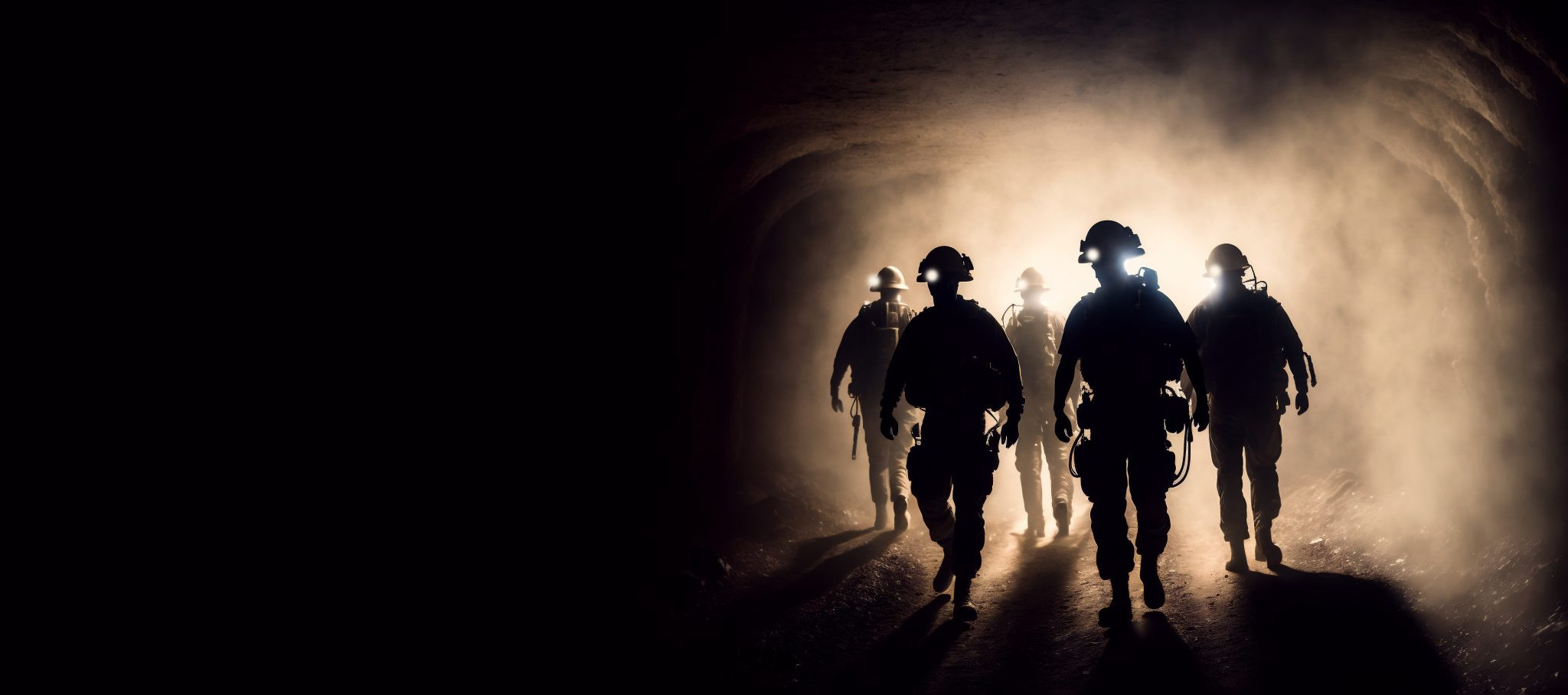
It started with a disaster.
On December 6th, 1907, explosions tore through the Fairmont Coal Company’s Mines 6 and 8 in Monongah, West Virginia at 10:28 in the morning. To be legally employed in the mines you had to be 12 years old, but to make ends meet and satisfy tonnage requirements, miners often brought children as young as eight to help. Those unregistered workers were never counted. The official death toll stood at 362, 171 of them Italian migrants. Others came from Russia, Greece, and Austria-Hungary. One report noted that not one man remained in 27 of the 30 households on a single block in Monongah. Modern casualty estimates reach over 500. It’s still the worst mining disaster in American history.
216 women were widowed. The miners left behind 475 children, with 31 more born after the disaster.
Seven months later, a shy, quiet woman named Grace Golden Clayton went to her minister with an idea. Hold a church service. Honor the fathers who were gone. She said years later in an interview, “It was partly the explosion that set me to think how important and loved most fathers are. All those lonely children and the heart-broken wives and mothers, made orphans and widows in a matter of a few minutes.”
She suggested a date close to her own father’s birthday, and the resulting service was held on July 5th, 1908, at Williams Memorial Methodist Episcopal Church South in Fairmont, West Virginia. So technically, this was the first Father’s Day in America.
Grace never got the credit. The service got buried by the Fourth of July celebrations the day before, and then overshadowed again when a prominent church member named Miss Billingslea passed away, with her obituary running as the top story in the Fairmont Times on July 6th, the very next day. Grace never thought to make it an annual event, so it was mostly forgotten about.
The version we celebrate today came from Sonora Smart Dodd in Spokane, Washington. When Sonora was 16, her mother died in childbirth with her sixth child, leaving her father, Civil War veteran William Jackson Smart, to raise Sonora and her younger brothers alone. While attending a Mother’s Day church service in 1909, Sonora came up with the idea. Within a few months she’d convinced the Spokane Ministerial Association and the YMCA to set aside a Sunday in June to honor fathers. She proposed June 5th, her father’s birthday, but the ministers pushed it to the third Sunday in June so they’d have more time to prepare their sermons after Mother’s Day.
The first Father’s Day bill was introduced in Congress in 1913, but in spite of encouragement from President Woodrow Wilson, it didn’t pass. So the idea sat there for 62 years.
The hold-up wasn’t red tape, it was total dad energy. The holiday met resistance, particularly from men who questioned the “manliness” of an event connected to Mother’s Day and flowers. Others called it a “commercial gimmick.” It only really caught on during the Great Depression, when struggling retailers pushed it as a reason to buy Dad a necktie he’d never buy himself.
In 1966, President Lyndon B. Johnson issued the first presidential proclamation honoring fathers, designating the third Sunday in June as Father’s Day. Six years later, the day was made a permanent national holiday when President Richard Nixon signed it into law on April 24, 1972.
Sonora died four years after that, at the age of 96. She’d spent most of her adult life pushing for a day her country kept refusing to take seriously.
So this Sunday when you hand your dad a pack of socks, you’re not being lazy. You’re being historically accurate.


