
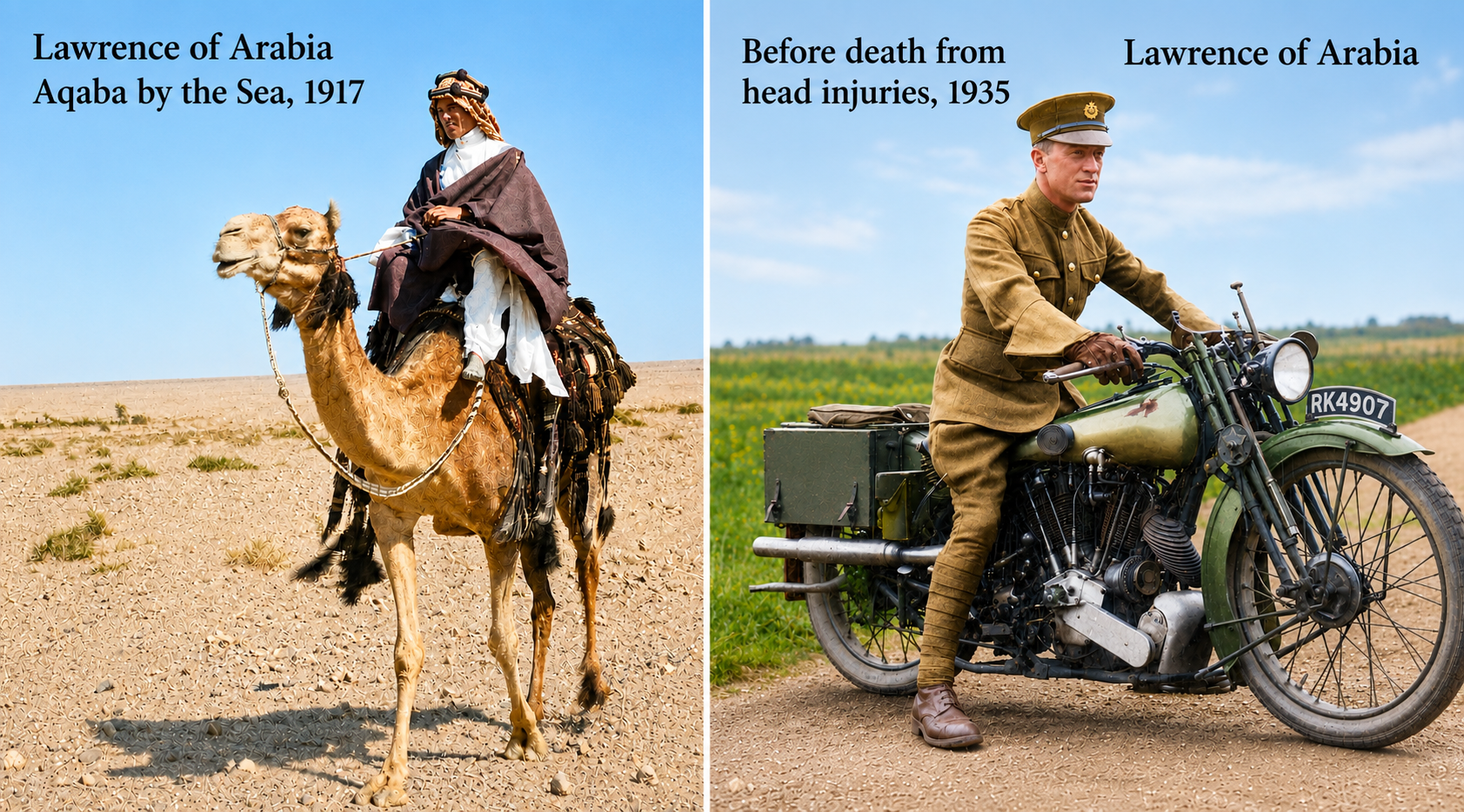
In 1935, T.E. Lawrence, the famed “Lawrence of Arabia,” died from head injuries sustained in a motorcycle accident. He was 46 years old at the time. He was not wearing a helmet. Modern helmets had not yet been invented. (Only cloth and leather headgear were used at the time, but Lawrence wasn’t wearing any protective device.) As a result of Lawrence’s death, neurosurgeon Hugh Cairns was inspired to conduct substantial research, which ultimately led to modern helmets. Lawrence’s death has been described as “a pivotal event that accelerated the widespread development, scientific study, and eventual mandatory use” of helmets.
Sturgis Rally Deaths and Accidents
There have been at least 29 motorcycle accident deaths during the Sturgis Rally over the last three years. This is according to statistics reported by South Dakota Searchlight, which “counts any motorcycle-involved traffic death anywhere in the state, not only during the official dates but also during the days just before and after the rally.” This count does not “include deaths that occur in other states while bikers are traveling to or from the rally, or deaths in nearby states such as Wyoming, where there are rally-themed events that attract bikers to ride back and forth across the state line.”
The overall number of accidents, as reported by the Highway Patrol in the Sturgis and Rapid City areas, was 93 in 2025 and 89 in 2024. The number of injury accidents for 2025 was 66, an increase of 31 over 2024.
Helmets as a Safety Factor
According to the U.S. Centers for Disease Control and Prevention (CDC) and the National Highway Traffic Safety Administration (NHTSA), wearing an approved helmet reduces the risk of death for operators by approximately 37% and the risk of death for passengers by approximately 41%. Helmets further reduce the risk of severe injuries, medical expenses, and long-term disability costs.
Should Helmets be Mandatory?
The use of helmets became mandatory nationwide through a 1966 federal requirement that Congress imposed as condition for federal highway funding. South Dakota enacted a mandatory helmet law in 1967. The South Dakota statute has been amended numerous times over the years, most significantly in 1980, when the Legislature removed its universal helmet mandate, replacing it with a requirement only operators and passengers under the age of 18 wear helmets. This remains the law in South Dakota.
Other Jurisdictions
More than a dozen states and the District of Columbia retain a mandatory universal helmet law for all riders and passengers, regardless of age: California, Oregon, Washington, Louisiana, Mississippi, New Jersey, Nebraska, West Virginia, New York, Hawaii, Tennessee, Maryland, and the District of Columbia.
Iowa and Illinois have no helmet law.
Other states, like South Dakota, have partial helmet laws, which are based upon various age levels or other conditions. Interestingly, some states remove the requirement for older operators (not required for operators over age 26 in Missouri), or if the operator has passed a certified motorcycle training course and/or carries personal health insurance or direct first party medical benefits coverage (Michigan and Texas).
Many credible medical and safety organizations continue to lobby for universal mandatory helmet laws. That list of advocates includes the CDC, NHTSA, the American College of Surgeons, American Academy of Pediatrics, American Public Health Association, Governors Highway Safety Association, National Association of County and City Health Officials and Insurance Institute for Highway Safety.
Sturgis is the Mecca
South Dakota is not an outlier in regard to mandated protective headgear. Notably, both Wyoming and Colorado have laws similar to South Dakota, where helmets are required for operators and passengers under age 18. But, Sturgis has become a Mecca for motorcycle enthusiasts each August.
Dana Hess, South Dakota journalist, wrote in August 2023, “It’s not just motorcyclists that pay. We all do. We all pay for the law enforcement that investigates the accidents and the first responders that have to deal with the mess.”
In the months and years following Hess’ published viewpoint, deaths and injuries persist. South Dakota has an opportunity to do better for the safety and well-being of citizens and tourists. Our laws could be strengthened.
Note: In regard to the preparation of this week’s column, the author would like to thank John Hult, Attorney Sarah Baron Houy and Claudia Baron for their assistance and input.
Anyone desiring to communicate with the Author, may do so by sending an e-mail to the author at rogermbaron@gmail.com .
Authorities: Dakota Searchlight Articles: Traffic and injury accidents surged higher at 2025 Sturgis Motorcycle Rally, By Seth Tupper, August 12, 2025 (https://southdakotasearchlight.com/2025/08/12/traffic-and-injury-accidents-surged-higher-at-2025-sturgis-motorcycle-rally/ ); At least 12 die in motorcycle accidents before, during and after 2024 Sturgis Rally, By Seth Tupper and John Hult, published August 12, 2024 (https://southdakotasearchlight.com/2024/08/12/sturgis-2024-more-drugs-and-drug-money-fewer-collisions-and-deaths/) ; Without a motorcycle helmet law for adults, we all pay, By Dana Hess, August 28, 2023 (https://southdakotasearchlight.com/2023/08/28/without-a-motorcycle-helmet-law-we-all-pay/ ).
Roger Baron is a guest columnist for the Rapid City Post. Opinions expressed may not necessarily represent the views of the Rapid City Post, its affiliates, or advertisers.


