
When an unwed mother becomes pregnant, there can be social, religious, and legal implications. Historically, English common law declared that such a child was nullius filius (also filius nullius), meaning the baby was the “son of nobody” or a “bastard.” Such a child was incapable of being heir to anyone and could have no heirs, except for direct lineal descendants. In a series of decisions beginning in 1968, the United States Supreme Court declared the common law treatment of children born to unwed mothers as unconstitutional, violative of the Equal Protection Clause.
Despite this ruling, the stigma of having a child out of wedlock can be a significant problem. Indeed, the stigma has led to the tragic occurrence of infanticide, which is the crime of a parent killing an infant child shortly after birth. While this is a relatively rare occurrence in South Dakota, it does happen. A widely publicized situation of infanticide occurred in Union County in 2005, when a mother killed her baby and placed it in the garbage. Then, in 2013, remains of two babies were found in a rural tree grove in Deuel County. It was later determined that the babies were born, and left, in Deuel County in 2009 and 2011 by a Minnesota woman.
Baby Moses (Safe Havens Provided)
In 2001, the South Dakota Legislature enacted a “Baby Moses Law.” Under this law, a parent may deliver an infant less than 60 days old to several “safe havens,” including a hospital, clinic, law enforcement office, licensed child placement agency, fire station, or with EMTs, without ramification, so long as the child is unharmed. The parent is not required to provide any information regarding parentage of the child and cannot be charged with any crime. As of 2008, at least three infants had been surrendered safely since enactment of the Baby Moses Law in 2001.
Baby Gabriel Tragedy
Despite the availability of safe havens, the issue of infanticide continued. In August 2024, a deceased newborn was found in a Sioux Falls recycling facility. The infant was given the name “Baby Gabriel.” Publicity around this event spurred statewide attention and discussion. It was believed that the “face-to-face” contact required for the safe haven remedy might be a bit too much for some mothers, who feared recognition, judgment, or legal consequences.
Baby Boxes (2025 Legislation)
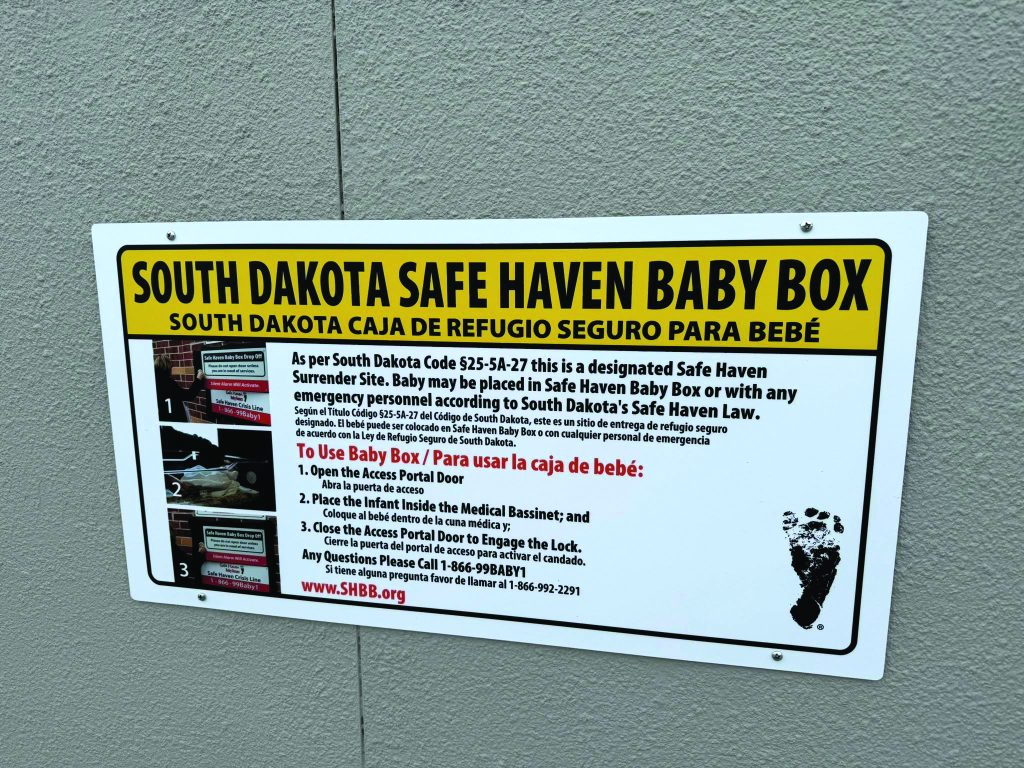
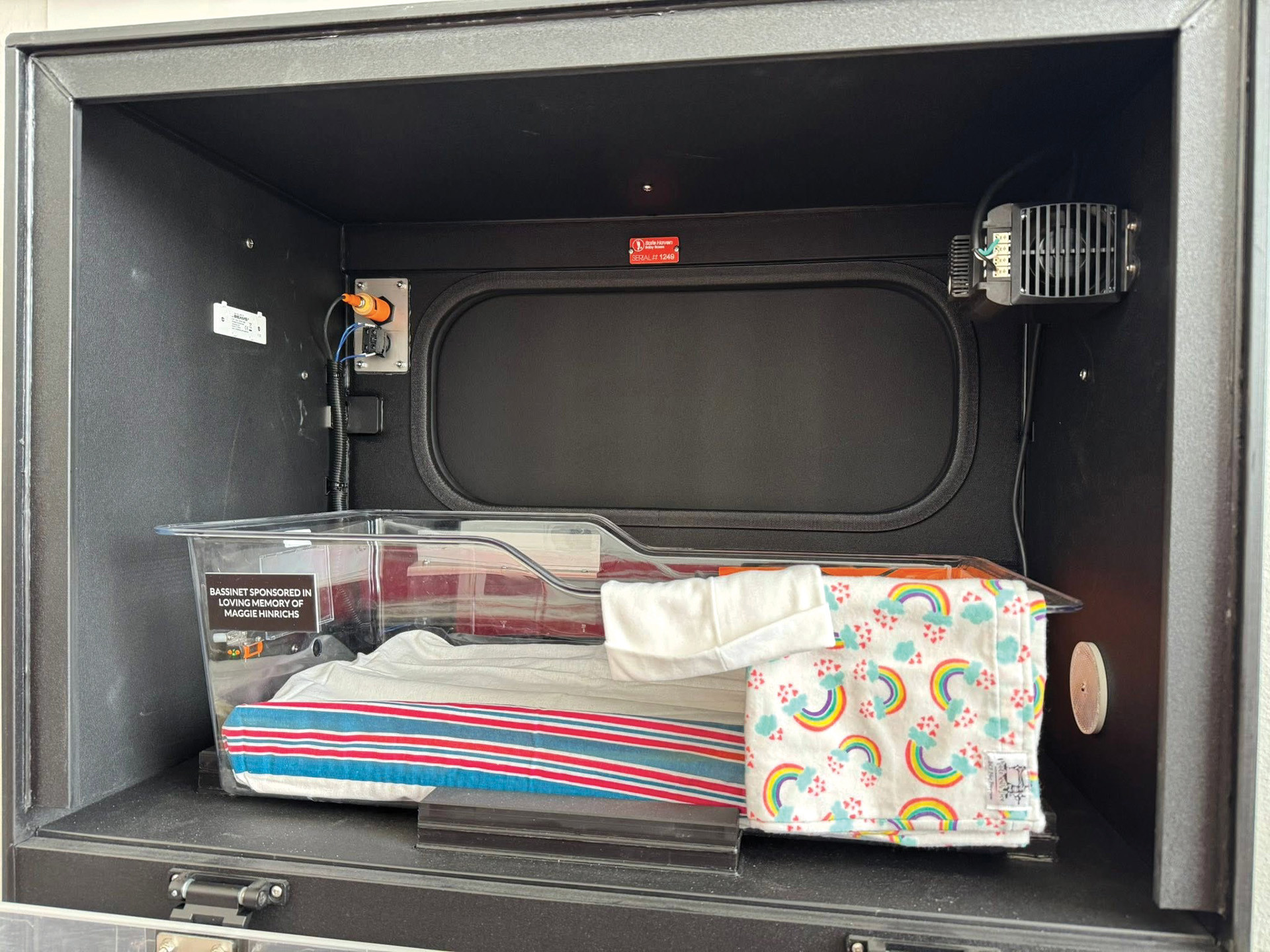
As a result, the South Dakota responded with the enactment of “Baby Box” legislation. This legislation authorizes the use of anonymous drop-off boxes at safe haven locations. This legislation, introduced by Representative Bethany Soye as the “Baby Gabriel Bill,” was passed and signed into law by Governor Larry Rhoden in March 2025.
South Dakota’s first Baby Box, as authorized by the new statute (SDCL 25-5A-27.1), was installed in a Rapid City Fire Station, with accompanying publicity. This new law has precise requirements for the safety and adequacy of the receptacle utilized. It also ensures immediate notification to personnel, who are to be available 24/7 to receive the baby.
Historical Backdrop
The problem of infanticide and a corresponding search for solutions have a long history. In England in 1863, Parliament enacted its Concealment of Birth of Bastards Act (21 Jac. I, c. 27) which imposed harsh punishment and harsh evidentiary rules for any unwed mother who claimed her baby was stillborn. The Massachusetts Bay Colony carried this legislation forward, actually imposing the death penalty on unwed mothers who had stillborn infants, unless the mother could prove otherwise. The only safe way for unwed mother to defend was to produce an eyewitness (such as a midwife or doctor) to the stillborn baby’s birth.
Tours – French Predecessors to “Baby Boxes”
The concept of a Baby Box originated as early as the 1600s, when Vincent de Paul instituted the utilization of a tour d’abandon (“tours”) in Paris. Tours were wooden revolving cylinders built into the wall of a foundling home. A mother could place an unwanted baby on the tour, ring a bell for an attendant to retrieve the baby, and leave without being identified. Facing the increased incidence of infanticide in 1811, Napoleon issued an Imperial Decree mandating the installation of tours in all foundling homes. Over the next fifty years, however, thousands of infants were being left in tours, overwhelming homes and hospitals. French society deemed the tours to be an inappropriate incentive to abandonment and they were outlawed in 1863.
(Personal note: I grew up close to a Carmelite Nun Convent, a cloistered sect that featured a tour. As one of many Catholic school kids, we used to visit the Convent and visit with the Nuns, through a tour, offering our services for any odd jobs that needed to be done, such as moving trash cans to and from the cloistered area. The Nuns would reward us with special prayer cards or cards of saints, being passed through the tour to us.)
Note: In regard to the preparation of this week’s column, the author would like to thank Representative Bethany Soye, attorney Sarah Baron, and Claudia Baron for their assistance and input.
Anyone desiring to communicate with the Author, may do so by sending an e-mail to the author at rogermbaron@gmail.com .
Authorities: Levy v. Louisiana (1968); SDCL 25-5A-27 thru 25-5A-35; Argus Leader news article, May 21, 2005; Rapid City Journal news article, November 2, 2008; Keloland news story, August 20, 2013.
Roger Baron is a guest columnist for the Rapid City Post. Opinions expressed may not necessarily represent the views of the Rapid City Post, its affiliates, or advertisers.


