
There are moments in life when one caring adult can change everything. Not with money. Not with grand gestures. Simply by showing up. By listening. By believing in a child who has spent too much of their young life wondering if anyone ever would.
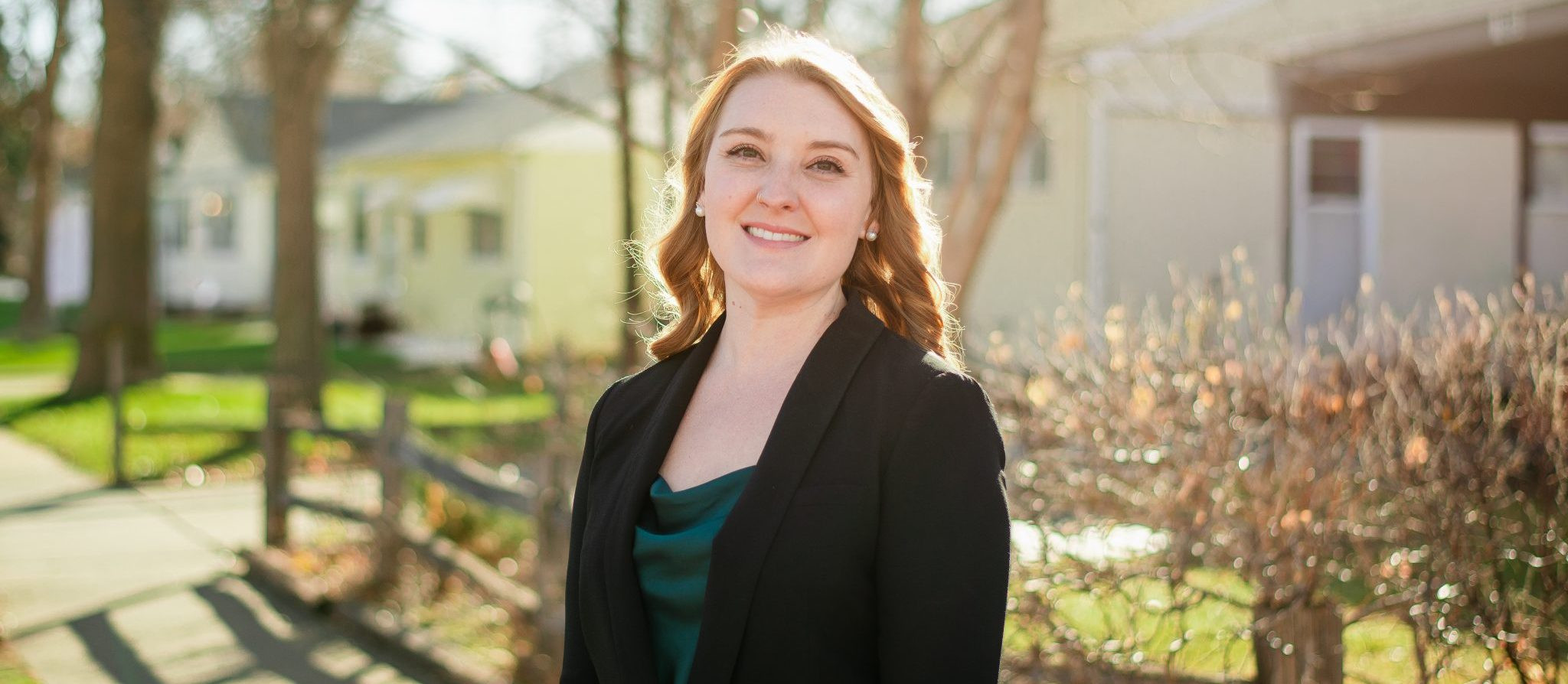
For Bailey Johns, those moments aren’t rare. They’re the reason she comes to work every single day. As the Advocacy Program Manager for the Seventh Circuit CASA Program in Rapid City, Bailey works alongside volunteers who become Court Appointed Special Advocates for children who have experienced abuse and neglect. It’s a role that requires compassion, resilience, patience, and an unwavering belief that every child deserves someone in their corner.
For Bailey, though, this isn’t just a career. It’s a calling.
“I’ve always been drawn to advocacy,” she says. “Seeing people suffer for circumstances that are out of their control is one of the major issues that we as a community have an obligation to help remedy.”
That belief didn’t begin in an office or a courtroom. It began on a ranch. Growing up outside Glendo, Wyoming, a town of roughly 200 people, Bailey describes her childhood as one surrounded by love, hard work and service.
“My older sister, my mom and dad, and several close family friends all taught me to work hard, help others when they’re in need, and never take life too seriously.”
Those lessons weren’t taught through lectures. They were lived every day. Her mother, a high school teacher, created a credit recovery program that helped students who otherwise may never have graduated. Looking back as an adult, Bailey realized those long mornings before school and evenings after classes weren’t simply extra work. Her mother was providing food, school supplies, comfort and safety to students who needed far more than an education.
“My mom made sure the kids in her classroom were taken care of.”
Her father served his community just as faithfully. An EMT. Volunteer firefighter. National Guard medic who deployed overseas to Kuwait and Afghanistan.
“His acts of service deeply resonate with how I interpret our duty to help our community.”
Those examples quietly shaped Bailey’s understanding of what it means to care for people. After high school, she attended Chadron State College on a music scholarship while earning degrees in Psychology and Child & Family Development. It was there she also met her husband, Tanner, through the choir program. Following graduation, Bailey worked with adults with developmental disabilities before moving to Rapid City in 2018, where she accepted a position at the Black Hills Children’s Home. That’s where everything changed. One of the children in her care had only one consistent visitor. Their CASA volunteer.
“I watched how important that relationship was,” Bailey recalls. “After learning more about CASA and seeing they had an opening, I knew I wanted to be part of it.”
She joined the Seventh Circuit CASA Program in January 2019. Seven years later, she still believes just as strongly in its mission.
More Than a Volunteer
Many people have heard of CASA. Far fewer truly understand what it means. Court Appointed Special Advocates are trained volunteers who are appointed by a judge to advocate for children in the foster care system. They spend time getting to know each child, not simply reading reports or attending hearings but building genuine relationships. They meet with teachers. They talk with foster families. They communicate with attorneys and social workers. They visit children regularly.
Most importantly…
They become a consistent, trusted adult in a child’s life.
“A CASA is there no matter where a child is placed,” Bailey explains.
That consistency can become life changing. She remembers one child who moved 40 different times while in foster care. Forty homes. Forty new environments. Forty chances to feel forgotten. Yet one person remained. Their CASA.
“That volunteer continued showing up wherever the child was placed,” Bailey says. “They became a source of familiarity and consistency in a world filled with unknowns.”
Sometimes consistency is the greatest gift anyone can offer.
What Advocacy Really Means
Ask Bailey what advocacy means and she doesn’t hesitate.
“What doesn’t it mean?”
“It can mean siblings staying together. Families getting the support they need to reunify. Medical needs being addressed. Educational opportunities opening up. Kids discovering who they are and who they want to become.”
Advocacy isn’t simply speaking. It’s refusing to stop until someone is heard.
“It means standing up for what’s right and pushing until there’s a solution, regardless of the barriers.” Every child is different. Every story is different. That’s why CASA focuses on children as individuals rather than statistics.
“We work to meet each child’s specific needs.”
In Bailey’s eyes, advocacy does something even bigger. It teaches children what compassion looks like.
“It shows kids what we can do to take care of each other so we can all make the world a safer place.”
The Strength of Children
Working in child advocacy means witnessing heartbreak. But Bailey says something else stands out even more. Hope.
“I’ve learned that resilience, hope and strength really do exist.”
She remembers one seven-year-old boy who had endured unimaginable abuse while also being exposed to addiction and domestic violence. Despite everything he’d experienced… He would regularly stop playing just to watch the sunset with his CASA volunteer. Then one day he quietly said something Bailey has never forgotten.
“I am thankful for my LIFE.”
For Bailey, those five words carried enormous weight. Another story reminds her just as much why healing is possible. A young mother who had once been in foster care herself struggled with addiction before eventually receiving the support she needed. With help from her children’s CASA and the people around her, she reunited with her children. Today, the family is thriving.
“She was taking the first step toward breaking the cycle of trauma.”
Bailey pauses.
“Healing is possible.”
Carrying the Weight Together
People often ask how she manages the emotional toll. The answer is simple. She doesn’t do it alone.
“My support system is incredible.”
Family, friends, her husband, coworkers, and volunteers. Together they laugh, cry and celebrate victories all while leaning on one another during the difficult days.
“We fully acknowledge the situations that are hard, but we also celebrate every success story.”
Those success stories keep everyone moving forward. She says one of the greatest privileges of her work is hearing children talk about finally having someone they trust. Someone they can call. Someone who celebrates birthdays, accomplishments and milestones. Someone who simply listens without judgment.
“Humans are so much more than their trauma.”
It’s a reminder Bailey carries with her every day.
A Moment She’ll Never Forget
Some stories never leave you. One volunteer remained assigned to a child for ten years—an extraordinarily long time in foster care. As the volunteer’s battle with cancer neared its end, Bailey helped arrange Zoom visits between them and the child, who had since been placed out of state. During one conversation, the child looked into the camera and said:
“You’ve been the only one who has stuck with me for the last ten years. You’re the closest thing I’ve ever had to a family. I love you so much.”
There weren’t many dry eyes. Moments like that remind Bailey exactly why CASA exists. Not simply to navigate court cases.
To change lives.
A Community Opportunity
Bailey believes Rapid City and the Black Hills have always been communities willing to help. She just hopes more people realize they already have what it takes.
“When we recruit volunteers, people often tell us they aren’t qualified.”
Her answer is always the same. Everyone has something to offer.
“You don’t need a special degree to know what a caring adult meant in your own childhood.”
Most of us can immediately think of someone. A teacher. A coach. A neighbor. A family friend. Someone who made us feel seen. That’s exactly what CASA volunteers provide. A positive, stable relationship. Someone who follows through. Someone who simply keeps showing up. Right now, more than 490 children across Pennington, Fall River and Custer counties are waiting for someone to become that person in their lives.
The need has never been greater.
The Legacy Bailey Hopes to Leave
When asked what she hopes readers remember after learning her story, Bailey doesn’t talk about awards or accomplishments. She talks about responsibility.
“I hope people remember that there is a call to action for the young people in our community.”
She believes every one of us has an opportunity to make the Black Hills a safer place for children. Sometimes those opportunities are surprisingly small. A conversation. An encouraging word. Volunteering. Supporting an organization. Showing up.
“There are little things we can all do,” Bailey says. “Those little things can make the biggest impact.”
In a world that often feels divided, Bailey Johns has dedicated her life to one simple belief: Every child deserves someone who refuses to give up on them.
And sometimes…
One caring adult can change everything.
Interested in becoming a CASA volunteer?
The Seventh Circuit CASA Program is actively seeking volunteers to advocate for children experiencing abuse and neglect throughout Pennington, Fall River and Custer counties. Volunteers must be at least 21 years old, complete background checks and training, and commit to being a consistent presence in a child’s life. Those interested can learn more, complete a volunteer application, or find additional ways to support the organization by visiting www.casaofrapidcity.org or calling 605-394-2203.


