By Mitchell “Stitch” Stafford
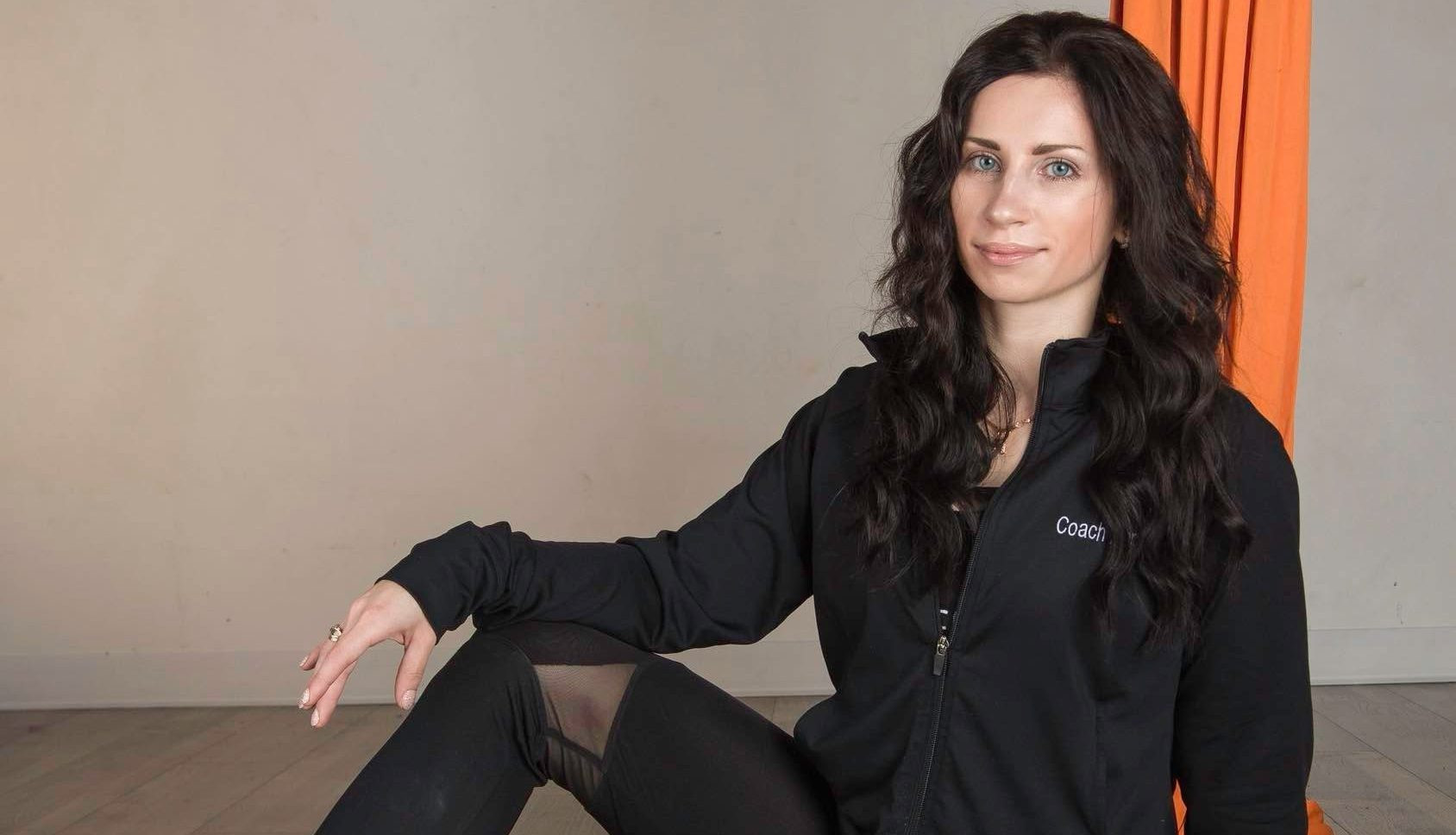
RAPID CITY, S.D. — When Anna Starenkova came to the United States from Ukraine about a decade ago, she didn’t know exactly what the next chapter of her life would look like.
She had a plane ticket, very little money and plenty of ambition. She also had an idea of the American dream.
What she couldn’t have known then was that her journey would eventually bring her to Rapid City, where she would help build an aerial community, teach the next generation of performers, create a competition attracting athletes to the Black Hills and become part of an ambitious effort to transform the former Northgate Theater into a new community event center.
“I think my ‘why’ has changed over the years,” Starenkova said. “When I was younger and starting over as an immigrant, I was constantly looking for opportunities — opportunities to work, to live, to create, to prove myself and to become somebody.”
Today, she sees things differently.
“I don’t want to spend my whole life searching for opportunities,” she said. “I want to create them.”
Finding a language without words
Long before aerial arts became part of her life, Starenkova was already performing. Growing up in Ukraine, she competed in rhythmic gymnastics and remembers participating in talent contests as early as kindergarten. Performing continued through her college years, though she never necessarily envisioned it becoming such an important part of her life.
“Performing was never necessarily the goal,” Starenkova said. “It just happened to be part of my life, in one form or another, for as long as I can remember.”
After immigrating to the United States, she discovered aerial arts. She was hooked.
“Aerial gave me a way to be strong and vulnerable at the same time,” she said. “Performing became the creative outlet I was searching for while I was pursuing all of the goals of building a new life in a new country. It became a form of self-expression.”
For Starenkova, that expression also connects to another important part of her life: communication. She grew up speaking multiple languages and eventually earned a degree in linguistics, translation and interpreting. Yet some of the most powerful communication she has experienced requires no words at all.
“One of the most beautiful things about performing is that art doesn’t really need a language,” she said.
Movement became its own universal language. Performing for children has been particularly memorable. Starenkova said young audiences can look at a performer with complete wonder, as though they are watching a real-life Disney princess.
“For a few minutes, you get to make someone believe in a little bit of magic,” she said.
Starting over
Coming to America required Starenkova to leave behind the familiarity of Ukraine and begin again thousands of miles from her family. She arrived about 10 years ago with little money and no guarantee of what would happen next.
“Building a life in a new country as an immigrant isn’t easy, especially when you’re doing it without your family nearby,” she said. “It humbles you. It pushes you far outside your comfort zone, and it forces you to become resilient.”
Fortunately, she jokes, resilience might have already been in her blood. What ultimately made Rapid City home wasn’t a building or geographical location. It was people. Starenkova met Breawna Schwartz Ventura, now one of her business partners, and began teaching aerial in Rapid City in 2018. She was given an opportunity to prove herself as a coach and leader. Along the way came friendships, business opportunities and a growing community surrounding aerial arts.
“You know you’ve found a place of belonging when you begin realizing that what you’re building matters to other people too,” she said.
Sometimes that realization comes through seemingly small moments. Starenkova has heard from parents who felt better about moving to Rapid City after discovering an aerial studio and community existed for their child. She has watched clients rearrange work commitments because they didn’t want to leave what had become their “circus family.”
Ukraine remains a defining part of Starenkova’s identity. But the Black Hills became the place where she could build.
“I’m originally from Ukraine, and that will always be an enormous part of who I am,” she said. “But Rapid City is the place that gave me the opportunity to build something.”
Teaching people how to fail
These days, Starenkova isn’t only the person in the air. She’s the one encouraging someone else to get there. At Live It Up Studio, one of her favorite experiences is watching students accomplish something they were convinced they couldn’t do.
“The number of rolled eyes and ‘You want me to do WHAT?’ looks I receive is incredible, and I love every second of it,” she said.
It doesn’t matter whether the student is a child or an adult. Watching someone break through a barrier is special because Starenkova knows that feeling herself. She wasn’t the naturally gifted athlete who walked into a room and immediately stood out. She was the one who kept trying. And trying. And trying again. That has shaped her philosophy as a coach. Technique, strength and artistry matter, but Starenkova believes some of the most important lessons taught inside Live It Up Studio have nothing to do with aerial skills.
“I want our students to learn how to fail and try again,” she said. “I want them to understand that being uncomfortable doesn’t mean they’re incapable. I want them to support the person next to them instead of constantly comparing themselves.”
Most importantly, she wants them to discover their individuality. Aerial can change a person’s perception of what is possible, Starenkova said. Someone can walk into the studio, look at a silk hanging from the ceiling and immediately decide there is no chance they could ever climb it. Then one day, they do. Once someone proves themselves wrong about one perceived limitation, another question emerges: What else have they convinced themselves they can’t do?
“Confidence doesn’t necessarily mean becoming the loudest person in the room,” Starenkova said. “Sometimes confidence is simply being willing to try.”
Building the Black Hills Aerial Cup
In 2021, the performing arts community needed something to look forward to. COVID-19 had put performances, events and much of everyday life on pause. Starenkova wanted to create something different.
The result was the Black Hills Aerial Cup. The idea combined her current passion with experiences from her childhood in Ukraine, where rhythmic gymnastics competitions created some of her favorite memories while teaching lessons about discipline, friendship, winning and losing. At the time, aerial competitions were relatively new to the region. Starenkova pitched the idea to Schwartz Ventura.
What started as an idea has grown into an event for which athletes now spend months training before traveling to the Black Hills. Perhaps most impressive to Starenkova is who participates. Competitors have ranged from 5 years old to 76.
“I think that says everything about this art form,” she said. “There really isn’t one age, body type or background that defines an aerialist.”
Watching the Cup grow can still feel surreal. What was once a crazy idea now gives athletes a goal, creates memories and brings the aerial community together. And Starenkova isn’t finished creating.
Opening The Gate
Her next project might be the biggest yet. Starenkova, Schwartz Ventura and Trinity Conrad are behind The Gate Event Center, which is being developed inside Rapid City’s former Northgate Theater. For Starenkova, it is a natural continuation of years spent producing shows, running a studio, organizing events and working with venues. Those experiences have also shown the partners what performers, businesses, producers and event organizers actually need from a space.
The vision for The Gate isn’t simply another building people can rent. They want a hub.
“The Gate feels like a natural continuation of everything we’ve been building for years,” Starenkova said.
That doesn’t mean the scope of the project isn’t occasionally intimidating.
“It’s definitely one of those projects where you occasionally stand in the middle of the building, look around and think, ‘What exactly did we get ourselves into?’” she said.
The large, flexible facility is envisioned as a home for creative arts and performances, weddings, concerts, corporate events, classes, community gatherings and projects that may not fit neatly into one category. Those events might look completely different from one another.
They share one basic requirement. They need somewhere to happen.
“That’s what we want The Gate to become,” Starenkova said.
Creating the opportunity
There is a common thread connecting the young girl competing in rhythmic gymnastics in Ukraine, the immigrant arriving in America, the aerialist, the teacher, the Black Hills Aerial Cup and now The Gate. It is opportunity. At first, Starenkova needed someone to give her one. Now she wants to create opportunities for somebody else.
“I want to create the kinds of places where other people could walk in and find an opportunity, a connection, a stage, a friendship, a passion, a smile,” she said. “A place where everything is possible.”
She understands how much those opportunities can matter because she remembers what it was like to start over. There have been failures along the way. There have been crazy ideas and difficult moments when quitting would have been easier. Perhaps those experiences are precisely why she continues building.
Starenkova came to America searching for a chance to create a life. A decade later, she hopes part of her legacy in the Black Hills will be making sure the next person doesn’t have to search quite as hard for their own opportunity.
“If my impact on Rapid City and the Black Hills is anything,” Starenkova said, “I hope it’s that there are more doors open because we were here.”