
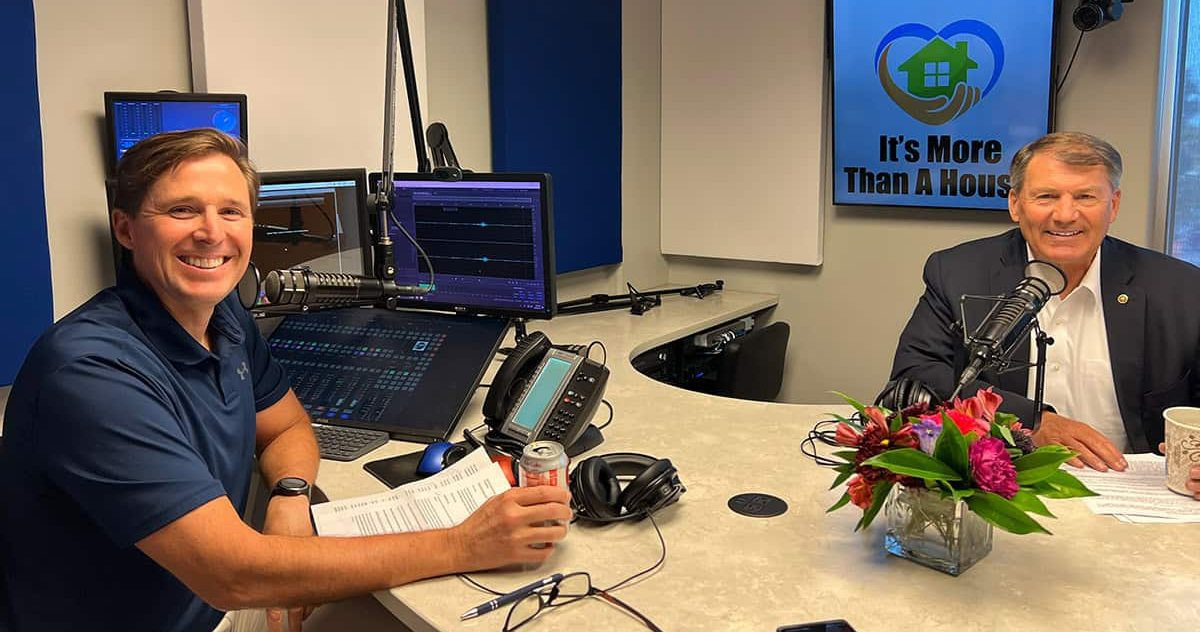
After more than two decades leading Black Hills Area Habitat for Humanity, Scott Engmann isn’t measuring success by the number of houses built. He’s measuring it by the lives changed, the people empowered, and the community that came together to make it all possible.
As Engmann prepares to transition from Executive Director to Executive Director Emeritus, he leaves behind a remarkable legacy that stretches far beyond construction sites. During his tenure, Black Hills Area Habitat for Humanity helped provide housing opportunities for hundreds of individuals and families, expanded its mission through the ReStore social enterprises, transformed the historic Garfield School campus, and laid the groundwork for East Creek Village, a neighborhood that will continue creating affordable homeownership opportunities for generations to come. Ask Engmann what he’s most proud of, however, and he doesn’t begin with projects or statistics.
“I’ve been able to work with incredible people,” he said. “Over the years our team has changed many times, but every person brought unique gifts during the season they served. Looking back, it’s like watching all of those talents weave together into something beautiful that has impacted hundreds of families.”
That perspective has defined Engmann’s leadership from the very beginning.
His Habitat journey began in 1994 after graduating from college, when a desire to better understand poverty, housing, and opportunity led him to volunteer with Habitat for Humanity in Chicago. He arrived with little construction experience, but found mentors willing to teach him everything from using power tools to building homes alongside families seeking a better future. Those early lessons stayed with him throughout his career.
Years later, while serving as a pastor in London, England, Engmann led a group of students to Budapest, Hungary, where they partnered with Habitat families rebuilding their lives in a post-Soviet economy. Watching both the homeowners and the students transform through service reinforced something he still believes today: helping others changes everyone involved.
When the opportunity arose to lead Black Hills Area Habitat for Humanity in 2006, Engmann embraced what he calls “the opportunity of a lifetime.”
At the time, the organization was small, operating from a modest office with a handful of staff members and a passionate board of directors. Every day presented new challenges. Fundraising, recruiting volunteers, working on construction sites, reviewing house plans, meeting with partner families, and finding ways to keep the mission moving forward often happened all at once.
“It felt like drinking from a fire hose,” Engmann recalled.
Yet those early years laid the foundation for what Habitat would eventually become.
Over the next twenty years, the organization expanded its reach across western South Dakota while continually searching for new ways to address one of the region’s most pressing issues: affordable housing. The launch of ReStore locations created sustainable funding while keeping usable materials out of landfills. Neighborhood revitalization projects like Garfield Green proved that preserving community spaces could be just as important as building new ones. Healthy Homes initiatives transformed unsafe living conditions into places where families could thrive.
Through every new initiative, Engmann says one truth remained constant.
“Habitat is about so much more than building houses.”
Two families, in particular, continue to remind him why the work matters.
One was during the height of the COVID-19 pandemic. Visiting a Habitat family, he watched children attending school remotely from their own bedrooms while their parents pursued college degrees online. In a season when so much of the world felt uncertain, that home had become a place of peace, stability, and opportunity.
The second story remains one of the most inspiring of his career.
A former Habitat homeowner who had once battled severe alcoholism and homelessness was honored during a ceremony at Ellsworth Air Force Base. Years earlier, the man had shared three goals with Engmann: to grow in his faith, become a homeowner, and earn his CPA. He accomplished all three. After purchasing his Habitat home, he completed his education and eventually became an accountant working in finance at Ellsworth Air Force Base.
“From literally living in cardboard boxes on the street to becoming a homeowner and a professional,” Engmann said. “That’s why we build. We look for people who want an opportunity, who are willing to work for their dreams, and who simply need someone to believe in them.”
Those stories continue to shape how Engmann views the Black Hills community.
“I hope we remember that we’re only as strong as our weakest link,” he said. “The health of a community can be measured by how it treats its most vulnerable neighbors.”
He hopes future generations continue dreaming alongside one another while investing in people who might otherwise be overlooked. He also believes experienced community leaders have a responsibility to pass along their wisdom, helping prepare the next generation to tackle the challenges ahead.
Although he’s stepping away from the day-to-day responsibilities of leading Habitat, Engmann insists he’s not stepping away from the mission. As Executive Director Emeritus, he’ll help guide leadership through the completion of East Creek Village while mentoring nonprofit leaders and launching a consulting practice focused on leadership development and organizational strategy. Beyond the Black Hills, he and his wife also plan to expand their work with Habitat for Humanity internationally, including leading Global Village build teams beginning with a trip to Brazil in 2027.
As he reflects on the past twenty years, Engmann’s final message is simple.
“Thank you. Thank you. Thank you.”
He credits volunteers, donors, board members, business leaders, churches, tradespeople, partner organizations, and Habitat families for making every success possible.
“They gave far more than they ever received because they believed in a future worth building together.”
For those hoping to make a difference in their own communities, Engmann offers equally simple advice.
“Remember who you are and why you’re here. Find something you care deeply about, something that aligns with your values and makes the world better. Then pursue it with everything you’ve got.”
For more than twenty years, Scott Engmann did exactly that.
The result isn’t simply hundreds of homes across the Black Hills. It’s a stronger community, countless second chances, and a legacy built one family, one volunteer, and one act of hope at a time.
Local Spotlight is a new feature from the Rapid City Post dedicated to celebrating the people who make the Black Hills special. Every community has individuals who quietly make a difference through their work, their passion or their service to others. Whether they’re building a business, giving back, creating opportunities or simply making our communities better, we believe those stories deserve to be told. If you know someone making a positive impact in western South Dakota, Please email localspotlight@rapidcitypost.com, we’d love to share their story.


