
By Mitchell “Stitch” Stafford
Some people enter a room and notice who is talking the loudest.
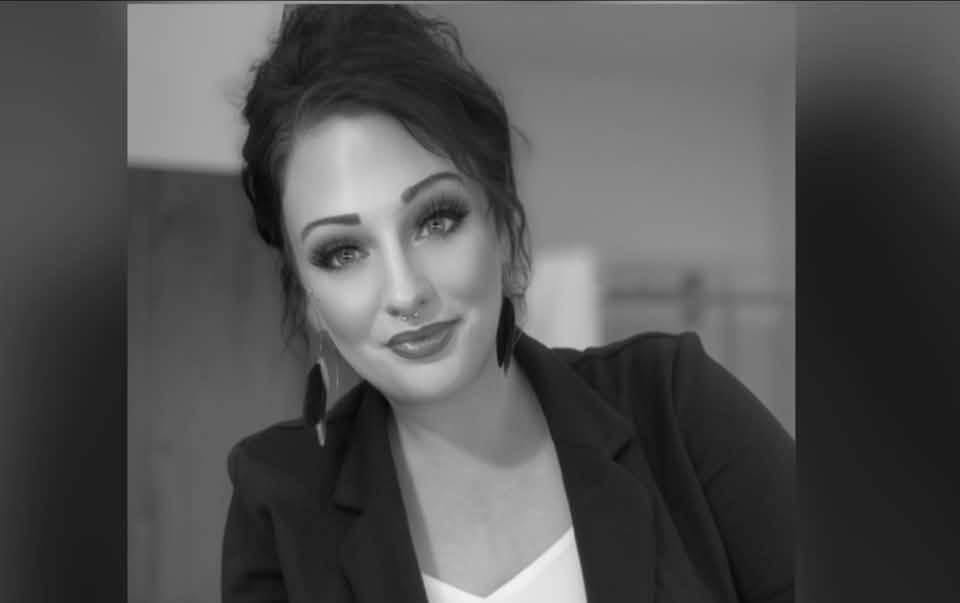
Tayler McCarty notices who is hurting.
She says that has been true for as long as she can remember. Before she understood the word empathy, she felt it. She could sense when something was wrong, even when the person in front of her insisted everything was fine.
“I have always felt things intensely,” McCarty said. “I could walk into a room and know when something was off.”
For much of her younger life, that sensitivity did not feel like a gift. Feeling everything so deeply could be beautiful, but it could also be exhausting and painful.
“For a long time, though, I think that sensitivity felt more like a burden than a gift,” she said.
Over time, the part of herself that once felt overwhelming became one of the qualities that would define her work, her motherhood and her advocacy. Today, McCarty is a mother, survivor, small business owner, mental health advocate and the LOSS Team Program Director for Journey On, a nonprofit organization providing street outreach, suicide loss support and youth mentorship. She also uses another word to describe herself: heartworker. The term reflects a life shaped by both tremendous difficulty and an equally powerful desire to be present for others. McCarty has experienced addiction, houselessness, suicide attempts, pregnancy loss, broken relationships and grief. She has lost two best friends to suicide.
“There have been seasons of my life when I wasn’t thinking about becoming the woman I wanted to be,” she said. “I was simply trying to survive long enough to meet her.”
Yet McCarty does not view those experiences as the sum of her identity. They are pieces of her story. Motherhood is another major piece. Her daughters, she said, have forced her to grow, examine her own patterns, admit when she is wrong and become more intentional about the kind of woman she wants to be.
“I want them to understand that strength does not mean never struggling,” McCarty said. “Strength can be soft. It can be compassionate. It can mean having boundaries, using your voice, admitting when you’re wrong, asking for help and standing back up when life knocks you down.”
Music has also been a steady presence in her life. It has given language to emotions she could not always explain and carried her through both joyful and painful seasons. She finds grounding in creativity and in the outdoors as well, particularly in the Black Hills, where she is reminded that beauty can exist alongside suffering. And when McCarty calls herself a survivor, she is not referring to one single event.
“It represents every version of myself I have had to fight for along the way,” she said.
That lived experience eventually became the foundation of her advocacy. McCarty’s connection to suicide prevention began when she was only 13. She and a close friend were standing at the Central States Fairgrounds when they made a suicide pact. McCarty remembers it as a conversation between two kids who did not fully understand the weight of what they were saying. Days later, her friend contacted her through Bebo, a social media platform from the Myspace era, and said she still intended to go through with the pact.
McCarty begged her to reconsider. She asked her to at least give high school a chance, even if only for a couple of days. Her friend agreed. Then, on McCarty’s first morning of high school, she received the call that her friend had died by suicide.
“The guilt and regret nearly froze me in place,” McCarty said. “She was gone, and I was still here.”
The survivor guilt that followed became a significant part of her teenage years and later contributed to McCarty’s own suicide attempt at 16. But another important development followed that loss. A school counselor brought together eight students who were struggling with their friend’s death. Once a week, they met in a safe environment where they could talk honestly, grieve and support one another. Eventually, the counselor trusted the students to help present the school’s suicide-prevention program to freshman and junior classes at Central High School. They continued doing those presentations until graduation. Only later did McCarty understand the significance of that experience.
“I believe that was when I first realized that helping people — especially through their darkest moments — was what filled my cup,” she said.
Even then, however, her desire to help others was tied to guilt. For years, McCarty carried the belief that if she could help enough people, save enough lives or support enough families, maybe she could somehow compensate for the friend she could not save. In 2025, that belief began to shift. While speaking with a Journey On board member who was helping her strengthen the LOSS Team program, McCarty heard something difficult but transformative. She would never be able to help enough people to bring her friend back.
“It was one of the most painful yet healing things anyone had ever said to me,” McCarty said.
For the first time, she began to see that her work did not have to be repayment for the past. It could simply be service.
“I cannot bring my friend back,” she said, “but I can use what I have lived through to help others feel less alone.”
That belief is at the center of what McCarty means when she describes herself as a heartworker.
“To me, being a heartworker means leading with compassion and being willing to sit beside someone in their pain without judging them, trying to fix them or rushing them toward healing,” she said.
Her own history shapes how she enters those moments. She understands addiction, houselessness, suicidal thoughts, suicide attempts and grief not only in theory, but through lived experience. She knows what it is like to be the person who is struggling and the person left behind after a suicide. Because of that, she is comfortable entering places many people instinctively want to avoid. She does not believe helping requires having all of the answers.
“It means listening, staying present, and sometimes holding hope for someone until they are strong enough to hold it for themselves.”
That philosophy becomes especially important in her role with Journey On’s LOSS Team. McCarty and her team may respond soon after a suicide, sometimes while law enforcement is still at the scene. Every situation is different. A family may need help notifying children, parents or other loved ones. McCarty may help a parent plan how to tell a child what happened and remain nearby as difficult questions follow. The team might contact a workplace or notify a school that a child will be absent because of a death. There may be biohazard cleanup to coordinate. Personal belongings may need to be retrieved. Families may need help understanding the condition of a scene or deciding which tasks require immediate attention and which can wait. When someone is in shock, even simple information can be difficult to retain.
“A person experiencing shock can retain very little information,” McCarty said. “So in those moments, we become their advocate, their eyes and ears when they cannot fully process what is happening around them.”
Sometimes there is nothing practical to organize. Sometimes the need is simply human. A survivor may have just seen their loved one for the last time. Someone may collapse under the weight of the moment. The most important thing McCarty can offer may be a steady presence and the knowledge that they are not alone.
“Walking into someone’s life immediately after a suicide is incredibly humbling,” she said.
The LOSS Team does not pretend it can erase grief or make an unbearable situation painless.
“We do not arrive expecting to fix their pain, because we cannot,” McCarty said. “We meet survivors exactly where they are.”
The goal is to bring a small amount of stability to a moment that feels completely destabilizing.
“Our goal is not to rush survivors through their grief or tell them how they should feel,” McCarty said. “It is to offer calm in the middle of chaos, hope without forcing it, and the reassurance that support will still be there after law enforcement leaves and everyone else goes home.”
That kind of work has a cost. McCarty is open about the fact that she is still learning how to carry the emotional weight without allowing it to consume her.
“I don’t believe you can sit with people during the most devastating moments of their lives and walk away completely untouched,” she said. “And I’m not sure I would want to.”
Her compassion is part of what allows her to do the work well, but she has learned that compassion also needs boundaries. She can walk beside another person without taking all of that person’s pain home as her own. Her daughters help her maintain that perspective. Motherhood pulls her back into ordinary moments: laughter, play, presence and the reminder that grief and joy can exist in the same life. She also turns to music, crafting, rock hunting and time outside in the Black Hills. Just as important are the people who allow her to step out of her professional roles and simply be Tayler. Those relationships have taught her something else: the person caring for everyone else also needs care.
“I have learned that even the person who is usually holding everyone else together deserves a safe place to fall apart,” she said.
McCarty also wants people to become more comfortable talking honestly about suicide and mental health. She believes one of the biggest misunderstandings is assuming that a suicidal person necessarily wants life itself to end.
“I wish people understood that suicide is rarely about someone wanting to die,” she said. “More often, it is about desperately wanting unbearable pain to stop and being unable to see another way out.”
What helps, she said, is not judgment, shame or attempts to immediately fix the situation. People need to feel safe enough to tell the truth. McCarty also stresses that directly asking someone whether they are thinking about suicide does not create the idea. Instead, the question may give that person permission to speak openly about something they are already experiencing.
She hopes people will also grow in their understanding of suicide loss. The grief can carry trauma, guilt, anger, stigma, unanswered questions and relentless “what ifs.” And it does not end when the funeral does. Birthdays, anniversaries, holidays and everyday memories can remain painful long after others have stopped checking in.
“We do not need perfect words or all the answers,” McCarty said. “We need to listen without interrupting, judging, comparing or rushing someone toward healing.”
Sometimes the most meaningful response is simple.
“I am here. I believe you. You matter to me, and you do not have to carry this alone.”
For McCarty, the clearest reminders of why this work matters often come later. A survivor may tell her months afterward that they do not know how they would have made it through that first night without the LOSS Team. She may watch someone enter a support group convinced nobody else understands, then slowly form connections with people carrying similar grief. McCarty once taught an eight-week class where complete strangers were united by loss. By the end, the bond among the group had grown so strong that participants decided to continue meeting weekly after the class was over. Those moments have reshaped McCarty’s understanding of what it means to make a difference.
“This work has taught me that making a difference does not always mean fixing something,” she said. “Often, it means sitting beside someone in the darkness until they can see even the smallest glimpse of light again.”
Healing can appear in small ways. Someone laughs again without guilt. A survivor says their loved one’s name. A person who once needed support becomes capable of offering it to someone else.
“Hope after suicide loss does not erase the grief,” McCarty said. “But it proves that grief and healing can exist together.”
Now McCarty is thinking about how that work can grow. One of her largest professional goals is to see every county in South Dakota covered by a LOSS Team so families throughout the state have support after a suicide. She recently created a LOSS Team volunteer training curriculum from scratch. She also developed Compassion in Action, a curriculum designed to help people learn how to support someone after a suicide loss. McCarty does not want that knowledge to belong only to trained professionals.
Friends, coworkers, neighbors, teachers and other community members can learn how to sit with grief, listen without judgment and offer meaningful support. That matters because people impacted by suicide loss can themselves face increased risk of suicidal thoughts. For McCarty, that is why one phrase carries so much weight: Postvention is prevention.
“When survivors receive compassionate, informed and consistent support after a loss, we are not only helping them survive an unimaginable moment,” she said. “We may also be helping prevent another tragedy.”
Her goals are personal, too. McCarty wants to keep healing, keep growing and keep becoming the kind of woman and mother her daughters can be proud of. She wants them to understand that a difficult chapter does not have to define the ending.
“Our hardest experiences do not have to be the end of our stories,” McCarty said. “They can become part of the reason we choose to create something meaningful.”
When she thinks about how she hopes to be remembered in the Black Hills, McCarty does not talk about recognition or having all the answers. She talks about presence. About compassion. About creating a place where people can speak openly about suicide and grief without shame.
“I simply hope I am remembered as someone who showed up, loved people well, and helped build a community where no one had to walk through suicide loss alone,” McCarty said.
If that legacy can be measured at all, she hopes it is measured in the people who felt seen, the people who found support, and the people who chose to keep going.


