
By: Mitchell “Stitch” Stafford
RAPID CITY, S.D. — For John Cass, building a stronger community begins with something deceptively simple: listening.
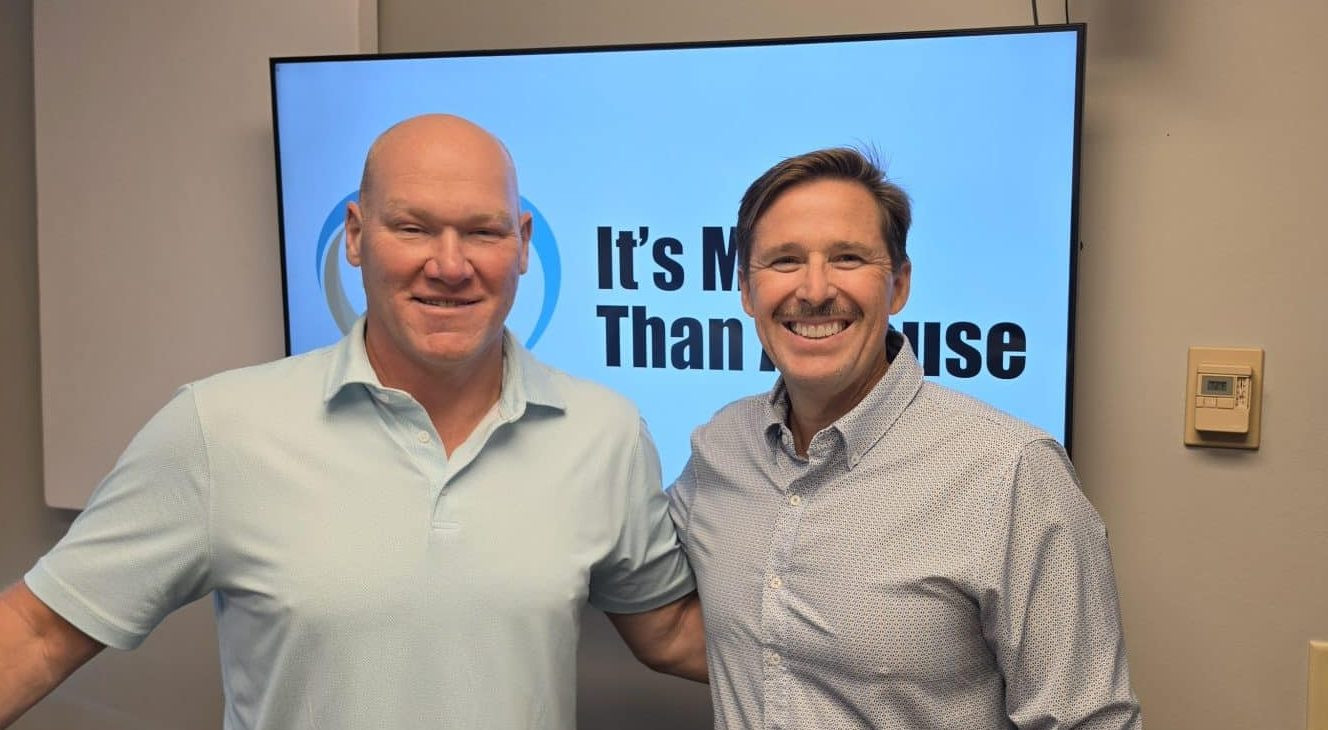
Cass, executive director of United Way of the Black Hills, joined Black Hills Area Habitat for Humanity Executive Director Scott Engman for the latest episode of “It’s More Than a House,” where the two discussed leadership, trust, collaboration and what it takes to create meaningful change across the Black Hills.
The conversation is part of the podcast’s second season, centered on the theme of abundance, looking beyond scarcity to the community, opportunity, generosity and purpose that already exist around us.
Cass’ perspective has been shaped by a leadership journey that has taken him far beyond western South Dakota. Before joining United Way of the Black Hills, Cass spent nearly 25 years with the Billy Graham Evangelistic Association and also served in the military, including during Desert Storm. His work eventually took him to 44 countries across six continents.
Through those experiences, Cass said he discovered that despite differences in language, culture and geography, people often share many of the same fundamental needs.
“You really have to stop and listen and hear what their heart’s saying,” Cass said. “But you start finding a lot of people have the very same needs, regardless of where you’re at anywhere in the world.”
That lesson now guides his work in the Black Hills. Rather than entering a community believing he already has the answers, Cass said leadership requires conversations with the people who understand its challenges firsthand.
But listening alone isn’t enough.
“We can talk a lot and never do anything,” Cass said. “So it becomes, let’s talk, but yet let’s take a step. Let’s take a chance. Let’s reach out and figure out, can we do something together?”
Breaking Down the Silos
One of the biggest opportunities Cass sees in the nonprofit sector is increased collaboration. Communities need nonprofits to fill gaps that government and businesses cannot always address, he said. But organizations can also fall into silos, sometimes creating separate programs or even new nonprofits to address problems that others are already working to solve.
That can divide more than financial resources. It can also divide talent, leadership and attention.
Cass encouraged people considering starting a nonprofit to first research what already exists and begin conversations with organizations doing similar work. Sometimes the greatest impact may come not from creating something new, but from strengthening something already working. That philosophy also means nonprofits must be willing to evaluate their own programs.
“What can we stop doing and what can we start doing?” Cass said.
He pointed to the large number of nonprofit fundraising events held throughout the Black Hills each fall as one example. Instead of repeatedly asking the same businesses, sponsors and donors to support separate events, Cass said organizations should be willing to explore what collaboration could look like. The same principle could apply to programs and even organizations themselves.
“Can we combine some of our organizations?” Cass asked. “Is it time to sunset that program? Is it time to combine our programs?”
The goal, he said, should always be impact rather than simply maintaining an organization because it exists.
Trust Starts With Accountability
Collaboration, however, requires trust. Cass believes that trust begins with accountability, particularly from leaders. Mistakes are inevitable. Cass said healthy organizations give people opportunities to fail, learn and recover. What matters is whether leaders and team members take ownership when something goes wrong.
“Do I own that mistake?” Cass said. “Did I make that mistake? Am I blaming that on somebody else?”
For leaders, that accountability extends to the entire team. If the team fails, Cass said the leader should own it. If the team succeeds, the credit belongs to the team. Trust also grows when people are willing to sit across from one another and have real conversations, particularly when they disagree. Cass said technology and social media have made it easier to communicate without actually building relationships.
Face-to-face conversations create something different.
“You can agree to disagree and keep going and do great things together,” Cass said.
At the center of that approach is remembering the person across the table has their own experiences, struggles and story.
“That’s a human being sitting across from you that has a life story,” Cass said.
Developing the Next Generation
Cass also believes successful leadership should never be measured solely by what happens while a leader is in charge. A leader should be preparing others to eventually take their place. When Cass arrived at United Way of the Black Hills, he said he immediately began thinking about who could one day become the organization’s next executive director.
“I want people that want my job,” Cass said. “And I want them to actively say, ‘I want your job.’ Because if they say that to me, then I’m going to start investing in them a little bit more.”
That investment extends beyond United Way.
Cass has helped develop training opportunities designed to build a pipeline of stronger nonprofit board members throughout the Black Hills. Instead of boards made up simply of people willing to donate or attach their names to an organization, Cass wants board members prepared to ask difficult questions about impact, return on investment and long-term direction.
For Cass, developing those leaders is part of leaving something behind that extends beyond any single person.
A Common Language for the Black Hills
After years of listening to nonprofit leaders, business owners, elected officials and community members, Cass believes one of the next major opportunities for South Dakota is developing a shared understanding of the challenges facing working families.
United Way is helping bring ALICE data to South Dakota.
ALICE stands for Asset Limited, Income Constrained, Employed and focuses on people who are working but earning above the traditional poverty threshold while still struggling to afford basic necessities. Cass said the data can help communities move beyond anecdotes and toward a common set of information that government officials, nonprofits, businesses and community leaders can use when discussing needs.
“We have one data set that we can actually go to,” Cass said. “The first and foremost belief that we get out of this, or what I’m believing we’re going to have out of this, is we’re going to start with a common language.”
From there, the question becomes who needs to be at the table and what can be done together. That idea ran throughout Cass and Engman’s conversation.
The Black Hills has generous donors, dedicated nonprofit organizations, business leaders, elected officials, volunteers and residents who care deeply about where they live. Cass believes the opportunity is finding better ways to connect those pieces.
His advice to his younger self captures much of the philosophy he now brings to that work.
“It’s not all about you,” Cass said. “How do I help others get further along?”
For Cass, that may ultimately be what abundance looks like: recognizing that a community’s greatest resource isn’t any one organization, program or leader.
It is what people can accomplish when they listen to one another, trust one another and decide to work together.
More than a House is produced by the Rapid City Post’s Parent Company “The HomeSlice Group.” and is Sponsored by Courtesy Subaru. You can listen to More than a House anywhere you get your podcasts or follow this link here. https://shows.acast.com/its-more-than-a-house


