
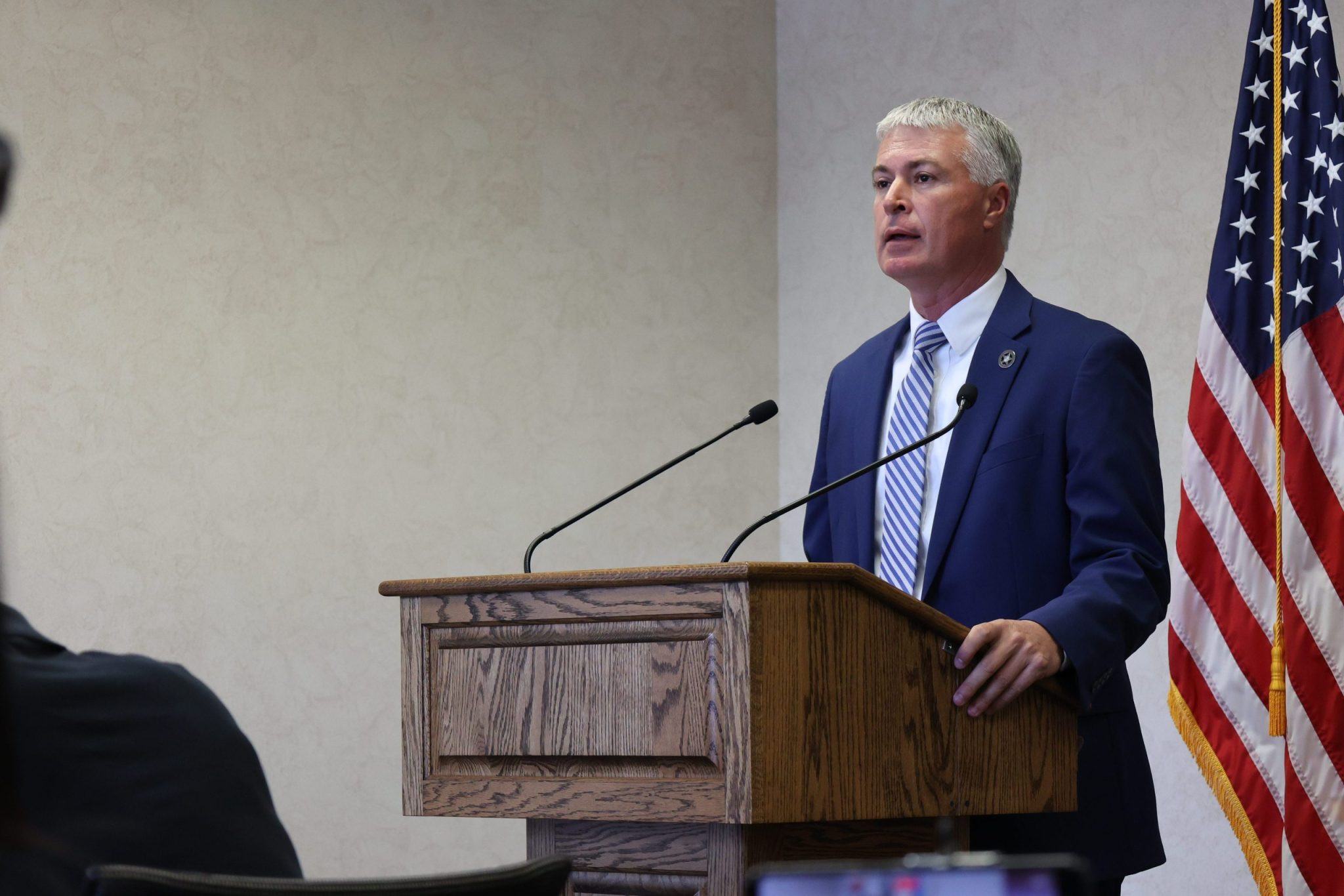
PIERRE, S.D. – All 10 legislative bills proposed by South Dakota Attorney General Marty Jackley during the 2026 legislative session will officially become law on Wednesday, July 1, bringing statutory changes that will impact residents from Pierre to Rapid City.
The new measures, which target online predators, illegal drugs, and government transparency, received broad approval from state legislators during the winter session and were signed into law by Gov. Larry Rhoden.
“These bills protect our citizens from online predators, scammers, and illegal drugs, while they strengthen transparency within state government,” Jackley said. “Thank you to all who testified on behalf of these bills and the support we received from legislators and the Governor.”
Rhoden also expressed strong support for the legislative package.
“In South Dakota, we protect our people, and we stand for what’s right,” Rhoden said. “I am grateful for Attorney General Jackley’s efforts to promote public safety, and I was proud to sign these important pieces of legislation into law.”
The 10 new laws cover a wide array of criminal justice, digital privacy, and open government regulations.
Campaign finance receives stricter oversight under Senate Bill 17, which prohibits a candidate or political committee from accepting contributions or loans made by a foreign national. The measure passed unanimously through both the House and Senate.
Two bills directly address modern digital threats and technology. Senate Bill 41 revises provisions related to criminal invasions of privacy, specifically prohibiting the creation and distribution of digitally fabricated material of an identifiable individual and establishing penalties for violations. Meanwhile, Senate Bill 43 updates state search and seizure provisions so they are applicable to digital currency.
Public safety and drug enforcement are also central to the new statutes. Senate Bill 42 enhances the penalties for the ingestion, possession with intent to deliver, and delivery of a controlled substance within a state correctional facility.
For families and communities like Rapid City, Senate Bill 45 revises provisions regulating delta-8 tetrahydrocannabinol, THC-O acetate, and hexahydrocannabinol for persons under the age of 21, establishing a penalty for non-compliance.
To aid law enforcement in financial and corporate investigations, Senate Bill 44 establishes investigative subpoena authority to gather business records in certain ongoing investigations.
Three of the new laws focus heavily on government transparency and the enforcement of the state’s open meetings laws. Senate Bill 46 modifies the requirements for open meeting agendas and provides a penalty for violations, while Senate Bill 47 revises the requirements for holding executive sessions and closed meetings. Additionally, Senate Bill 48 clarifies that an official open meeting agenda must be posted online at least 72 hours before the scheduled start of the meeting.
Finally, consumer privacy receives a boost under Senate Bill 49, which safeguards the integrity, privacy, and security of personal genetic data and provides a civil penalty for unauthorized use or disclosure.


