
Rapid City, S.D. – For many people living with heart valve disease, the first symptoms arrive quietly. A walk becomes harder. Climbing stairs leaves you winded. Over time, those changes can feel like a normal part of getting older.
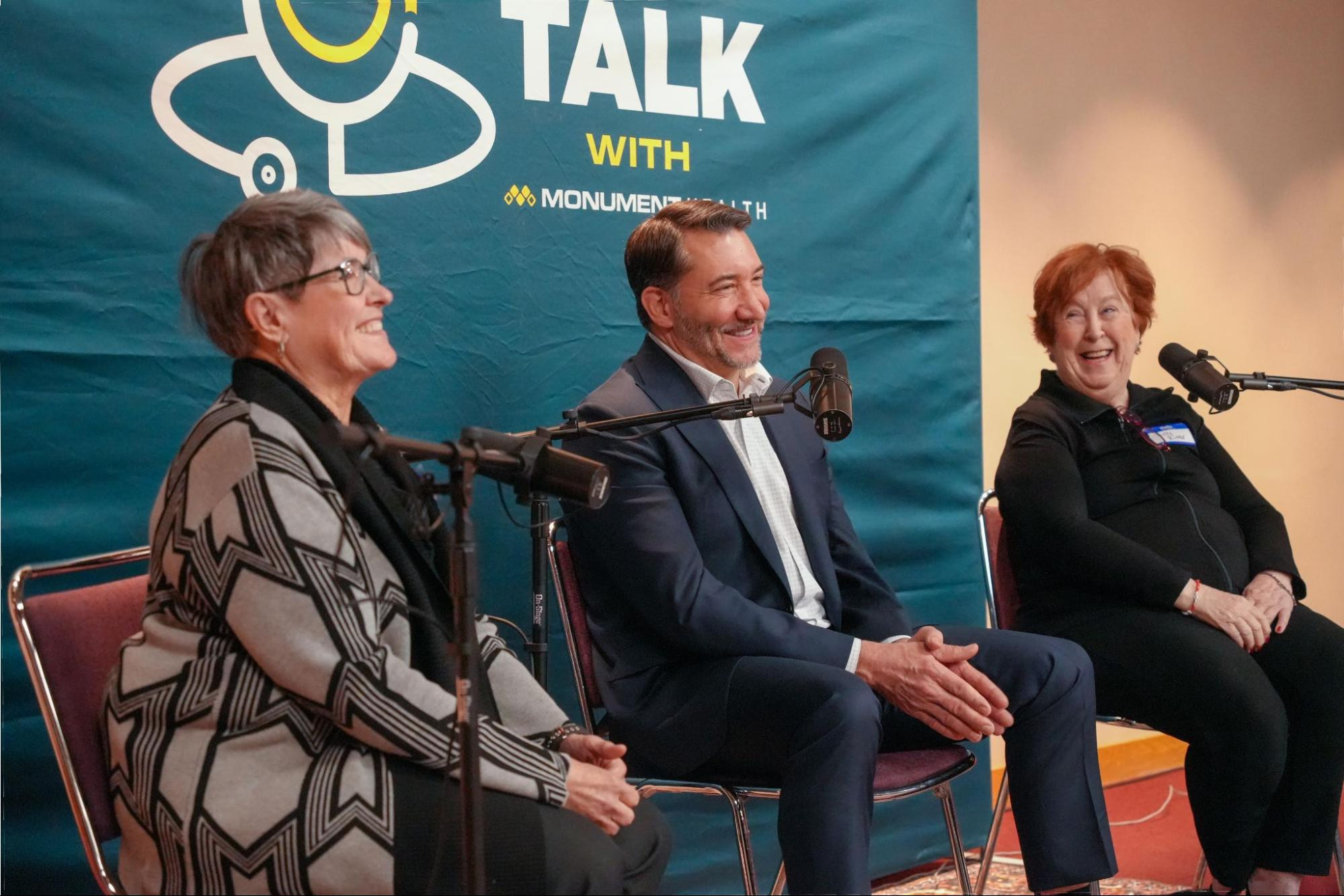
At a recent Valve Disease Awareness Day event in Rapid City, patients and physicians gathered to talk about what those symptoms really mean and how treatment can change lives.
The event, held at the Monument, featured a roundtable discussion led by Dr. Joseph Tuma, an interventional cardiologist with Monument Health’s Heart and Vascular Institute. The conversation focused on transcatheter aortic valve replacement, known as TAVR, a minimally invasive procedure used to treat severe aortic valve disease.
For Dr. Tuma, the gathering also marked an important milestone for the local program.
“We’re coming up on TAVR number one thousand,” he told the audience. “It’s been a very successful program, and a lot of that has to do with the team around me.”
When Symptoms Sneak Up
One of the patients sharing her story was Darcy Oltmanns, who said the most surprising part of the experience was realizing how much better she felt after the procedure.
“I remember not knowing that I didn’t feel as bad as I did until after it was over,” Oltmanns said. “I could already feel better right after the surgery.”
Like many patients, she had adjusted to the gradual changes in her energy and mobility. Once the valve problem was treated, the difference was immediate.
“I thought the next day I’d take the dog for a walk,” she said with a laugh. “That was a little too soon.”
Oltmanns also described the care she experienced throughout the process.
“There were so many people involved in getting me ready,” she said. “It all went very smoothly, and I can’t say enough about how good the care was.”
A Routine Checkup That Changed Everything
Another patient, Kay Ryder, said her diagnosis began with what seemed like a small comment during a routine visit with her primary care doctor.
“I said, ‘Sometimes I feel like I get a pain right in the middle of my chest, like I’ve been shot with an arrow,’” Ryder recalled.
That remark led to an echocardiogram and the discovery that her heart valve needed treatment. Looking back, Ryder realized the condition had already been affecting her daily life.
“I couldn’t walk like I used to,” she said. “I would be tired right off the bat.”
After the procedure, she noticed the improvement almost immediately.
“I felt good right away,” Ryder said.
A Rare Complication and a Second Procedure
Although Ryder’s initial TAVR procedure was successful, she later experienced an unusual complication.
Dr. Tuma explained that in rare cases the replacement valve can shift position over time. That is what happened about a year after Ryder’s procedure, causing symptoms to return.
“There are very few reports of this happening,” he said.
To address the problem, Ryder was referred to Dr. Paul Sorajja, a nationally recognized valve specialist at Abbott Northwestern Hospital in Minnesota. The valve was successfully repaired.
Despite the unexpected setback, Ryder said the care she received locally stood out.
“The care I got here was absolutely superlative,” she said. “I cannot begin to tell you how well taken care of I was.”
A Team Effort Behind Every Procedure
While TAVR procedures receive much of the attention, Dr. Tuma said the success of the program depends on a large team of specialists working together.
Each patient is evaluated by cardiologists, surgeons, imaging experts, and advanced practice providers who review multiple tests before deciding on the best treatment plan.
“Every single patient gets seen by multiple members of the heart valve team,” Tuma said. “We take all the information and decide what’s the best thing for the patient.”
In some cases, that decision leads to traditional open-heart surgery rather than TAVR. The goal, he said, is always the same: choosing the treatment that offers the best outcome.
Recognizing the Signs
One of the most important messages from the discussion centered on recognizing symptoms early.
Heart valve disease often develops gradually, and patients frequently assume the fatigue or shortness of breath they feel is simply part of aging.
Dr. Tuma said he hears that explanation often.
“People will say, ‘I just thought I was getting older,’” he said. “The symptoms build up over such a long amount of time that you adapt to them.”
A heart murmur, which is often detectable during a routine exam, can be an early clue that prompts further testing.
Life After Treatment
For the patients who attended the event, the most powerful part of the conversation came when they described life after treatment.
Ryder said cardiac rehabilitation helped her build strength and confidence again.
“I’ve never gone to a gym before,” she said. “Now I go four days a week.”
For many people in the room, stories like that captured the purpose of the event. Heart valve disease may slowly take away everyday abilities, but modern treatments are helping patients reclaim them.
And sometimes they come back stronger than before.


