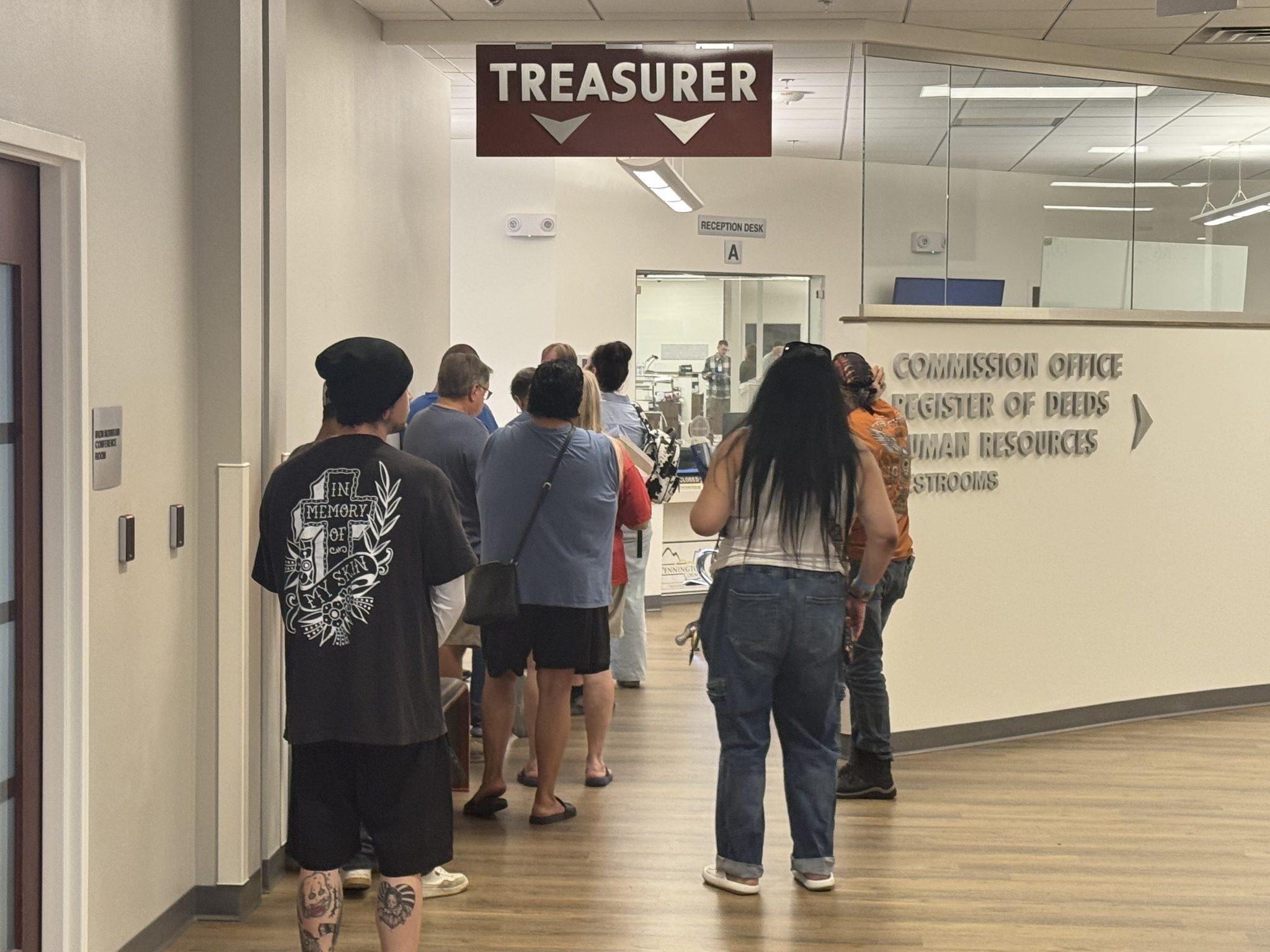
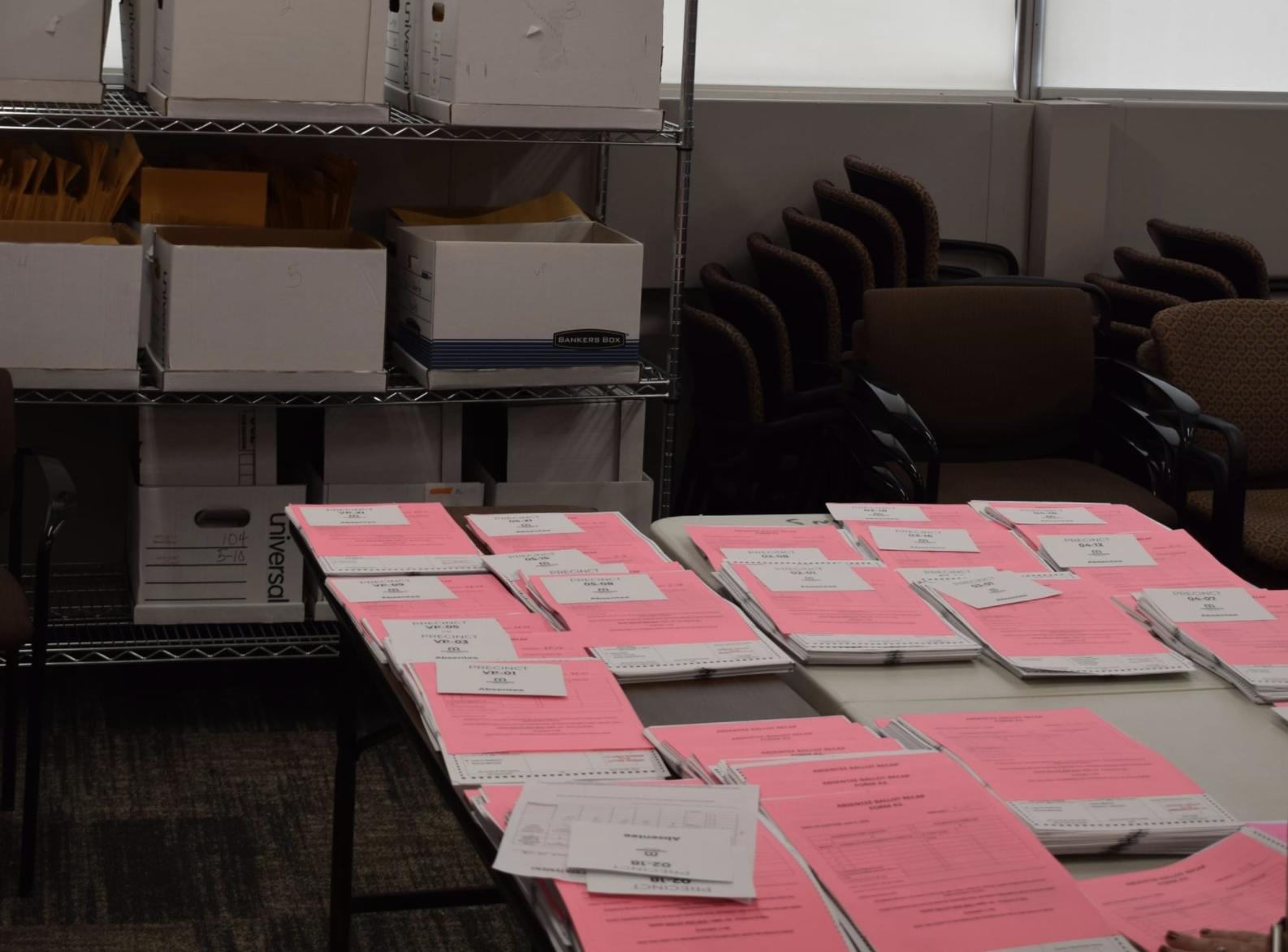
The number of South Dakota voters who cast absentee ballots instead of voting on Election Day jumped from 16% in 2016 to 58% in 2024, according to data from the South Dakota Secretary of State’s office.
That mirrors a national trend and also highlights the context behind a recently-settled federal fight over mail-in ballots: On Monday, the U.S. Supreme Court said President Donald Trump’s new executive order regarding mail-in ballots could not be implemented before the November general election. That executive order, among other rules, would require states to submit information for all registered mailing voters to the U.S. Postal Service.
Two federal judges blocked it before the Supreme Court also rejected it.
The ruling means that starting Friday, South Dakota voters may vote in person at their county auditor’s office or submit an absentee ballot for the Nov. 3 general election as usual.
That ballot includes choices for governor, U.S. House and Senate, four ballot measures, a slate of constitutional and statutory officers as well as legislative races and some local races.
Chris Mann, research director at the Center for Election Innovation and Research, told News Watch that South Dakota’s increase in early voters also reflects a shift in national voting habits.
The secretary of state’s office did not respond to multiple requests for comment.
Brookings County election official Jenna Baker told News Watch that her county has started to see “about half-and-half” early and Election Day voters, and more people choose to vote absentee every election year.
Baker said that while official ballots will be ready on Sept. 18, she expects most of those who show up on that day will come to collect sample ballots and other information without formally casting a vote.
South Dakota is one of a few states that restrict the processing of absentee ballots until right up to Election Day. Counties may begin processing absentee ballots the day before Election Day, but ballots cannot be counted until polls close.
Brookings County currently has 21,991 registered voters. It’s one of the more populous counties, but Baker said that even with an increase in absentee voters, processing times have not yet been an issue for her office.
She said that though the county has the option to do so earlier, it does not begin processing absentee ballots until Election Day, unlike larger counties like Minnehaha.
“On that Election Day, we start processing, getting them ready to be tabulated at 7 p.m. that night. So we don’t take advantage of that, but I mean, it’s there, if we ever wanted to switch over,” Baker said.
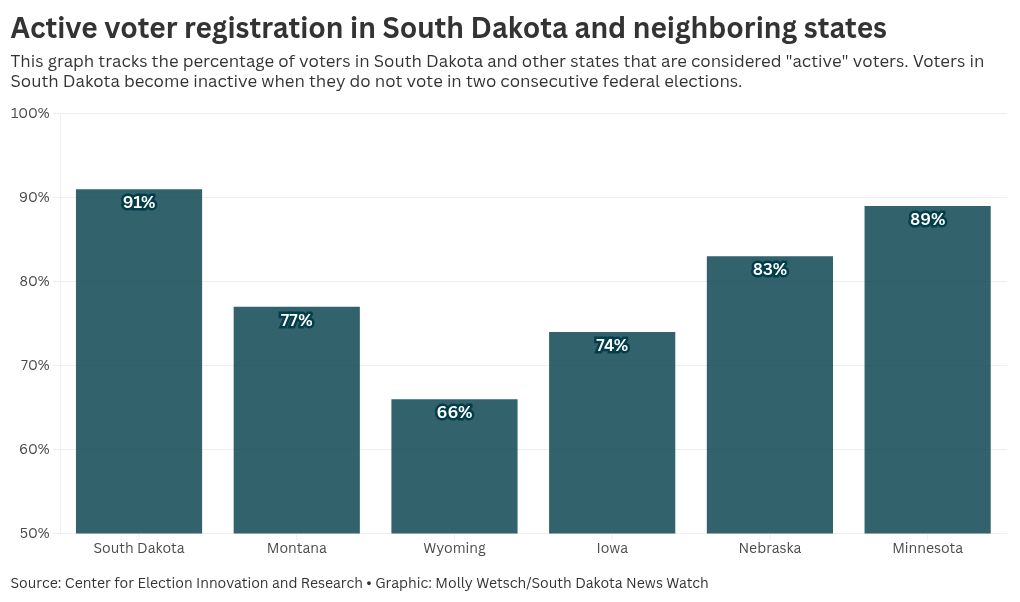
South Dakota also has a high number of “active” voters when compared to neighboring states. Voters become “inactive” in South Dakota when they do not cast a ballot in two consecutive federal elections.
In the state, 91% of registered voters are listed as active, compared to 66% in Wyoming, 74% in Iowa and 83% in Nebraska.
Baker said that ensuring voters are educated about what is required to stay active is an ongoing effort for her office.
“When you ask around, not a lot of people know what that means, inactive or active. People don’t realize, ‘If I don’t vote every so often, I’m just eventually gonna get removed.’ There’s so much that people don’t know.”
South Dakota Secretary of State Monae Johnson supported an amicus brief filed with the Supreme Court that argued implementation of Trump’s executive order now would place unrealistic burdens on election workers, especially in states where mail-in ballots have already been sent out, according to SDPB. She was one of six secretaries of state to do so.
Johnson’s signature sits in opposition to Attorney General Marty Jackley, who came out in support of the executive order in April and joined the federal court case backing it in September.
South Dakota counties will send out mail-in ballots on Sept. 18 when absentee voting officially opens.
Other changes to election processes have also occurred at the state level as Gov. Larry Rhoden signed a bill in March requiring proof of citizenship to register to vote. That law only applies to new registrants.
A lawsuit filed by the League of Women Voters against the secretary of state alleges that implementation of that law, which includes registering voters as “federal-only,” violates the U.S. Constitution, according to South Dakota Searchlight.
The lawsuit does not question the bill itself but whether letters sent out by the secretary of state’s office misled voters and properly informed them how to change their status.
U.S. District Judge Eric Schulte said in a hearing Friday that he expected to release a decision this week.
Mann, with the Center for Election Innovation and Research, said that in other states with voter citizenship requirements, like Arizona, the biggest consideration for election officials has been ensuring the documentation process goes smoothly and that those across the state are in consensus about the requirements.
South Dakota News Watch is an independent nonprofit. Read, subscribe for free and donate at sdnewswatch.org. Contact reporter/Report for America corps member Molly Wetsch: 605-531-7382/molly.wetsch@sdnewswatch.org.