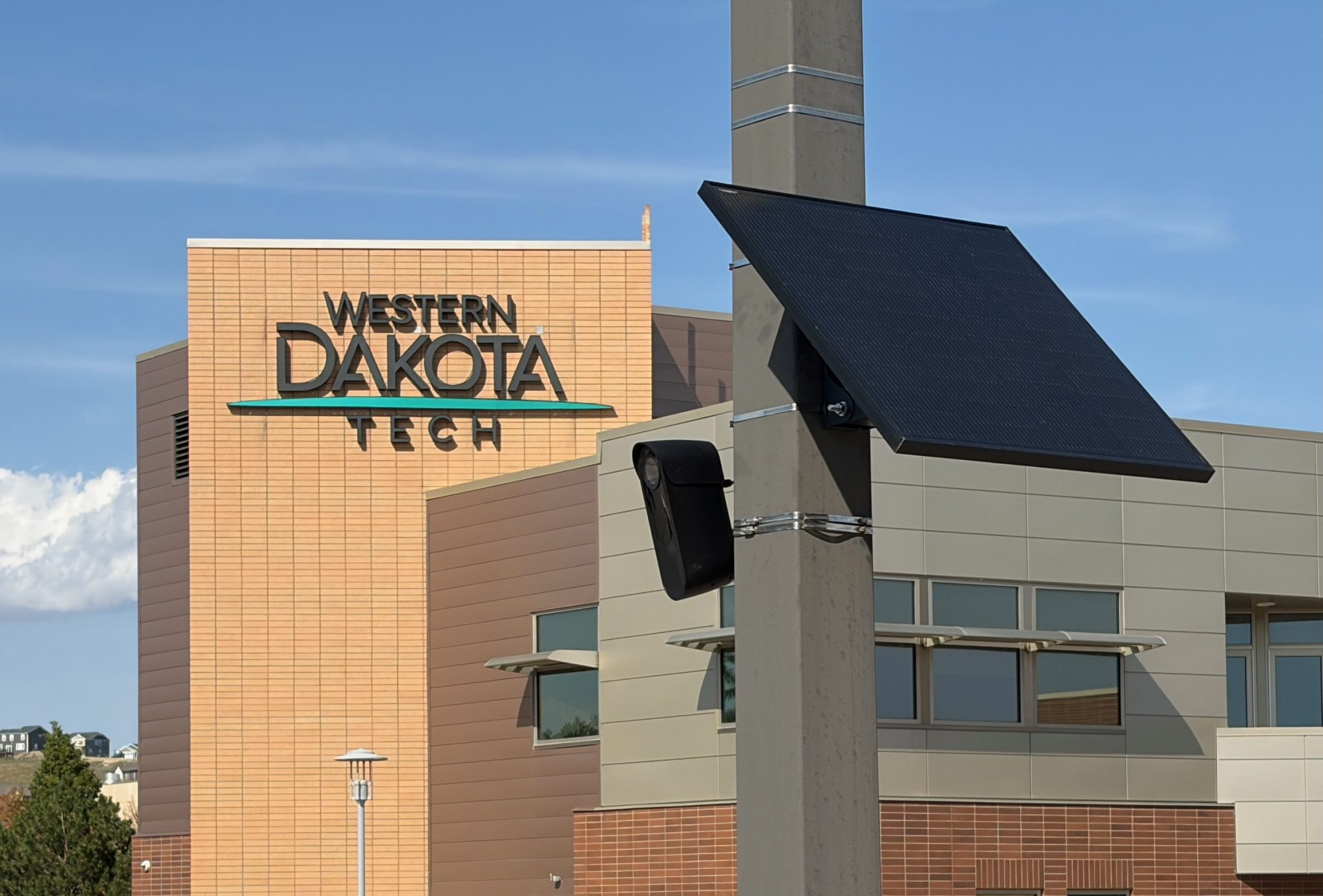
Flock cameras have been generating concern and discussion here in Rapid City – and nationwide. The ultimate issue is how we can take advantage of technology that can help law enforcement solve crimes without an unwarranted invasion of privacy rights?
Attorney General Marty Jackley recently announced his intent to propose legislation establishing safeguards for the use of license-plate-reader technology. His stated goal is to allow law enforcement to use the technology for legitimate criminal investigations while requiring information to be protected and eventually deleted unless it is relevant to an ongoing investigation.
I have known Marty Jackley for a long time and know his commitment to public safety. I also believe he understands the importance of protecting individual rights. In this case, I think his approach strikes an appropriate balance between protecting the public and respecting individual privacy.
The value of this technology cannot be overstated. Just this month, South Dakota law enforcement used license-plate-reader technology to rescue a 15-year-old girl who had been abducted from Sundance, Wyoming. Wyoming authorities were searching for the vehicle and notified South Dakota authorities. Within an hour, a South Dakota Highway Patrol trooper stopped the vehicle on I-90 near the Aurora County line. The girl was safely recovered, and the suspect was arrested. According to the Attorney General’s Office, license-plate-reader technology helped locate the suspect’s vehicle in South Dakota.
That is exactly the kind of case in which we want police to have every legitimate tool available. The question isn’t whether this technology can be useful. Clearly, it can. But what happens to the information collected about everyone else? Who is keeping track of where we go?
As a practical matter, most people whose license plates are photographed aren’t criminals. They’re going to work, taking their children to school, going to church, shopping, visiting friends—or riding a motorcycle through the Black Hills. Don’t we all have a fundamental right to live our lives without being watched by the Government? Doesn’t the Fourth Amendment place parameters on when the Government can invade our privacy?
The Fourth Amendment was written long before anyone imagined a camera capable of such powers as the Flock. And while the technology is new, the need for reasonable limits on government power is not. Government power needs boundaries. These are not anti-police principles – quite the opposite. A clear set of rules protects the public and law enforcement officers who are using an increasingly powerful investigative tool.
As a lawyer who has spent much of my career teaching law, I think the best time to address these questions is before there is a problem. We should decide now who can access the information, the circumstances under which law enforcement may view it, how long it can be retained, when it can be shared, and what happens when it is misused.
Fortunately, South Dakota is not operating in a vacuum. We don’t need to wait for a scandal, a lawsuit, or the misuse of someone’s personal information before deciding the rules. We have the advantage of seeing what is happening elsewhere and fashioning appropriate safeguards before we face the same problems.
Just a few weeks ago, Missouri Gov. Mike Kehoe signed an executive requiring most license-plate and vehicle data to be deleted within 30 days; prohibiting vendors from selling, sharing, or commercializing Missouri-generated data; limiting use of the data to legitimate criminal justice and lifesaving purposes; and setting penalties and consequences for misuse. Florida recently revoked permits, and stopped issuing new permits, for license-plate-reading cameras on state highways. More than 50 localities have canceled, suspended, or rejected Flock contracts or deactivated cameras in 2026.
Interestingly, Flock has recently announced changes to its recommended privacy practices, including a reduction of the standard data retention period from 30 days to 7 days. It also announced an intent to add features to restrict data sharing and detect potentially abusive searches.
South Dakota does not have to choose between public safety and privacy. We can have both. Attorney General Jackley’s proposal deserves serious consideration.
Let’s get the rules right – before we need them.
Note: In regard to the preparation of this week’s column, the author would like to thank Attorney General Marty Jackley, Attorney Sarah Baron Houy and Claudia Baron for their assistance and input.
Anyone desiring to communicate with the Author, may do so by sending an e-mail to the author at rogermbaron@gmail.com
Roger Baron is a guest columnist for the Rapid City Post. Opinions expressed may not necessarily represent the views of the Rapid City Post, its affiliates, or advertisers.