By Mitchell “Stitch” Stafford
RAPID CITY, S.D. — When a concert sounds great, most people never think about the person standing behind the mixing board. That might be exactly how Matt Buehner wants it.
For Buehner, the goal isn’t necessarily for an audience to notice what the sound engineer is doing. The goal is to understand what the artist is trying to do and make sure the audience experiences it.
“The first thing in my head and the last thing in my head for every show I’ve ever worked: Does this sound like the artist?” Buehner said.
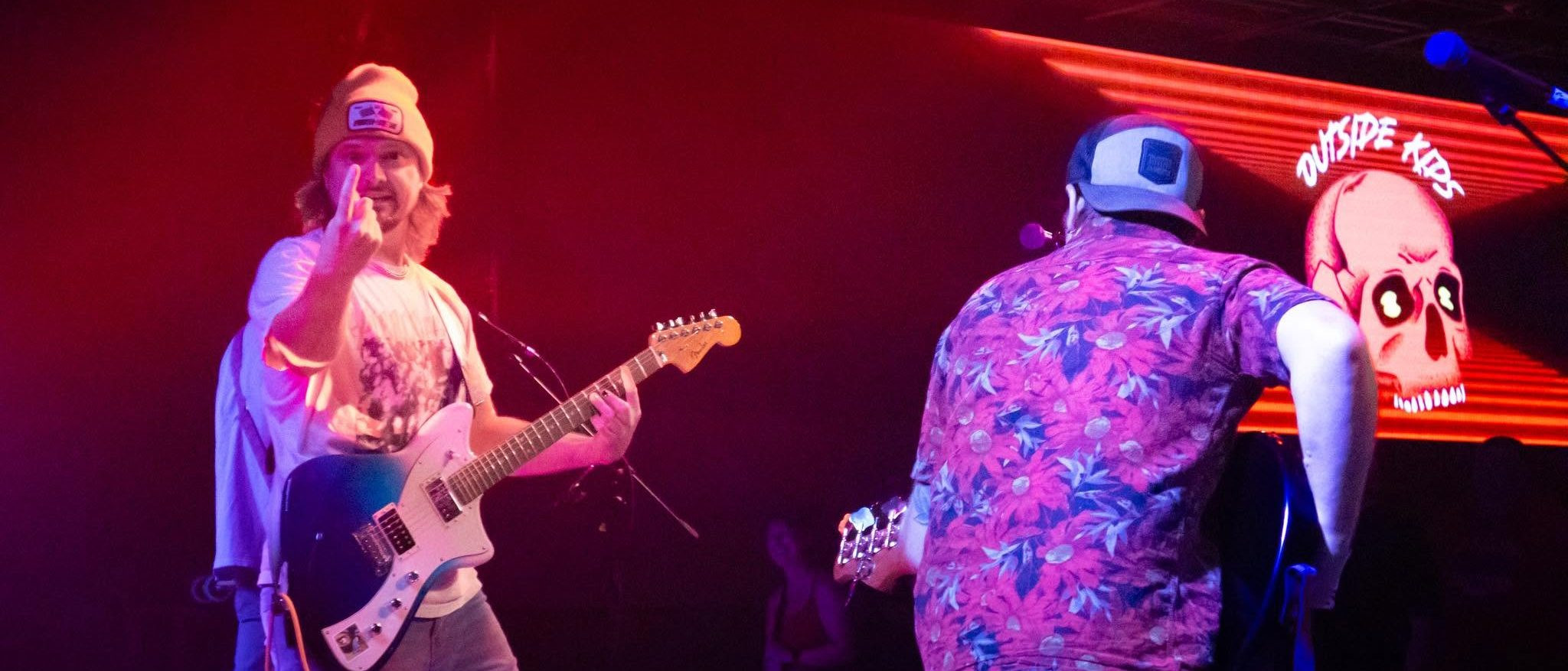
It is a deceptively simple question that summarizes a career spent obsessing over audio, creating music and helping other artists find their sound. Buehner is a sound engineer for Powerhouse Sound, a producer, studio engineer and multi-instrumentalist. He has worked behind the scenes at festivals and large productions, produced and engineered recordings for artists including Camp Comfort, High Rise and Bijou Belle, and creates his own music as a member of The Outside Kids.
Ask Buehner who he is, though, and he has a slightly less formal description.
“I’m an audio nerd multi-instrumentalist who has an almost unhealthy obsession with audio fidelity, the creative process, and hand-eye coordination,” he said.
From a basement drum kit to a life in music
Buehner was born in San Francisco but primarily grew up with his mother in Tripp, South Dakota, regularly visiting his father in Rapid City. Tripp had fewer than 600 residents most days, Buehner said, and his graduating class had 15 students. That small-town upbringing continues to influence how he views relationships and community. His musical story started when he was only 3.
His parents agreed to store a friend’s drum kit in their basement. They probably had no idea what that favor would eventually create.
“For as long as I can remember, I’ve always enjoyed rhythm and drumming,” Buehner said. “Ask any of my elementary school teachers. I got yelled at for desk drumming daily!”
By junior high, his brother Tom had gotten into drumming. Buehner started noticing everything else happening on the AC/DC records they listened to and pulled his father’s old electric guitar out of storage. A few friends started playing instruments, too. Before long, Buehner had his first band, The Almosts.
“That natural progression from personal interest in music to seeing a community form around it locked me into this career path, whether I knew it then or not,” he said.
That idea, music creating community, would eventually become one of the defining themes of his career.
Finding the why before the how
Buehner studied audio engineering at Full Sail University, but his interest in recording started before college. In high school, he and friend Lee Putnam began recording their own music for one basic reason: They wanted to hear themselves. Buehner said young musicians can become so focused on physically creating music that it can be difficult to simultaneously step outside the performance and truly listen to what they are creating.
Recording changed that.
It also introduced Buehner to something that still fascinates him today: capturing a moment of creativity and preserving an artist’s intention. Sometimes his job is to be almost invisible, using his equipment and skills to hold up a mirror to the artist. Other times, he dives into the creative process, helping develop musical parts and exploring sounds alongside them.
“But the end goal is the same,” Buehner said. “How do I best capture the artist’s intentions and deliver it for their audience to experience as well?”
That philosophy has guided his studio work with artists throughout the region. Buehner has produced and engineered music for Camp Comfort, High Rise, Bijou Belle and The Outside Kids, among others. No two sessions are identical.
“One specific recording technique that totally made one record cool might ruin the next one,” he said.
Instead of forcing musicians into his process, Buehner tries to build a process around them. He asks questions. He challenges lyrics or musical choices when something doesn’t feel right. He encourages musicians to challenge him when his ideas move away from their vision. For Buehner, successful production requires trust.
“It’s real collaboration at its best, and I am truly honored when an artist trusts me to record their musical babies,” he said.
Being a musician himself helps him understand what an artist is trying to communicate. The technical side,microphone selection, recording techniques, compression, mastering and equipment, is important. But Buehner believes those decisions become easier after understanding something more fundamental.
Why?
Why did someone write this song?
Why are they playing it?
Why does it matter enough to them that they want to record it?
“The WHY is what answers the HOW,” Buehner said.
The secret to great live sound
That same respect for the artist follows Buehner from the studio to live production. He has worked as an audio technician and stage manager for festivals and major productions, putting him in the position of helping translate what happens onstage to an audience. Ask what separates an average engineer from a great one, and Buehner doesn’t start talking about equipment.
He talks about caring.
“Honestly? The main thing that separates a good engineer from a bad one is whether or not they give a sh*t,” he said. Technical knowledge can be learned. An ear can be developed. Experience comes with time. But caring makes someone pay attention.
“You notice details you miss if you don’t care,” Buehner said. “And you collaborate better.”
Caring can also make failure hurt more, he acknowledged. Engineers can take responsibility for circumstances outside their control, particularly when they are personally invested in getting everything right. But that investment remains central to his approach. When Buehner puts a microphone in front of a guitar amplifier, his starting point is straightforward: Does the sound coming through the venue’s speakers actually sound like the guitarist?
His job isn’t to transform the artist into something else.
“My job is to understand what they’re doing, and make it loud,” he said.
Live music also provides something a studio cannot.
Impermanence.
A concert happens right now, for an hour or two, and then that particular performance disappears.
“That’s part of the fun of live shows versus recording,” Buehner said. “It’s real, right now, for like an hour, and then it’s done and gone forever.”
Lessons from Mom and Dad
Buehner’s emphasis on caring didn’t originate behind a soundboard. He credits both of his parents. His mother taught at a Hutterite colony for nearly 30 years before recently retiring. She became so integrated into that community that, Buehner joked, the women responsible for communal cooking know exactly which dishes his family likes best. His father, Dr. Marvin Buehner, was a longtime Rapid City physician. From him, Matt remembers two distinct lessons.
Do no harm.
And don’t be afraid to reach out to help someone.
Some of Buehner’s earliest memories of traveling with his father involve watching him stop and talk to unhoused people. His father would listen for as long as someone wanted to talk and offer whatever money he had available. Through his father’s medical career, Buehner also witnessed professional integrity, accountability and what it meant to show up when people were counting on you. And, he joked, how to survive on three hours of sleep when necessary.
Those experiences helped shape how Buehner sees people today.
He has been open about his own struggles with depression and anxiety related to ADHD and said therapy, family and close friends have provided invaluable support. Buehner recognizes not everyone has that support system.
“You can seldom tell from the outside what their current experience is,” he said.
Experiencing personal pain, he said, made it impossible for him to ignore pain in other people.
“We’re not others”, Buehner said. “We’re humans, together.”
That belief naturally connects to his view of music.
“We are going to coexist with each other whether we work together or not,” he said. “Why not try and collaborate and make things better for everyone?”
Could the Black Hills become the next great music scene?
After working in music outside South Dakota, Buehner sees something unusual happening in the Black Hills.
“The scene here is rare, in my eyes,” he said.
Larger cities may offer more conventional paths toward success in the music industry, but Buehner believes few places he has lived possess the number of artists and venues per capita found in the Black Hills. On any given night, listeners can find multiple genres being performed at multiple venues. Buehner believes the potential is much bigger than simply having a healthy local bar-and-venue circuit.
“I think this scene has the potential to be the next Seattle or Austin, in its own right,” he said.
Getting there, however, requires people to get outside their comfort zones. Like many smaller music communities, Buehner said, the Black Hills can become cliquey. His solution is collaboration. Play with the band you’ve never met. Book the venue outside your normal circle. Meet other musicians. Attend each other’s shows. Support each other’s projects.
“Rising tides raise all ships and all that,” Buehner said. “We are all collectively and individually responsible for the success of our scene.”
Every audience member who leaves a concert inspired can tell someone else. Every musician who feels supported can carry that energy into another project. That cycle, Buehner believes, is what actually creates a music scene.
“WE are the scene, you know?” he said. “Invest your energy in being constructive. Invest your energy in a ‘let’s build it together’ mentality, and sky is the limit.”
Music with a purpose
That philosophy will be on display twice in October for The Outside Kids. The band will headline Stitch-Fest: Feed the Need on Oct. 10, a birthday benefit concert raising money for Tom Whillock’s Friday Meals, which helps provide meals to people in need. The Outside Kids will then take the stage again Oct. 31 for Emo Night at The Park. The two shows demonstrate different sides of what Buehner loves about music, the ability to create an experience and the ability to rally people around something larger than the performance itself.
“Shows like this mean everything to us,” he said of benefit performances such as Stitch-Fest.
Like any band, The Outside Kids play to share their music, connect with fans, sell merchandise and help fund the next adventure. But Buehner said attaching a larger purpose to a concert changes its entire tone. It becomes less about the band under the lights and more like, in his words, “a communal group hug intended to lift everyone up, especially those of us that need it most.”
He has particular admiration for Whillock.
“Tom Whillock, as you know, is one of the most generous souls on this planet, and this community is blessed to have him here, caring, working on solutions, and loving like he does,” Buehner said. “May we all attempt to follow his example!”
“Good music is everywhere here”
When Buehner imagines his legacy in the Black Hills, he doesn’t describe awards, famous records or his name on a marquee. He imagines another band playing its first show. They’ll be nervous. They’ll question whether they’re ready. They’ll experience all the anxiety and uncertainty that comes with stepping onto a stage for the first time.
But maybe somewhere along the way they saw The Outside Kids or another Black Hills band do it.
And they’ll think, “If THEY can do it, so can we!”
Buehner hopes more venues will be built and supported. He hopes musicians will continue pushing each other forward. He hopes the quality of music coming from the Black Hills eventually becomes impossible for the rest of the country and perhaps the world, to ignore.
Maybe visitors will come to Rapid City or the surrounding Black Hills and ask someone where they can hear good live music. Buehner hopes the local they ask has several answers. And someday, he hopes people won’t be surprised by that anymore.
“Good music is everywhere here!” Buehner said. “Open your ears when you’re in the Black Hills, because you don’t have to listen hard to find it.”
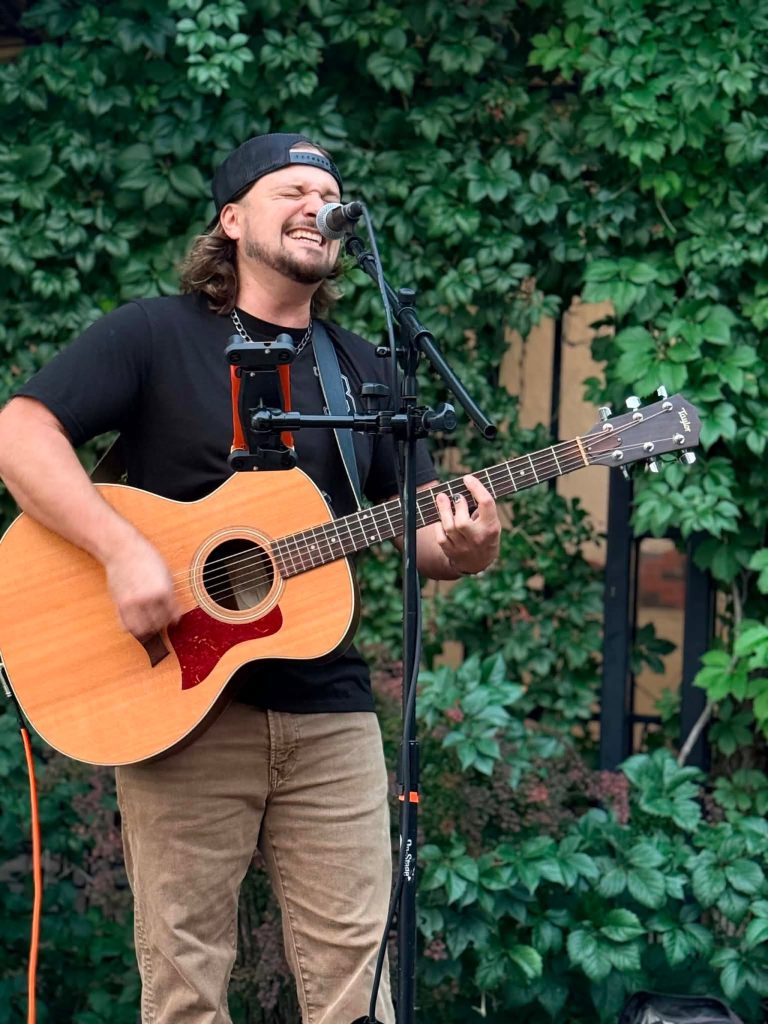
Matt Buehner Plays on the Murphy’s Patio earlier this Summer!