In 1836 two young men walked off a farm at Strathythan, near Ellon, and headed for Aberdeen. James Chivas was 26. His brother John was 22. Sixteen miles, and by some accounts it took them three days. They were two of fourteen children with a cousin in banking and not much else going for them.
Neither one ever ran a still. Their name sits on one of the world’s best-selling Scotch whiskies anyway.
The shop was already there
Here’s the part most tellings skip. The brothers didn’t open the King Street shop. That business traced back to 1801, and by the time the boys arrived it belonged to a grocer named William Edward. James got a job there. John went into wholesale across town.
James became a partner in 1838. Edward died in 1841 and Charles Stewart came in, so for years the sign read Stewart & Chivas. In 1843 Queen Victoria granted James Chivas a Royal Warrant as purveyor of groceries to Her Majesty, and Balmoral became a customer. The shop grew into a luxury emporium stocked from across Europe.
Stewart left in 1857. John finally came in with his brother, and the firm became Chivas Brothers.
Why they started blending
Scotland in the mid-1800s drank single malts. Every distillery made what its water, barley and weather allowed, so one cask could be lovely and the next one thin. For a merchant selling to households that expected the same thing every time, that’s a headache.
Blending fixed it. Pull whiskies from several distilleries, marry them, and you can hand a customer the same flavor next spring. Legislation in 1853 and the Spirit Act of 1860 made it workable, and James Chivas moved early. His first branded blend, Royal Glen Dee, came out in 1854. Royal Strathythan followed in 1863, ten-year-old malt and grain whiskies under the name of the farm he’d left.
That’s the skill in it. You’re taking a dozen flavor profiles shaped by geography, barrel and climate, and building something on purpose.
The brothers were long gone before the famous bottle
John Chivas died in 1862, five years into the partnership that carries his name. James kept at it, brought his son Alexander into the firm, and died in 1886 at 75, condolences arriving from royalty. Alexander died in 1893.
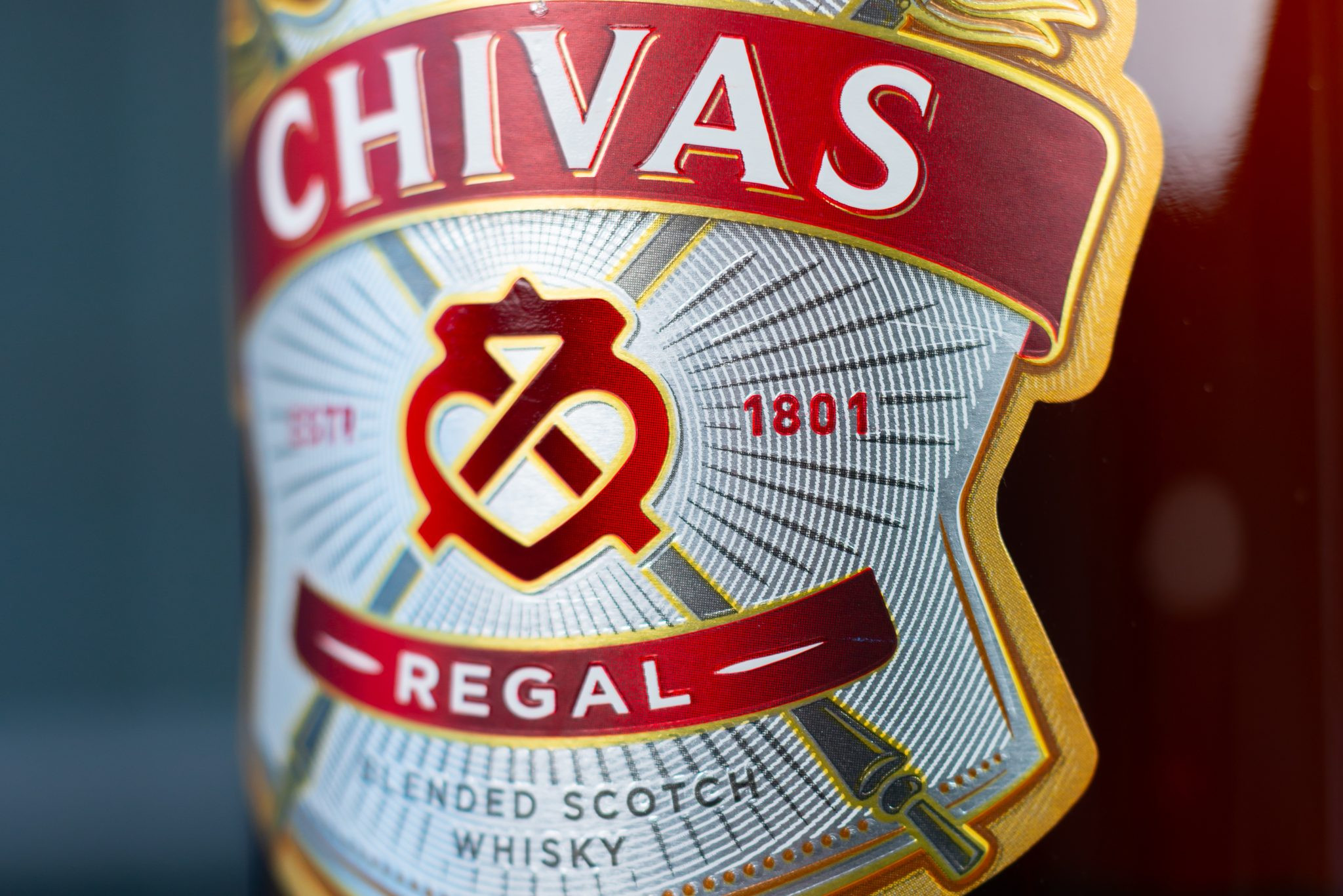
In 1895 Alexander Smith and master blender Charles Stewart Howard bought the company. They wrote one condition into the deal: the Chivas Brothers name stays, permanently. That’s why you can still read it on a bottle. Somebody made it a term of sale.
Howard created Chivas Regal in 1909, a 25-year-old blend built for the North American market and widely called the first luxury Scotch. It sold on prestige, and you could drink it well without passing a geography exam first.
Seagram, Hollywood, and $3 billion
Samuel Bronfman’s Seagram bought Chivas Brothers in 1949 and turned the bottle into shorthand for having arrived. By the 1970s it was set dressing for success.
Then his grandson got restless. In April 1995 Edgar Bronfman Jr. sold Seagram’s 24% stake in DuPont back to DuPont for $8.8 billion, a steady earner gone in an afternoon, and put $5.7 billion of it into 80% of MCA and Universal Studios. Whisky was now the thing that paid for movies.
In 2000 he sold Seagram to Vivendi, Jean-Marie Messier’s French media group, in a deal worth about $34 billion. He took Vivendi stock instead of cash.
Now the part that usually gets told backwards. Vivendi wanted content, not liquor, so the spirits business went up for sale alongside the merger. On December 19, 2000, Diageo and Pernod Ricard agreed to buy it for $8.15 billion, Diageo paying $5 billion and Pernod Ricard $3.15 billion for Chivas Brothers, The Glenlivet, Martell and Seagram’s gin. That was arranged before anything fell apart.
The falling apart came after. Vivendi was carrying roughly $30 billion in debt, the stock dropped more than 60% during 2002, and Messier was pushed out on July 2. Bronfman’s Vivendi shares sank with it. The family’s losses ran to around $3 billion.
What the name actually carries
Chivas Brothers today is a Pernod Ricard company running distilleries and blending operations worldwide. No Chivas has been involved since 1895.
Two farm boys who never distilled a drop built a standard instead of a recipe. Buy the best available, sell it to people who’d notice the difference. Then somebody promised in writing to keep their name on it, and that promise has outlasted everybody who signed it.