

Trump executive order could overturn state property rights laws
WASHINGTON, D.C. – At least one legislator wants to put a new executive order signed by President Trump up for public scrutiny in South Dakota. And is asking the attorney general to look into it.
A new executive order signed in April 2026 by President Donald Trump has triggered concerns among state officials—particularly in South Dakota—that federal authority could override state-level property rights laws and will be used as a tool to bypass state-level restrictions on eminent domain for projects like pipelines and other energy developments
“President Trump has signed an Executive Order that would give the federal government siting authority and placement of all energy infrastructure and supporting infrastructure in the United States,” District 23 Senator Mark Lampka told Dakota News Now. “You’re talking about CO2 pipelines, you’re talking about data centers; any energy infrastructure including wind turbines and solar panels.”
Lampka warned that this order could effectively negate state-level laws passed in 2025-2026 that aimed to restrict the ability of CO2 pipelines to use eminent domain, forcing them to use good-faith negotiations instead.
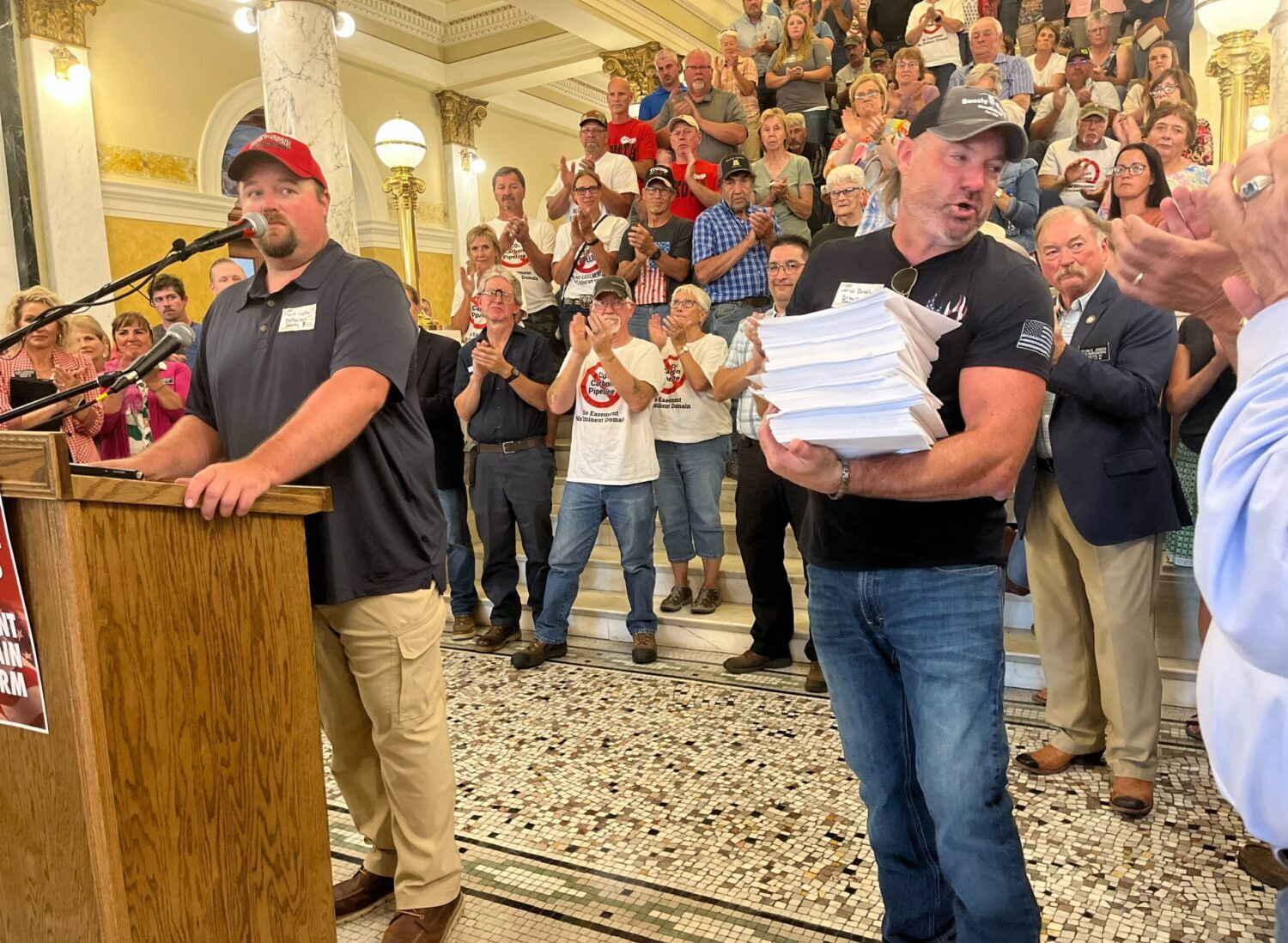
The legislator has been long-time supporter of private property rights and just as ardently against the use of eminent domain in those instances where energy projects are built for private gain.
He was instrumental in getting legislation passed in South Dakota that prohibits the use of eminent domain for pipelines transporting carbon dioxide, hydrogen, or facilities qualifying for certain tax credits.
Lampka is encouraging South Dakotans to contact the state’s congressional delegation, Senators John Thune and Mike Rounds and U.S. House Dusty Johnson. “They work for us in Washington and that’s how our voice can be heard in D.C.”
South Dakota Attorney General Marty Jackley told Dakota News Now he wants to learn more about “what the president is looking at and whether it will have an effect on our state laws here in South Dakota that protect private property rights.”
Lampka is more pragmatic. “After everything everybody has been through to protect their property rights in South Dakota, it looks like were not quite out of the woods yet.”


