

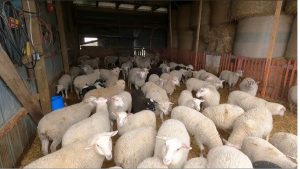
MOLT, MT – A proposed lamb finishing facility in south-central Montana could provide a significant boost to both the region’s sheep industry and local grain producers.
Sheep producer Henry Hollenbeck is pursuing plans to transform an existing grain elevator property into a modern indoor lamb feeding facility designed to create new opportunities for agricultural growth while supporting the domestic lamb industry.
“We’ve proposed putting in an indoor confinement lamb finishing barn with a grain elevator that has been a staple of Montana agriculture for years,” Hollenbeck said. “The goal is to keep the grain industry alive in the area, bring livestock to the grain, and create economic growth in the community.”
The proposed facility would feature a 120-foot by 450-foot enclosed barn with slatted floors and an eight-foot-deep manure storage pit underneath. Hollenbeck said the design improves sanitation by moving manure and urine away from the animals while also creating a valuable nutrient source for local farm ground.
“We’ll have enough storage for a year to a year and a half, and then apply that back to farm fields in the area,” he explained. “It makes the whole picture very holistic.”
Key Project Details:
- Location: The former grain elevator property in Molt, Montana.
- Capacity: Capable of housing up to 6,500 head of sheep at any given time, processing around 26,000 lambs annually.
- Facility Design: An enclosed, deep-pit barn with slatted floors and continuous ventilation to manage odor, flies, and sanitation. The plans also include a potential second phase for outdoor pens.
- Nutrient Management: An eight-foot-deep manure pit designed to store slurry for 12 to 18 months, which will then be applied as fertilizer to local farm fields.
Hollenbeck said the project fits into his operation’s vertically integrated model, which includes lamb production and processing.
“We go from a lamb to our packing plant in Forsyth and can tie the whole deal together to produce more American lamb,” he said.
The operation markets lamb across much of the country, shipping product from Canada to Texas and from Los Angeles to New York.
One of the major goals of the project is creating a stronger local market for grain while also generating additional value through livestock production.
“Try to move pounds of grain through pounds of lambs and sell it,” Hollenbeck said.
The facility has faced strong pushback from local residents concerned about potential odors, fly infestations, property values, and increased truck traffic. Addressing concerns raised by some local residents, Hollenbeck emphasized that the facility is designed with environmental stewardship in mind. The project site is surrounded primarily by agricultural land, and the manure management system is fully contained.
“I went with this style because these barns are more efficient and more eco-friendly to the environment,” he said. “Everything is enclosed and contained.”
He added that the nutrient value of the manure could provide a meaningful benefit to area farmers at a time when commercial fertilizer costs remain elevated.
“With fertilizer prices where they are, this material has tremendous value back to the farm community,” Hollenbeck said.
“There are a lot of questions out there, and I want people to participate in the public hearing,” he said.


