
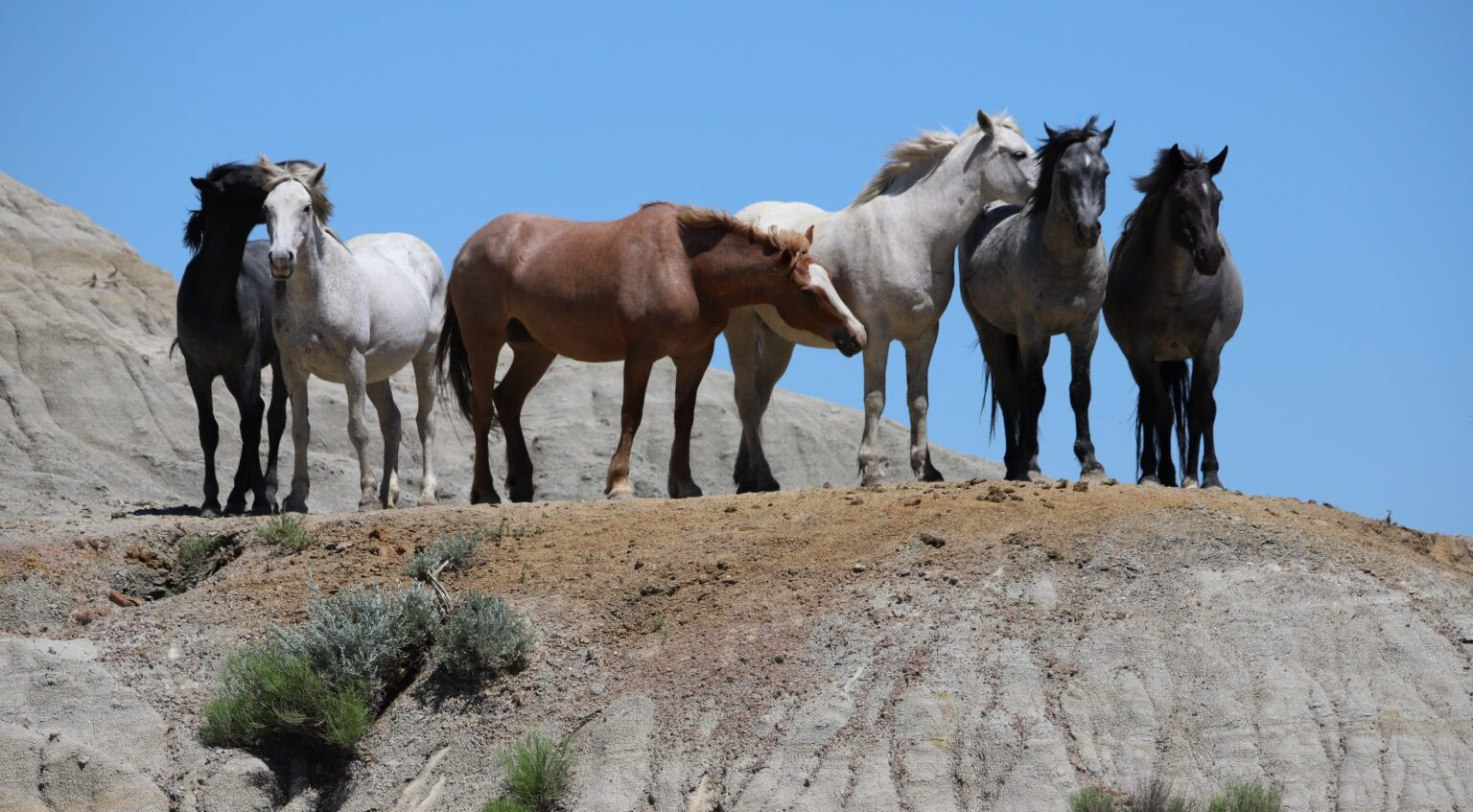
MEDORA, N.D. – The debate over wild horses in North Dakota centers on the management of a small, historic herd of about 150 mustangs in Theodore Roosevelt National Park. Advocates fight to protect the animals as a living cultural legacy, while the National Park Service (NPS) and ranchers classify them as non-native livestock that threaten local ecological resources and want them removed.
With the recent passage of U.S. Senate Bill 1377 that would grant permanent protection for the horses, the matter is far from settled but it has become closer to a resolution.
In 2022, the NPS put out a plan to remove all the horses from the park. The reasons given were to address the potential risk the horses pose to resources, which includes damaging fences, trampling and overgrazing vegetation, contributing to erosion, and competing for food and water.
Following massive public pushback, the NPS ended its proposed elimination and gradual removal plans, allowing the horses to temporarily remain. According to the Associated Press, thousands of people made comments during the NPS review, mostly in support of keeping the horses.
The horses roam primarily within the South Unit of the park, accessible via I-94 near Medora. The herd currently fluctuates around 150 to nearly 200 horses. Under the new legislative efforts, the National Park Service is required to develop proper management plans to ensure the herd’s survival and genetic health.
While a total removal has been halted, conflict remains over the methods of population control. According to a story published in the North Dakota Monitor, the park service has been inoculating mares with a birth control drug which will over time reduce fertility and could cause complete sterilization. Already, the reported damage has included fewer foals and more foal mortality. If this intensive regimen (which reportedly includes double dosing) continues, horse advocates believe the herd’s health will be compromised, in part by the loss of the very characteristics that have made the horses uniquely suited to the challenging environment of the Badlands – toughness, intelligence and a robust genetic pool.
The bill will now go to the U.S. House for consideration.


