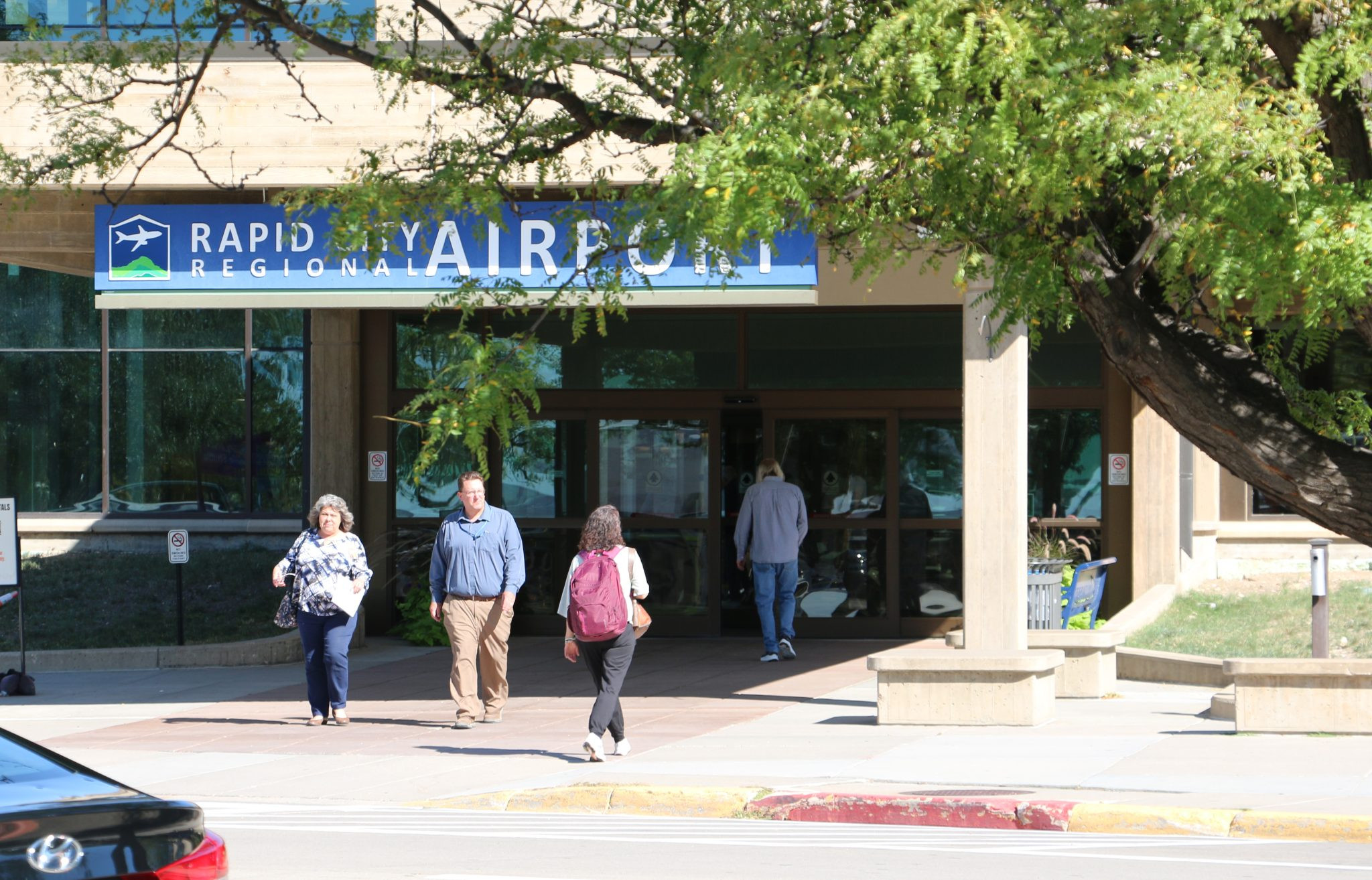
RAPID CITY, SD – Rapid City Regional Airport is undergoing a major expansion project, investing tens of millions of dollars in efficiencies, parking, and concourse expansion.
The need for the multi-year project was driven by passenger counts, and those passengers are largely from the hills’ area tourism which is the single largest driver of air traffic to Rapid City.
“The good majority of (traffic) it comes within a five-to-six-month period,” Patrick Dame, Executive Director of the Rapid City Regional Airport, said. “You may say don’t build the church for Christmas; the problem is our Christmas is five to six months long.”
Black Hills tourism sets the airport apart from comparably sized cities.
“Without that tourism… we’d be comparable to Bismarck, North Dakota,” Dame says. “But we just have a wonderful tourism market that really sets us apart with the growth needs that are there.”
Rapid City Regional Airport is considered a non-hub primary airport but serves five airlines and has seen significant growth over the years. In the last 10 years alone, enplanements have increased 57%.
In the first half of 2026, the airport enplaned 206,010 passengers, the highest first-half total in airport history.
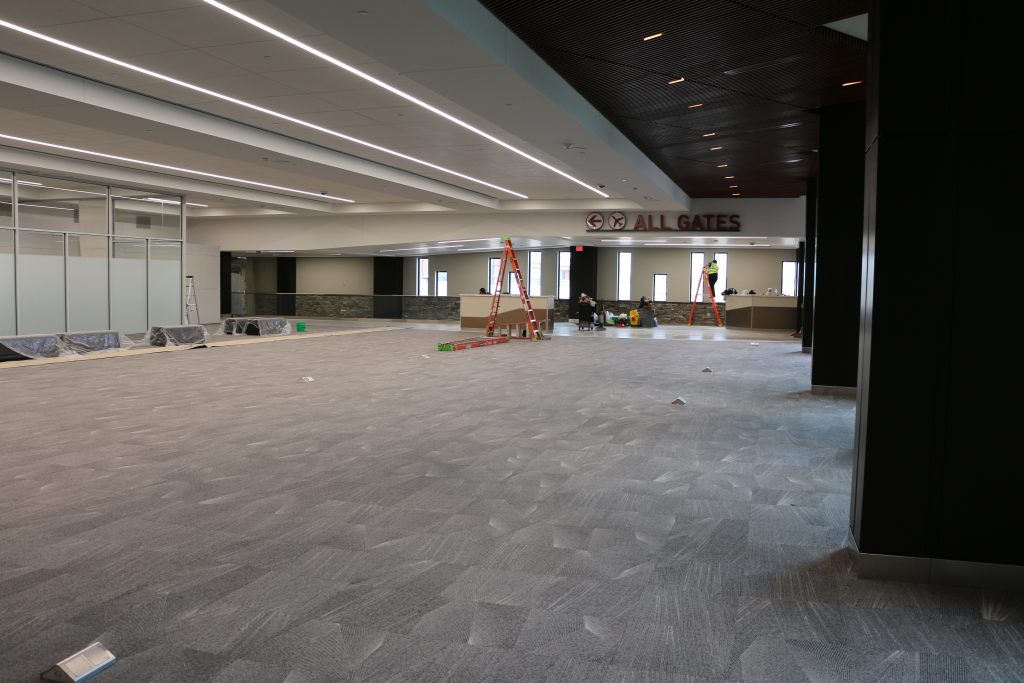
A greatly expanded TSA Passenger Checkpoint will be operational as soon as this week, allowing for a better flow of people in the increasingly busy airport.
The project
The multi-project expansion updates equipment and processes and adds gates to the increasingly busy regional airport.
Project 1, phases 2 and 3, are currently underway at the airport which includes the ticketing and check-in areas. Completion of that project is expected in April and will run about $80 million.
Project 2 – costing between $110 million to $120 million – will get underway in the near future and consist of adding five gates to the existing seven at the airport. To expand the footprint, crews will tear down three existing gates and rotate the concourse 45 degrees, so it sits perpendicular to the runway.
Pre-work is underway for Project 2, but groundbreaking isn’t expected until September 2027 followed by 20 months of construction.
“We’re going from a pimply-faced teenager to an adult on the moves we’re making right now,” Dame said. “These are pretty big R movements in getting this next jump in the facility.”
While the expansion adds capacity for travelers and airlines, it’s also modernizes infrastructure that hasn’t kept pace with industry standards such as having the airport’s TSA screening equipment is still located behind the ticket counters.
Under the new design, checked bags will travel via a linear belt to a centralized, dedicated screening room in the middle of the facility. From there, automated readers will sort bags to carrier-specific carousels, where airline staff can load them directly into bag carts without the manual maneuvering that currently creates both inefficiency and injury risk.
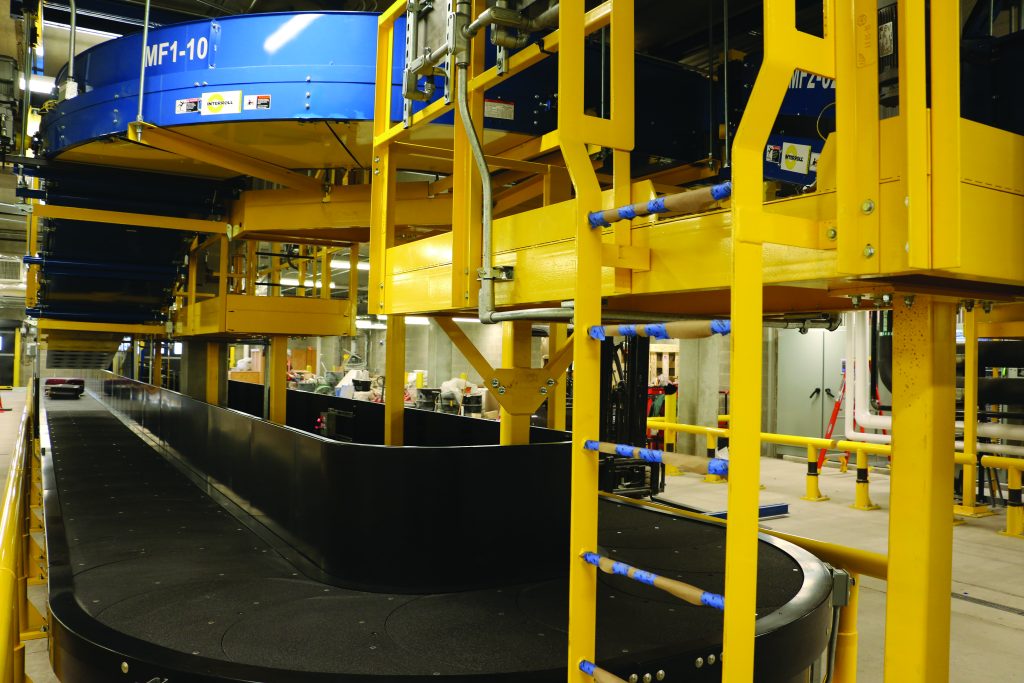
Behind the scenes, a new inline baggage handling system will be operational within the month of November. The system will improve the baggage check in and security process.
Growth for today, and tomorrow
Expanding the airport is necessary to handle the increased traffic today as well as anticipated future growth.
Today it’s estimated the airport generates $456 million in economic activity to Pennington County and generates more than $2 million in tax revenue for the county.
“Much like I mentioned in the (September) city council meeting, we’re going to go through substantial growth,” Dame said. “It’s just that we’re getting to that bigger kid status in terms of the airport world, so there’s some big steps here.”
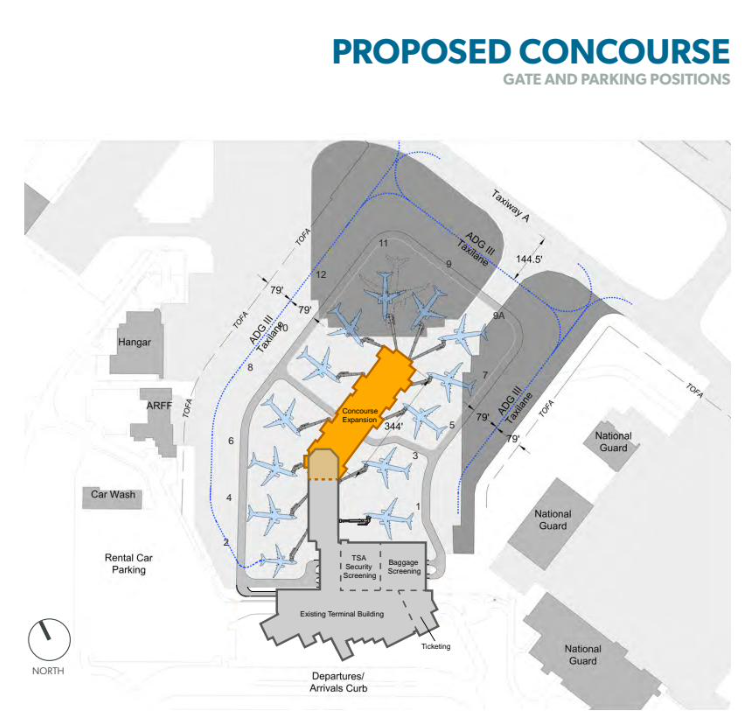
Adding gates will be a major project. Pre-work is underway but groundbreaking isn’t expected until September 2027 followed by 20 months of construction.
One of the Next Major Steps Includes a Runway Project
Once the terminal projects are complete, attention will shift to what may be the airport’s most complex undertaking yet: replacing the main air carrier runway. Runways typically take five to 10 years to move through the environmental and regulatory process before pavement is ever laid, so planning will begin soon after the terminal work wraps up.
“Typically, a runway, you might get 40 or 50 years out of it and that’s where we’re at,” Dame said. “This thing has been added on to and done various different things over the last 40 or 50 years.”
The plan is to build a new runway parallel to and east of the existing one, allowing air service to continue uninterrupted during construction. Once the new runway is operational, the old one will be converted into a parallel taxiway — and, critically, it will be preserved so that 50 years from now, it can be reconstructed and returned to service as a runway.
A Parking Garage Is Probably Coming, Too
Somewhere in the mix of the terminal and runway projects, Dame expects the airport will also break ground on a parking structure. Right now, the strategy is to maximize surface parking for as long as possible — going vertical costs roughly 10 times more than building on the ground. The airport has been actively grading and preparing land on the south side of the parking lot to build up surface capacity before the garage eventually displaces some of it.
For context, Dame notes that both Fargo and Sioux Falls — airports about 20% to 30% larger than Rapid City — have recently hit the threshold where a parking garage became necessary.
Managing Decades of Growth
With all of this growth and complexity, the airport is also adding a dedicated project manager to its leadership team. Dame describes the airport’s current management structure as three executives dividing construction oversight on top of their regular responsibilities — a setup that works in normal times but falls short when you’re managing hundreds of millions of dollars in active construction.
“There’s just a lack of consistency,” Dame said, “And when you start dealing with projects that are tens of millions or hundreds of millions of dollars, we need that level of consistency.”