
Senate Republicans want states with moderate to high SNAP benefit error rates to pay more of the benefit costs
WASHINGTON,D.C. — A program used by every state in the U.S., the Supplemental Nutrition Assistance Program (SNAP) is at the center of failure to advance a Farm Bill out of the Senate Agriculture Committee this week.
The debate isn’t over funding amounts per say, but over which states are making the most errors in dispensing program benefits. Under provisions mandated in the One Big Beautiful Bill Act (OBBBA), beginning October 1, 2027, most states with payment error rates above 6 percent will be required to pay a portion of their SNAP benefit costs.
Those cost-sharing requirements are estimated at a total annual cost shift of approximately $9.4 billion to states with SNAP payment error rates above the federal benchmark.
USDA reported a national error rate of 10.62 percent for fiscal year 2025, a slight improvement from 10.93 percent in 2024. Approximately $10.1 billion in benefits were issued in incorrect amounts during the year, which includes overpayments where a recipient receives too much, and underpayments, where a recipient receives too little.
The latest Department of Agriculture (USDA) figures show that 41 states and Washington, D.C., recorded SNAP payment error rates above 6 percent in fiscal year 2025, which is the benchmark states must meet to avoid contributing toward error-based benefit costs under the new system.
Republicans see it as “unimaginable” error rates and payment inaccuracies at the state level, pushing for accountability and fiscal restraint.
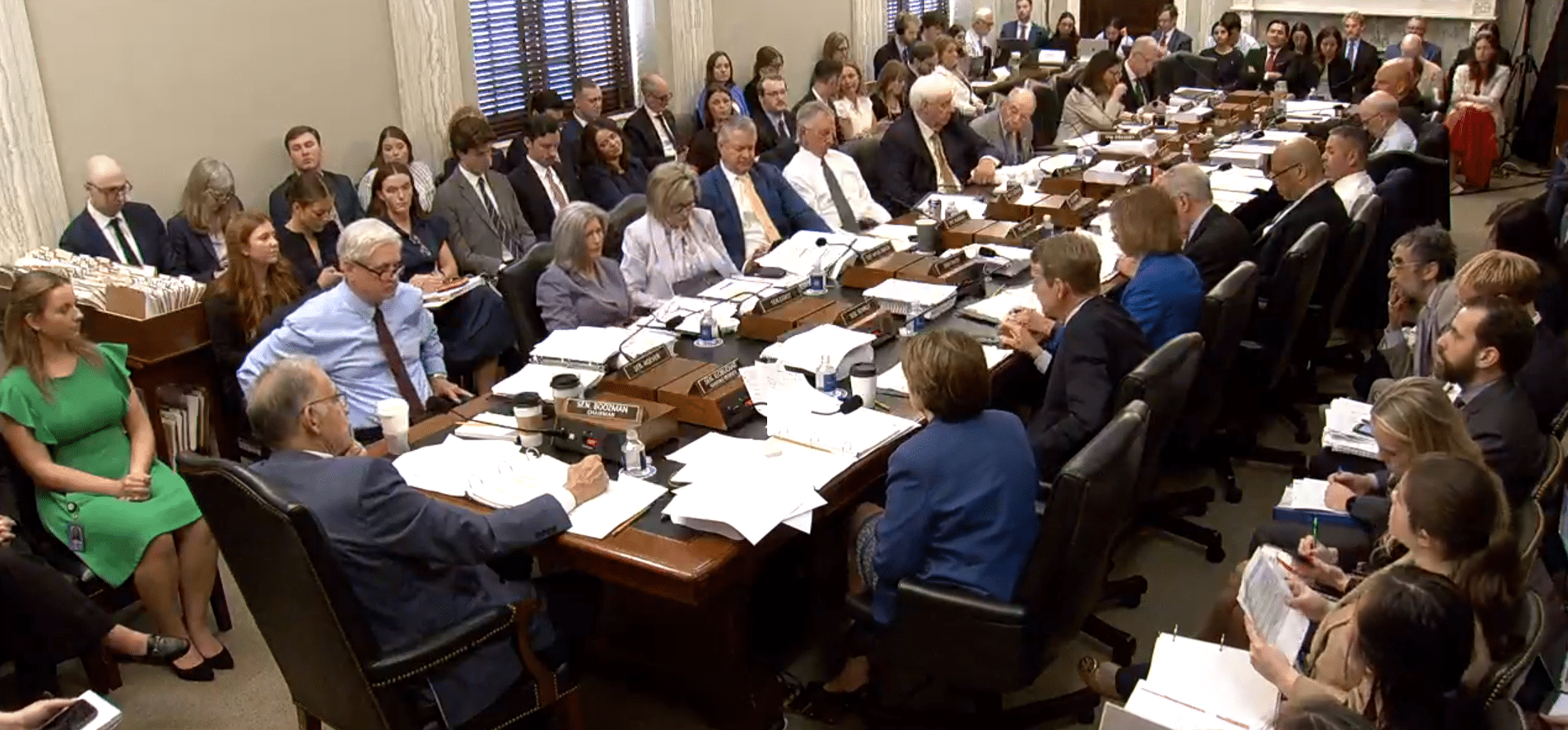
Negotiations over the multiyear federal farm bill broke down Thursday, Aug. 6 as the Senate Agriculture Committee failed to advance the Agricultural Act of 2026 following a 10–11 vote. The defeat sends the massive omnibus legislation into limbo heading into the August congressional recess.
The party-line markup vote derailed after lawmakers deadlocked over contentious proposed changes to the Supplemental Nutrition Assistance Program (SNAP). While committee members found bipartisan common ground on several farm policy provisions earlier in the session, deep partisan divides over nutrition funding and state cost-sharing metrics ultimately blocked final passage out of committee.
The central sticking point during markup centered on rules governing state error rates—which measure overpayments and underpayments in state-administered SNAP benefits. Under existing statutory targets, states with payment error rates exceeding 6% are slated to shoulder a percentage of benefit costs starting in October 2027.
The Republican proposal features structural changes that shift a portion of SNAP benefit costs onto states—scaling up to as high as 20% for certain states depending on their error history.
Agriculture Secretary Brooke Rollins said the error rates show “state accountability is severely lacking in SNAP” and argued that states should bear financial consequences when programs perform poorly.
Republicans, led by Agriculture Committee Chairman John Boozman (R-AR), offered a one-year delay on the cost-sharing mandate alongside additional flexibility measures in an attempt to build consensus. However, Democrats insisted on a two-year delay and pushed back against provisions that granted extra compliance time to states with the highest error rates—a setup Democrats argued unfairly penalized states with moderate error metrics.
Only nine states recorded error rates below the law’s 6 percent threshold in fiscal year 2025. South Dakota had the lowest rate nationally, at 2.47 percent. Idaho followed at 3.85 percent, with Wyoming at 3.96 percent. Kentucky reported a rate of 4.70 percent, while Iowa, Vermont, Utah, Wisconsin and Nebraska also remained below the benchmark.
Alaska recorded the country’s highest rate by a wide margin with 23.15 percent, which is nearly four times the level needed to avoid cost-sharing. New Mexico had the second-highest rate, at 16.81 percent, followed by Delaware at 16 percent. Georgia recorded 15.21 percent, Illinois 14.67 percent, Oregon 14.14 percent and Florida at 13 percent.
Despite failing to move the full bill out of committee, panel members adopted several notable bipartisan amendments during the markup:
- Mandatory Country-of-Origin Labeling (MCOOL): Reinstates mandatory country-of-origin labeling requirements for beef products.
- Hot Foods Expansion: Expands SNAP eligibility to allow recipients to purchase hot rotisserie chicken and prepared hot foods.
- Program Transfers: Permanently transfers administration of the Food for Peace program to the U.S. Department of Agriculture (USDA).
Because the bill failed to advance, Chairman Boozman placed the committee into an indefinite recess rather than adjourning. The procedural move allows Boozman to reconvene the markup and hold another vote at a later date without restarting the amendment process from scratch
With the current farm bill authorization set to expire on September 30, 2026, lawmakers face a tight window when Congress returns from recess in September. Lawmakers must either bridge the gap on SNAP cost-sharing to pass a full five-year farm bill or pass a temporary extension to keep agricultural support programs and food assistance fully operational.


