
State lawmakers also fall short of overriding Rhoden’s objection to home-care background checks, licensing regulations
PIERRE, S.D. – A future where lab-grown meat replaces natural beef, pork and chicken in the diets of South Dakotans remains a threat.
And bad actors masquerading as caretakers are still able to operate where the light of government regulators does not reach.
That’s the takeaway some state lawmakers on the losing side of the Veto Day scorecard would have South Dakotans believe after the Legislature stood down on a pair of measures that’d been sent to Gov. Larry Rhoden’s desk earlier this winter.
Representatives in the state House on Monday put their final stamp on South Dakota’s 101st Legislative session with deference to the governor’s office, failing to sustain its passage of both House Bill 1077, which proposed banning lab-grown protein commonly referred to as “fake meat” by categorizing it as an adulterated food product not legal to sell in the state, and in-home care regulations a majority of legislators had supported in House Bill 1138.
While neither enjoyed veto-proof levels of support among lawmakers and odds had both vetoes anticipated to stand, impassioned floor speeches reignited debates around the role of government in end-of-life transitioning and food production.
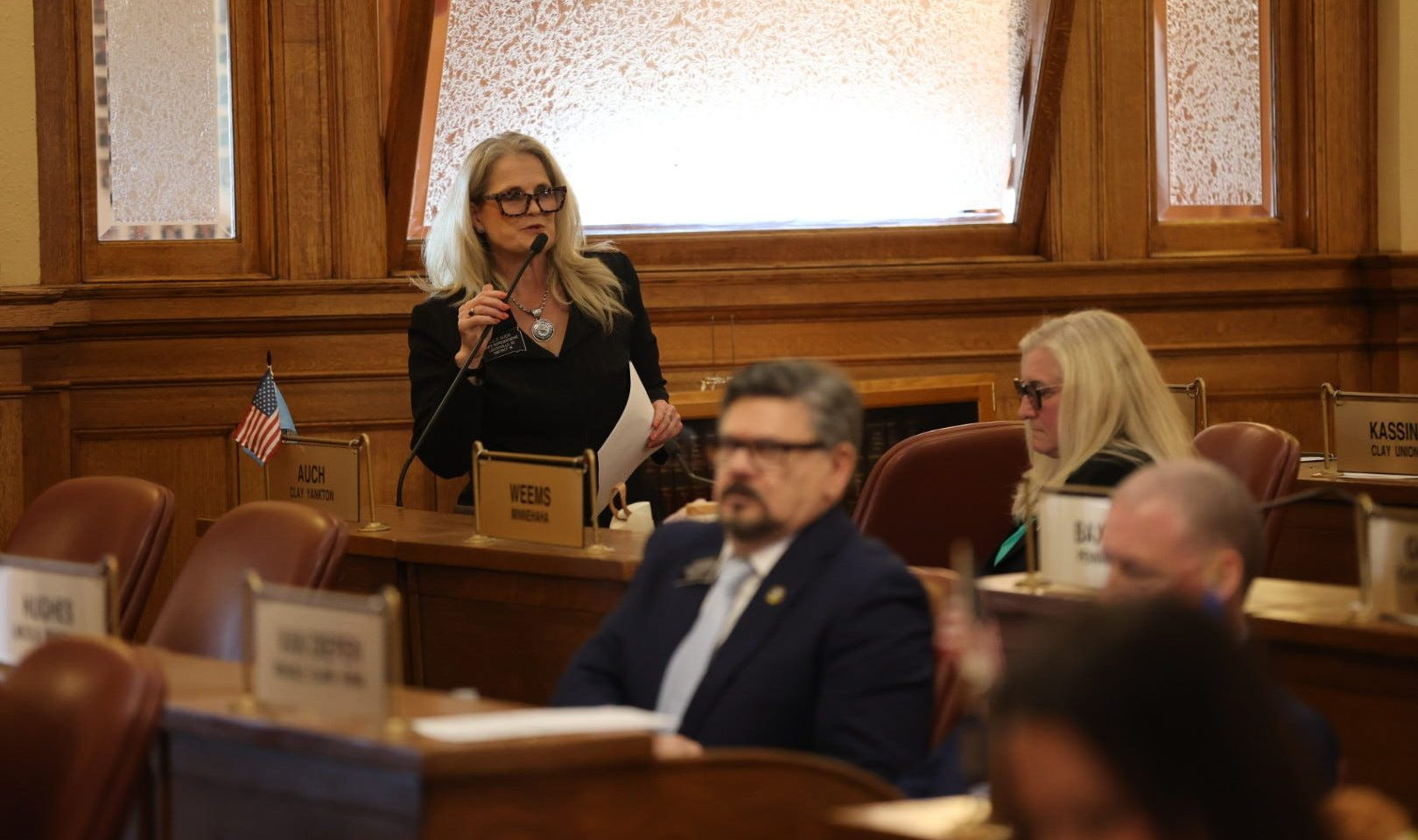
“This is not about coexistence. This is about replacement. Replacement of the ranches, replacement of farmers, family operations, replacement of rural economies, and replacement of a food system rooted in the land, with one controlled by patents, corporations, and laboratories,” Rep. Julie Auch said while imploring her fellow house members to override the veto that Rhoden handed down in February.
At that time, the Republican governor —a lifelong livestock producer — cited apprehensions around overstepping government’s role in the free market and the potential for retaliatory legislation in more progressive, ag-hostile states.
Instead, Rhoden called for a five-year moratorium on cell-cultured protein sales in the state. That plan came with support from South Dakota’s leading agricultural special interest groups and lawmakers, who shortly after his HB 1077 veto adopted Senate Bill 214.
“I myself voted for a five-year compromise. But let me be clear, that was a compromise, not my dream, and not of my choosing,” Auch said. “I am here to do my best for the people of South Dakota. And a compromise is not my best.”
While HB 1077 had initially been passed in the state House with only two votes fewer than the 47 necessary to achieve two-thirds of the chamber’s seats, the Yankton-County Republican’s legislation met its finality with a 32-32 result.
House Bill 1138’s story arc took a similar path.
The legislation targeted in-home, end-of-life care providers by proposing state licensure and minimum training and background check standards.
“Abuse in the space is difficult to identify, investigate, and prosecute. And the easiest way to protect our vulnerable South Dakotans in their home, is to not hand bad actors the key to their front door,” said Rep. Melissa Heerman, a Brookings County Republican who authored HB 1138.
She and other backers of the bill contend a growing number of elderly residents relying on in-home services and no state oversight of the broadening industry that follows necessitates some regulation.
But in his veto, Rhoden raised concerns that the measure would create a false sense of security for families while placing new burdens on small providers, particularly in rural areas. He also pointed to the limited capacity of the Department of Health, which is already dealing with staffing shortages and a surge in complaints tied to existing regulatory responsibilities.
While the number of lawmakers flipping their votes was fewer for HB 1138, the legislation still met defeat with a 36-27 result.
Following adjournment by the Legislature Monday, the governor’s office praised lawmakers for their service and supporting key legislative initiatives of the Rhoden administration.
“Thanks to his commitment to open dialogue, both of his vetoes were sustained,” said Josie Harms, press secretary for the governor. “When Gov. Rhoden says his administration will work with the Legislature to develop a better solution, he means it — and South Dakotans can trust he will follow through.”


