
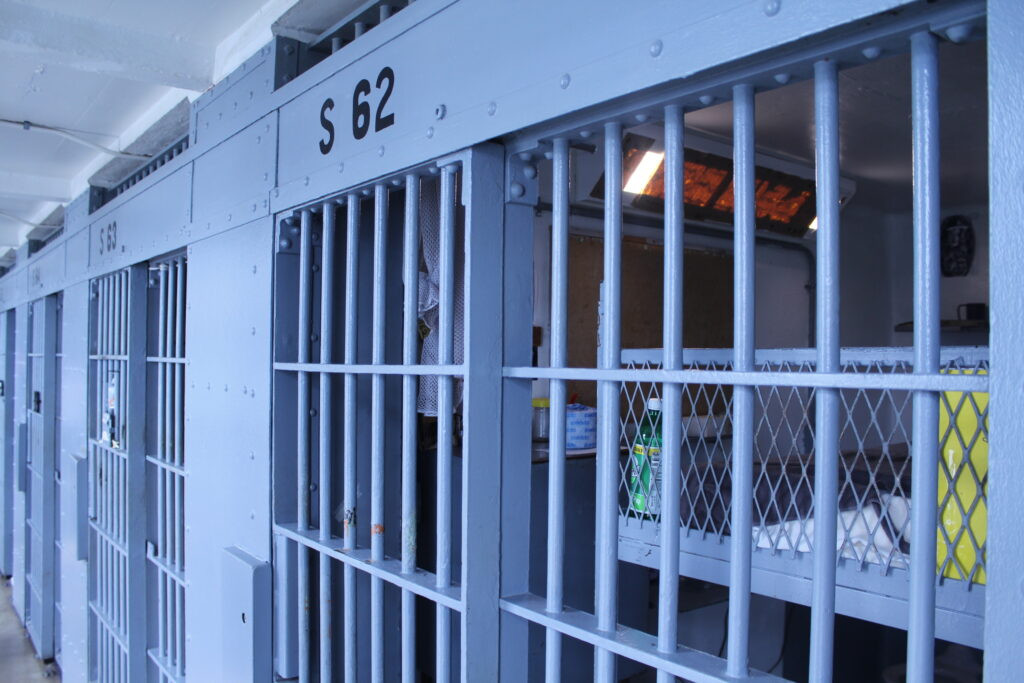
Cells at the South Dakota State Penitentiary. (Courtesy of South Dakota Department of Corrections)
Day after day, the seats in my South Dakota penitentiary classroom filled up. I wasn’t offering shortcuts or promises. People kept coming back because the environment was different: a space where they were treated with respect, where they could think, contribute and take ownership of their time. Whether I was teaching employment readiness, GED courses, or creative writing, I saw how quickly people respond when they’re given even a small amount of trust and purpose.
South Dakota’s prison system is at a crossroads right now. State leaders are breaking ground on a new men’s prison while the Correctional Rehabilitation Task Force examines how to improve outcomes inside correctional facilities and after release. Those conversations offer some promise, but are also a cause for urgency. A new facility will not solve the deeper cultural problems that have long defined corrections in South Dakota and across the country. Real change will require a willingness to rethink what prisons are supposed to accomplish. If the goal is public safety, then incarceration should leave people better prepared to return to society — not simply warehoused until the day they walk out the door.
Cost savings and improved outcomes emphasized at men’s prison groundbreaking
There are already signs of what that shift can look like. At the South Dakota State Penitentiary, a newly created peer companion program trains incarcerated people in Mental Health First Aid so they can support others inside the facility. Although the program only launched this year, it reflects a promising recognition of the value of giving incarcerated people responsibility and a stake in the environment around them. Other states are putting similar ideas into practice in ways that are producing measurable results.
In Maine, incarcerated individuals are now working fully remote jobs for outside employers. About 45 people are employed full time from inside state facilities, earning competitive salaries. They’re using their hard-earned money to pay restitution, support their families and build real work histories before release.
The idea behind the program is straightforward. If we expect people to eventually return to society, they should have opportunities to prepare for it while they are still incarcerated. Giving people the chance to build skills, earn meaningful income, and establish stability before release is common sense, even if many prison systems are only beginning to embrace it.
In Minnesota, administrators at the Stillwater Correctional Facility took a similar approach to another longstanding prison reality: tattooing. For years, prisons responded to underground tattooing with punishment, even as it continued in unsafe conditions and contributed to the spread of diseases like hepatitis C.
Stillwater chose a different path. The prison created a regulated tattoo apprenticeship program where participants complete training hours, follow safety standards, and in some cases leave with professional licenses and jobs already lined up. The program reduced rule violations while turning a risky underground activity into a legitimate trade. Other state prison systems have begun following Stillwater’s lead.
In Pennsylvania, change is happening at the unit level. Inside the Little Scandinavia unit at SCI Chester, administrators created a more normalized environment with shared spaces, consistent routines, and more interaction between staff and residents. Officers are encouraged to build relationships and take an active role in shaping the climate of the unit.
Quotation
Real change will require a willingness to rethink what prisons are supposed to accomplish. If the goal is public safety, then incarceration should leave people better prepared to return to society — not simply warehoused until the day they walk out the door.
The unit has seen significantly lower levels of violence and stronger relationships between staff and residents. Accountability still exists, but it is reinforced through communication and consistency instead of constant escalation.
These programs may look different, but they are built on the same basic idea. When people are given purpose, responsibility and opportunities to build stability, behavior changes. When staff have more tools than punishment alone, facilities become easier and safer to manage. And when incarcerated people leave prison better prepared for life outside, communities benefit, too.
None of this means abandoning accountability or lowering standards. It simply means using common sense about what actually improves safety inside prisons and beyond them. Facilities built around constant tension and deprivation will continue producing the same outcomes. But prisons that invest in stability, problem-solving and human dignity are showing there is a better path forward.
South Dakota now has an opportunity to decide which direction it wants to take. Building a new prison will not solve the deeper problems that have long defined corrections. Real progress will depend on whether the state is willing to realign its approach around the kinds of strategies already proving effective elsewhere — emphasizing stability, responsibility, rehabilitation, and human dignity alongside accountability. Without that broader shift in mindset, we risk re-creating the same problems inside a newer building.
New commentary, delivered: Sign up for our free newsletter.


