
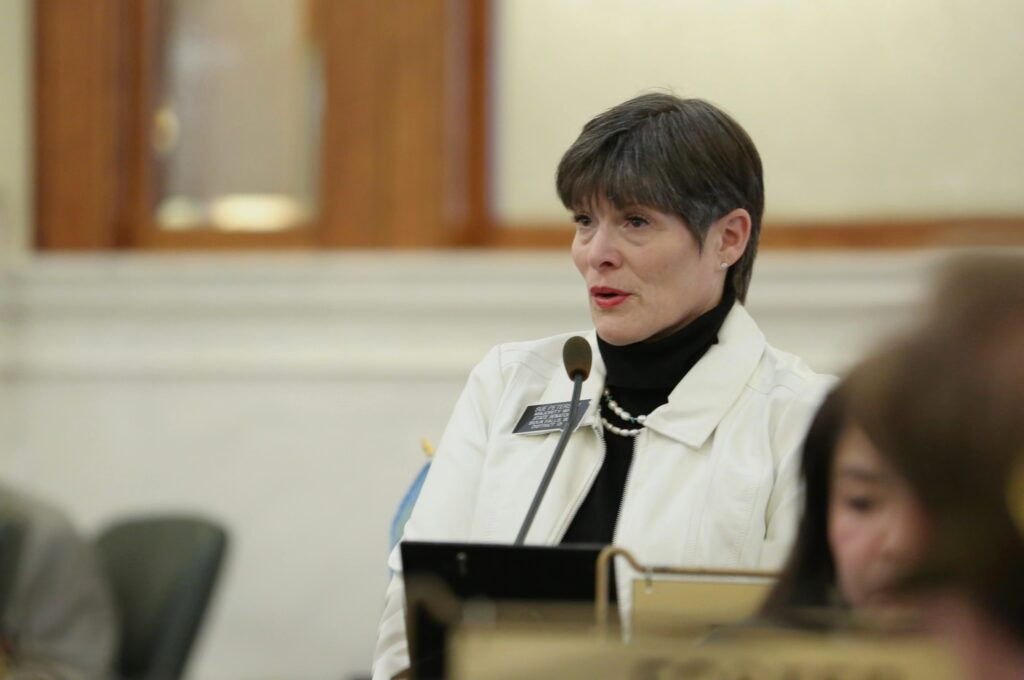
Sen. Sue Peterson, R-Sioux Falls, speaks on the South Dakota Senate floor on March 6, 2025, at the Capitol in Pierre. (Photo by Makenzie Huber/South Dakota Searchlight)
A bill to require a local election after any South Dakota school board decides to exceed property tax limitations passed the Senate on a 20-14 vote Monday at the Capitol in Pierre.
The bill targets decisions by school districts to raise more revenue by “opting out” of property tax limitations imposed by the state. Local residents can already petition a board’s opt-out decision to a public vote, but there is no requirement for an election if nobody organizes a petition drive.
More legislative news
See all of Searchlight’s coverage of the 2026 legislative session.
Under the bill, a school board could approve an opt-out with a two-thirds vote, but the decision would then go to a mandatory election. The bill also requires boards to spell out not only the number of years an opt-out would run, but the “total maximum dollar amount of taxes payable over the full term.”
There are 79 active school district opt-outs across South Dakota, according to data from the Legislative Research Council, resulting in a combined total of $43 million in excess property taxes.
Sen. Sue Peterson, R-Sioux Falls, introduced the bill, which was recommended by lawmakers on last summer’s Comprehensive Property Tax Task Force.
The bill aims to provide property tax relief and increase accountability among school districts and boards, Peterson told lawmakers, adding that the current system is “making spending limits obsolete.”
“It only makes sense that the burden should be on the school boards to get direct consent from the people if they want to circumvent spending limits,” Peterson said. “It should not be the responsibility of the people to gather petition signatures to prevent over-the-limit spending.”
Opponents of the bill said taxpayer dollars would be spent on unnecessary elections since many referred opt-outs are upheld by voters. Sen. Jamie Smith, D-Sioux Falls, said that school board members decide to opt out because of inadequate state funding.
The bill now heads to the House of Representatives.


