
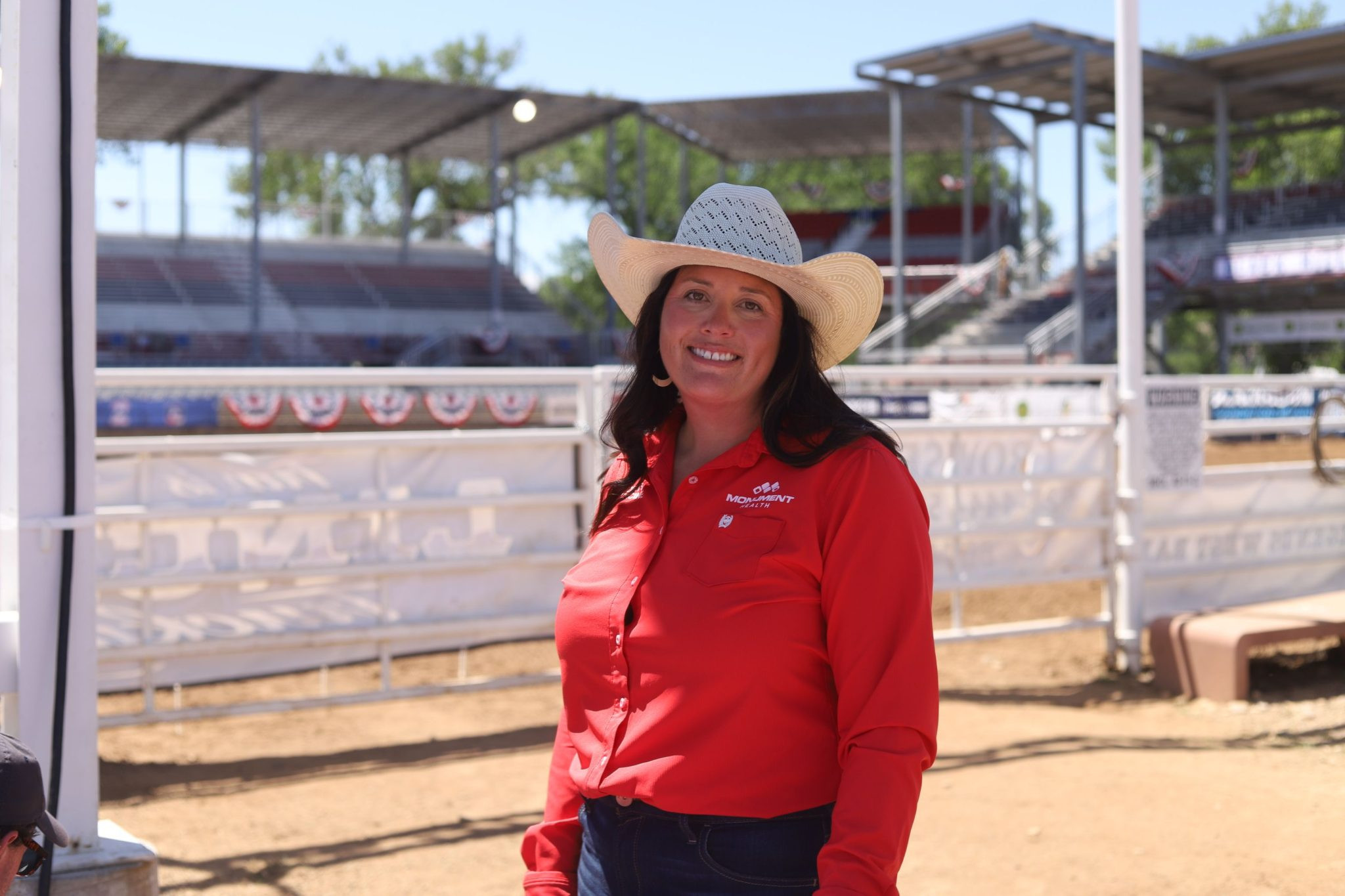
Sonnie Neiman spends her Fourth of July where the dirt is.
She’s an athletic trainer, employed by Monument Health, contracted out to Hulett High School in Wyoming. On rodeo weekends she’s behind the gates at the Black Hills Roundup in Belle Fourche, close enough to the chutes to see exactly how a cowboy landed.
“It’s a great way to celebrate the Fourth of July,” she said.
Two Loves, One Job
Neiman grew up in a small town, played every sport she could, and grew up on a ranch around agriculture and rodeo. Athletic training let her weld those two lives together. Out of college, a job opened that came with heavy rodeo coverage.
What an Athletic Trainer Actually Does
The stereotype is somebody holding a water bottle on the sideline. Neiman will take that.
“On a perfect day, that’s exactly what we do, is give water to kids,” she said. “You don’t want them to get hurt.”
Real days look different. She arrives in the afternoon to set out water and ice. Then school lets out and the training room fills up. Kids need taping. Someone needs rehab. Someone else got hurt the night before at an away game she couldn’t cover. After that she’s at practice, talking with coaches, waiting to see what the day brings.
Football, volleyball, basketball, wrestling. She covers anything athletic at her school.
Neiman’s paycheck comes from Monument Health, but her days belong to the school.
“I’m considered like a community benefit employee,” she said. “So I get to kind of go out in the communities that Monument Health services and work there.”
Monument Health places trainers and strength coaches at schools around the Hills, including Spearfish, Black Hills State, and Mines.
Taping for Eight Seconds
Ask her how rodeo differs from football and she starts with the boot. A knee is a knee. If it needs taped for an ACL, she tapes it. Her rodeo patients have to get that foot back into a cowboy boot, which means tape she wouldn’t reach for on a basketball court.
“These athletes are here to compete and they want to do whatever they can to get through their eight seconds,” she said. “And we might put gobs of tape on them to get through eight seconds, but we do it.”
That drive is the part she likes. “Their passion is so great to see. Like, what can we do to get you through?”
The old cowboy attitude hasn’t disappeared, either. Some athletes want it looked at. Others wave her off. She has a workaround for the stubborn ones.
“Let me take a picture so I can show you, because I know you can’t see it,” she said. “And then maybe you’ll decide you need stitches.”
The Injuries Look Familiar
ACLs. Broken bones. Concussions. The same list you’d get from a trainer at a Friday night football game.
One is particular to the arena. If a roper gets that rope wrapped around an arm or a finger, “it will burn it off pretty quickly,” she said. She’s seen it once or twice.
Game Day at the Roundup
The crew shows up about two hours early and works out of a trailer behind the arena. Athletes filter in to get taped, looked at, stretched. Once the rodeo begins, they divide and conquer, a couple of people on each side.
“We stand behind these gates right here, because we’ll go in that gate right there if we have to go into the arena,” Neiman said. “So we’re really close and we can have front row seats.”
That’s her favorite thing about the whole career.
“I get to be in the action,” she said. “On a football game, I’m on the sideline. Volleyball, basketball, I’m in the chairs on the court with them. Rodeo, we’re right here behind the chutes. And you go to a sporting event for fun and you’re up in the stands and you can’t see a thing.”
The Calendar Never Really Empties
August through March is the heavy stretch. Spring lightens up at smaller schools, down to track, golf, and a little softball. Summer is supposed to be slow. It isn’t.
Monument Health’s Northern Hills crew covers the Black Hills Roundup, the Days of ’76 in Deadwood, Rodeo Rapid City in late January and February, the state high school finals rodeo in Pierre, and this year a rodeo in Kadoka, plus community events, youth soccer, and wrestling tournaments.
Asked what else people should know, Neiman kept it short.
“I appreciate everybody that lets us do our job, and be safe and drink lots of water.”


