
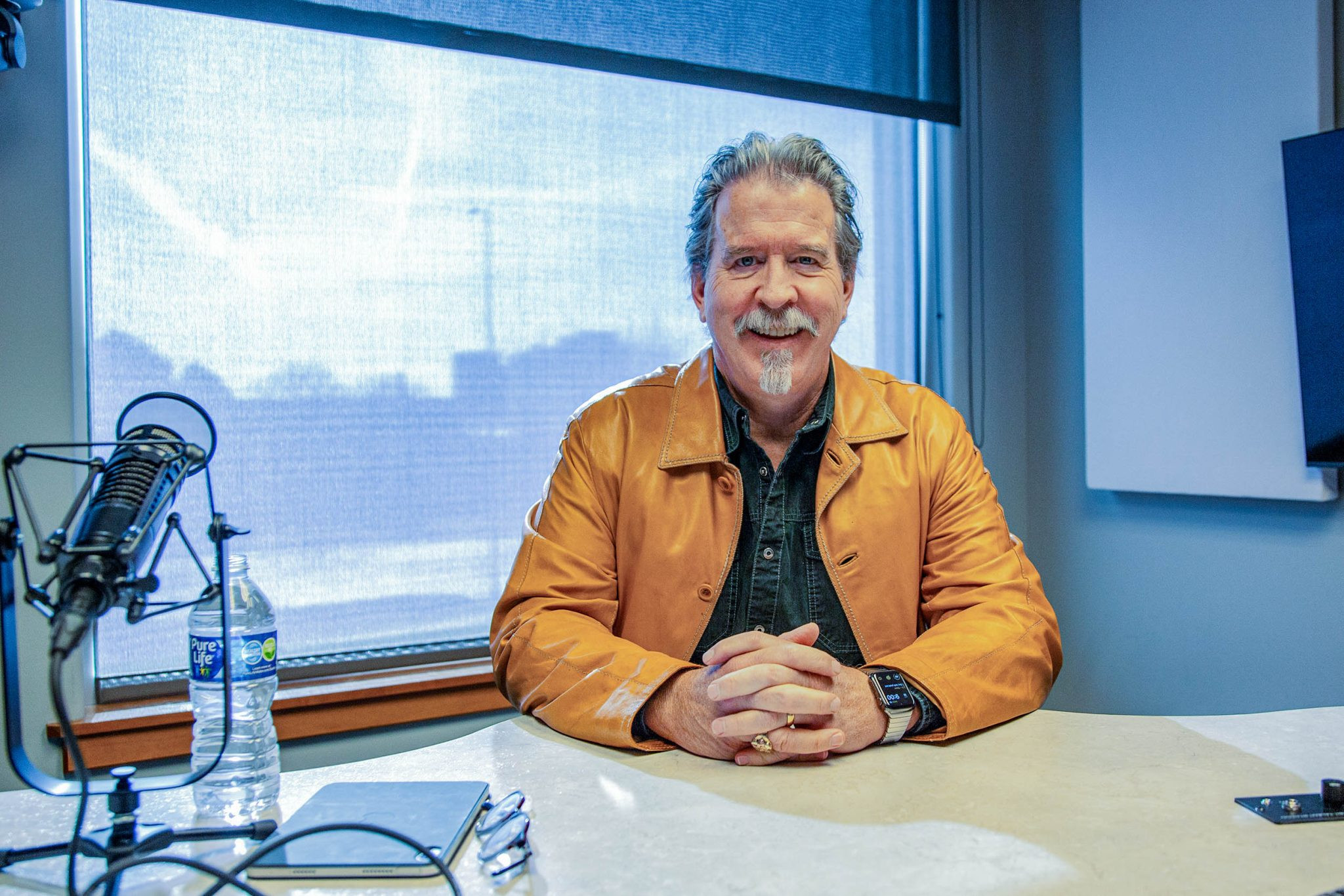
Chronic pain shrinks a life down to the size of a recliner. It starts with the garage you stopped cleaning. Then the dog walk you handed off. Then the dishes, then the stairs, and pretty soon the whole world is whatever you can see from that chair.
Dr. Steven Frost has watched that happen for about thirty years and spent most of that time trying to reverse it. He’s an anesthesiologist and fellowship-trained pain medicine physician at Monument Health, born and raised in Rapid City, and the first pain management doctor in town.
What an intrathecal pain pump actually is
Picture a hockey puck. That’s about the size of it.
The pump goes under the skin of the abdomen, and a thin catheter tunnels around to the back, into the intrathecal space around the spinal cord. Medication runs from the reservoir straight to where the pain signals are.
Delivered that way, morphine is roughly three hundred times stronger.
“If you’re on three hundred milligrams of morphine a day orally, I only need to put one milligram of morphine in the intrathecal space,” Frost said.
The reason is plumbing. A pill has to survive your stomach, intestines, and liver before any reaches the spinal cord. Flood the whole system to get a little where it counts, and you pay for it everywhere else. Confusion. No appetite. Nausea, constipation, itching.
“But if you don’t give them enough pain medication, they’re in severe pain,” Frost said.
It’s the last step, not the first
Frost follows World Health Organization guidelines, and the pump sits at the end of a ladder.
Step one is basically take two aspirin and call me in the morning. Step two moves to weaker opiates, the Vicodin and oxycodone people have heard of. Step three brings in patches, fentanyl, methadone. When someone has climbed all of that and still hurts, that’s the pump’s moment.
For cancer patients, the referral usually comes from an oncologist who notices the dose keeps climbing and the relief doesn’t. You don’t need cancer to qualify. Eight back surgeries and a medicine cabinet full of things that didn’t work counts too. Frost can do a test shot first, a little morphine into the spinal space, so the patient gets a preview.
“It’s amazing when you do that,” he said. “Those patients are just ecstatic.”
Morphine is the approved drug. The list also includes ziconotide, which came from a venomous sea snail on an Australian coral reef and is made only for these pumps.
Living with one
The battery lasts about five years. The catheter can stay for life, and Frost has a patient he’s been treating with a pump for twenty-seven years.
The reservoir holds about three months of medication, like a fuel tank, and refills happen with a needle through the skin. Newer models borrowed the button from hospital IV pumps, so a handheld controller lets patients ask for a little more.
Placement is a same-day, walk-in walk-out procedure, usually done by a neurosurgeon. Frost compares it to getting a port placed for chemo. Studies show less pain, less toxicity, and longer survival in cancer patients.
“It doesn’t cure the cancer,” Frost said. “But if you have less stress on your body, it makes sense that you’re going to be able to help your oncologist fight the cancer better.”
The nurse who drives out to you
Monument’s pain clinic sits at the sports hospital in Rapid City and draws patients from a three-hundred-mile radius. That radius used to be a problem. A refill meant a four-hour round trip, sometimes for someone at the end of life who couldn’t manage the drive.
Now a nurse comes to the house, and refilling pumps is the only thing she does.
“Some of them are rural and live far out, and they can’t drive two hours each way just to get a pump refill,” Frost said. “But the nurse can go out to them.”
Where to start
The clinic is referral-only, so the path begins with a primary care doctor. Cancer pain gets seen same-day or next-day.
Frost is honest about the limits. No magic cure, no hundred percent guarantee. He’ll make one guarantee.
“We can help you cope with your pain,” he said. “If A doesn’t work, we go to B, and if B doesn’t work, we go to C, and we’re going to find something.”


