
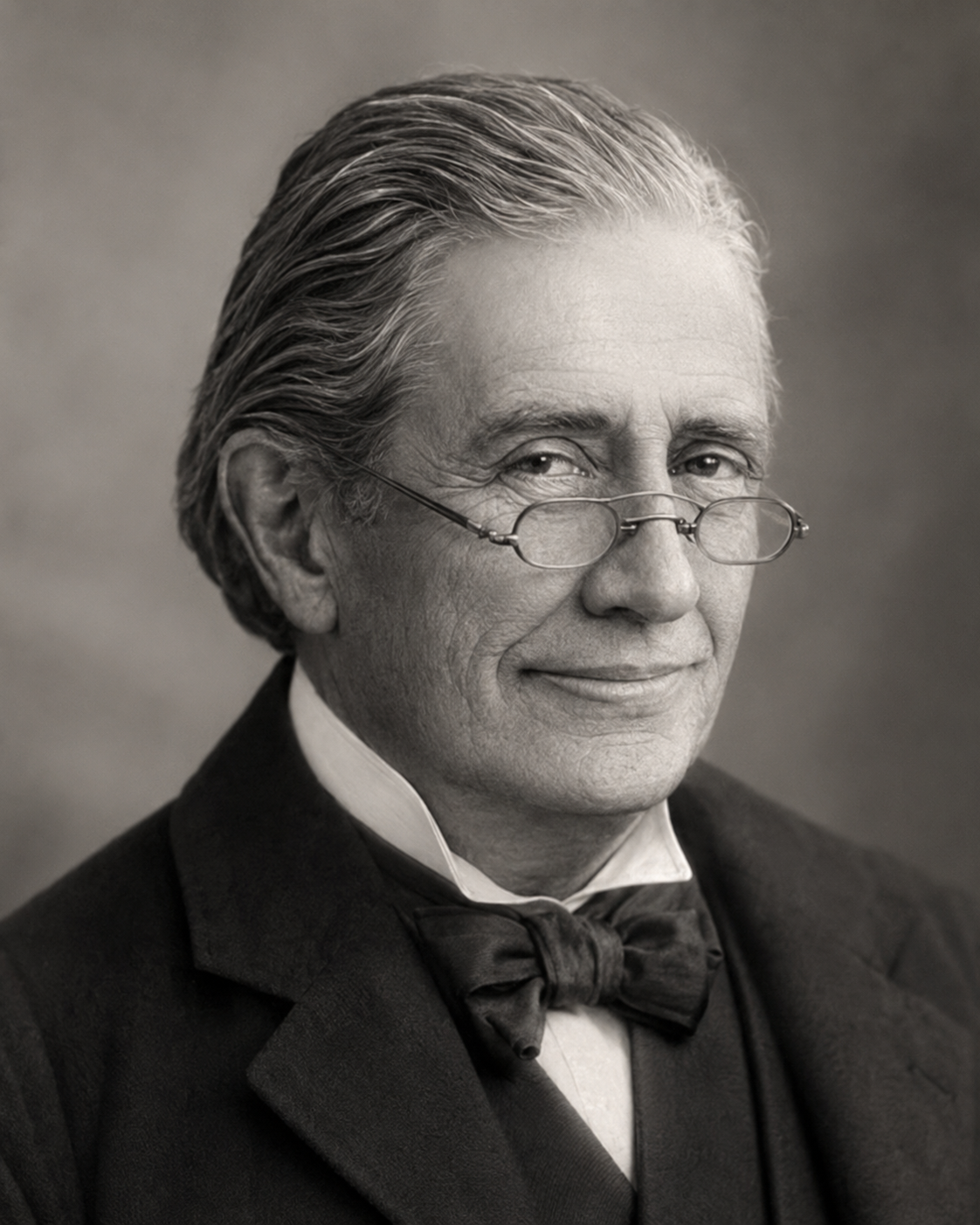
Most people grab Basil Hayden because it looks like it’s easy to drink. Clean label. Nothing fancy. Nothing about it says you’d better know your stuff. And the bourbon backs that up. It’s smooth, a little peppery, the kind you can hand somebody new without scaring them off. The best part is that the name on the bottle was a real guy.
There was an actual Basil Hayden. He lived, he made whiskey, he helped build a community, and he was gone long before anybody put his name on that label.
He was born in Maryland sometime in the 1740s, back when the colony pretty much ran on rye. And that wasn’t some fancy choice. Rye grew there, and turning grain into whiskey was how you kept it from going to waste. Whiskey was useful, like having a smokehouse out back. So Hayden grew up seeing it as something you needed, not something you collected.
Then the family headed west.
The Haydens packed up in 1785 and joined a group of about twenty-five Catholic families moving to Kentucky. The trip was rough. Several of Hayden’s kids died along the way. The ones who made it settled near Bardstown, in Nelson County, where land was cheap, the water was clean, and there was more corn than anybody knew what to do with.
So Hayden used the corn. But he kept the rye too.
His whiskey came out spicier than most of what his Kentucky neighbors were making, but softer than the rye he grew up on in Maryland. He did that on purpose. People still call him the father of high-rye bourbon, and it goes right back to a guy who didn’t want to fully let go of where he came from.
He was also a serious Catholic. The Hayden family gave the land for the first Catholic church in Kentucky. And he lived openly as a church guy and a whiskey maker at the same time, which nobody back then found odd. Whiskey was safer than a lot of the water. It worked like money when coins were short. The people in the front pew weren’t bothered by the distiller sitting next to them.
When he died, around 1804, his idea about flavor stuck around. His grandson, Raymond B. Hayden, kept the high-rye thing going into a different time, when whiskey was shipping across states and a name actually meant something.
Raymond called his label Old Grand-Dad, named right after the old man. Grab a bottle of that today and you’re closer to the original. Bold. High rye. Not softened up for anybody.
The Basil Hayden you know came way later. 1992, part of Jim Beam’s Small Batch Collection during the big bourbon comeback, made under a guy named Booker Noe. The industry wanted new drinkers, the ones who thought regular bourbon was too much. So Beam kept the high-rye recipe as a nod to history but pulled the proof down and smoothed out the rough parts.
So the bottle on your shelf isn’t a copy of what Hayden was making in 1796. His family had been out of it for generations by then. What you’re drinking is more of an interpretation, shaped by branding, modern taste, and a couple hundred years in between.
And there’s something kind of nice about that. Basil Hayden Sr. spent his life finding a middle ground between two kinds of whiskey, working out something between corn and rye back when you had to be flexible to get by. The modern brand does a similar thing, giving an easy way in for people who’d skip the bourbon shelf otherwise. Different time, same idea.
The frontier version probably tasted nothing like what’s in your glass. But the name earned its spot anyway. There’s a lot of made-up backstories in this business. Basil Hayden goes back to a real person, a real recipe, a real family that kept it going.
And honestly, the best part of a whiskey isn’t always how it tastes. Sometimes it’s how the name got there in the first place.


