
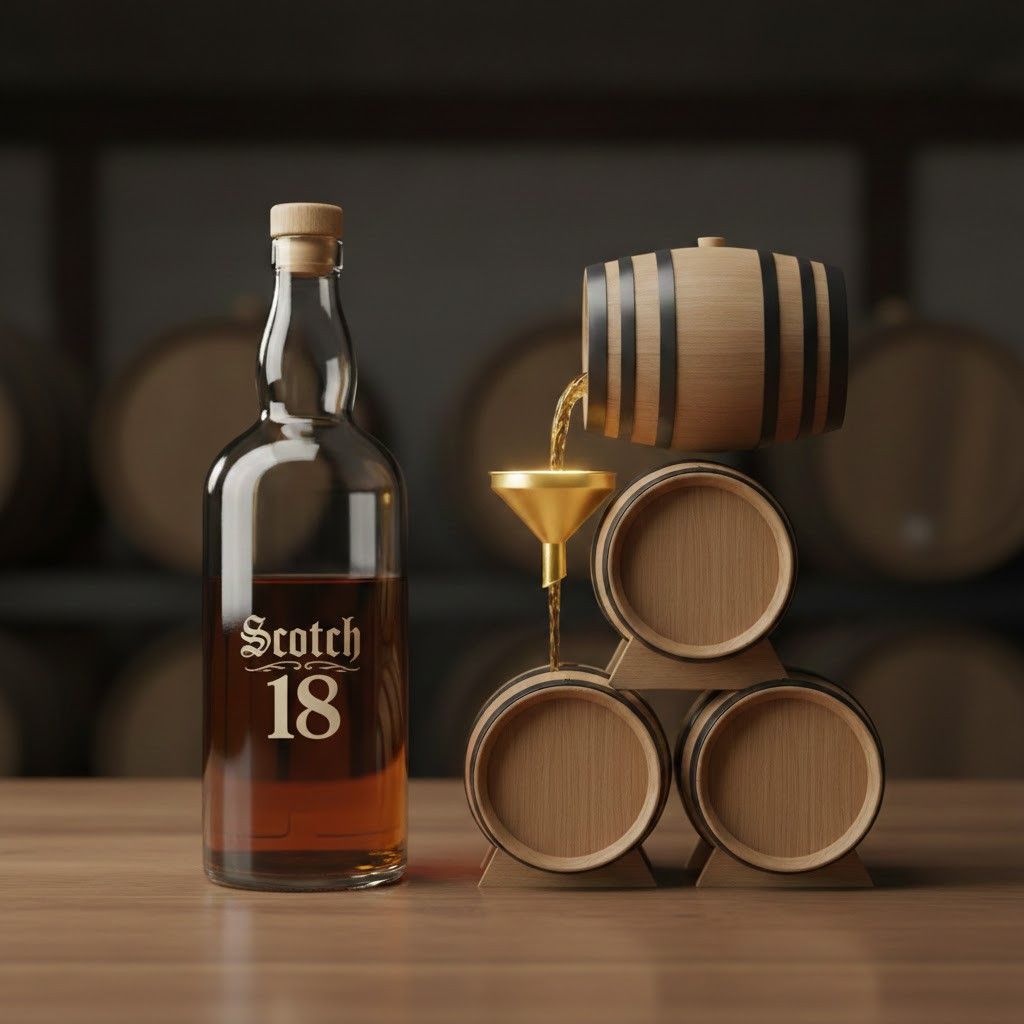
Shoppers who reach for a bottle of 12, 18 or even 24-year-old Scotch whisky often assume every drop inside has been aging patiently for exactly that long. It feels logical. It feels honest. It feels like the whisky version of a guarantee.
But the number on that label is more precise, and more limited, than most people realize.
To understand why, it helps to know how Scotch whisky is made and blended.
Single Malt Doesn’t Mean Single Barrel
A single malt Scotch whisky is not a single barrel. It simply means the whisky comes from one distillery and is made from 100 percent malted barley. Inside that distillery, dozens or even hundreds of casks may be aging at once. Some sit higher in the warehouse where temperatures fluctuate more. Others rest low and cool. Some mature in ex-bourbon barrels, others in sherry casks.
Even when filled on the same day, those casks will not taste identical years later. That variation is natural. It is part of what makes whisky interesting.
To maintain a consistent flavor profile from year to year, distilleries blend multiple casks together before bottling. The result is a reliable house style rather than a one-off expression.
What Blended Whisky Really Means
Blended Scotch whisky goes a step further. It can include whiskies from multiple distilleries and typically combines malt whisky with grain whisky. Grain whisky is usually lighter and more neutral in flavor, while malt whisky brings weight, texture and character.
Blending allows producers to shape a specific flavor profile, manage supply and create balance across different styles. It is less about cutting corners and more about building complexity and consistency.
The Age Statement Rule
Here is where the age statement becomes important.
Under Scotch whisky regulations, the age printed on the bottle must reflect the youngest whisky used in that bottle. If the youngest component is 18 years old, the label must read 18 years. It cannot claim to be older, even if older casks are included in the blend.
That means an 18-year-old Scotch may quietly contain 20-year-old, 25-year-old or even older whisky layered into the mix for added depth. What it cannot do is advertise an age older than its youngest drop.
The rule exists to protect consumers and maintain integrity in the marketplace. Before modern regulation, age claims could be vague or misleading. Today, the standard is clear and enforceable.
What About Non-Age-Statement Bottles?
Not every bottle carries an age statement. Many Scotch whiskies today are labeled without one, often referred to as NAS, or non-age-statement releases. In those cases, the producer is not required to disclose the age of the whisky inside.
That does not automatically mean the whisky is young. It simply means the blender chose to emphasize flavor profile over a specific number. Some NAS bottlings contain a mix of younger and older components designed to create a particular character that might not fit neatly into a single age declaration.
What This Means for Buyers
For shoppers, the takeaway is straightforward. An age statement on Scotch whisky tells you the minimum age of the youngest whisky in the bottle. It does not limit how old other components might be.
In many cases, you may be getting whisky that is older than what the label promises.
Understanding that nuance does not diminish the value of an age statement. It clarifies it. And for anyone building a home bar or exploring Scotch for the first time, that clarity makes every pour a little more interesting.
For more stories that make whisky clearer and more approachable, listen to Rob and Mark on Whiskey@Work.


