
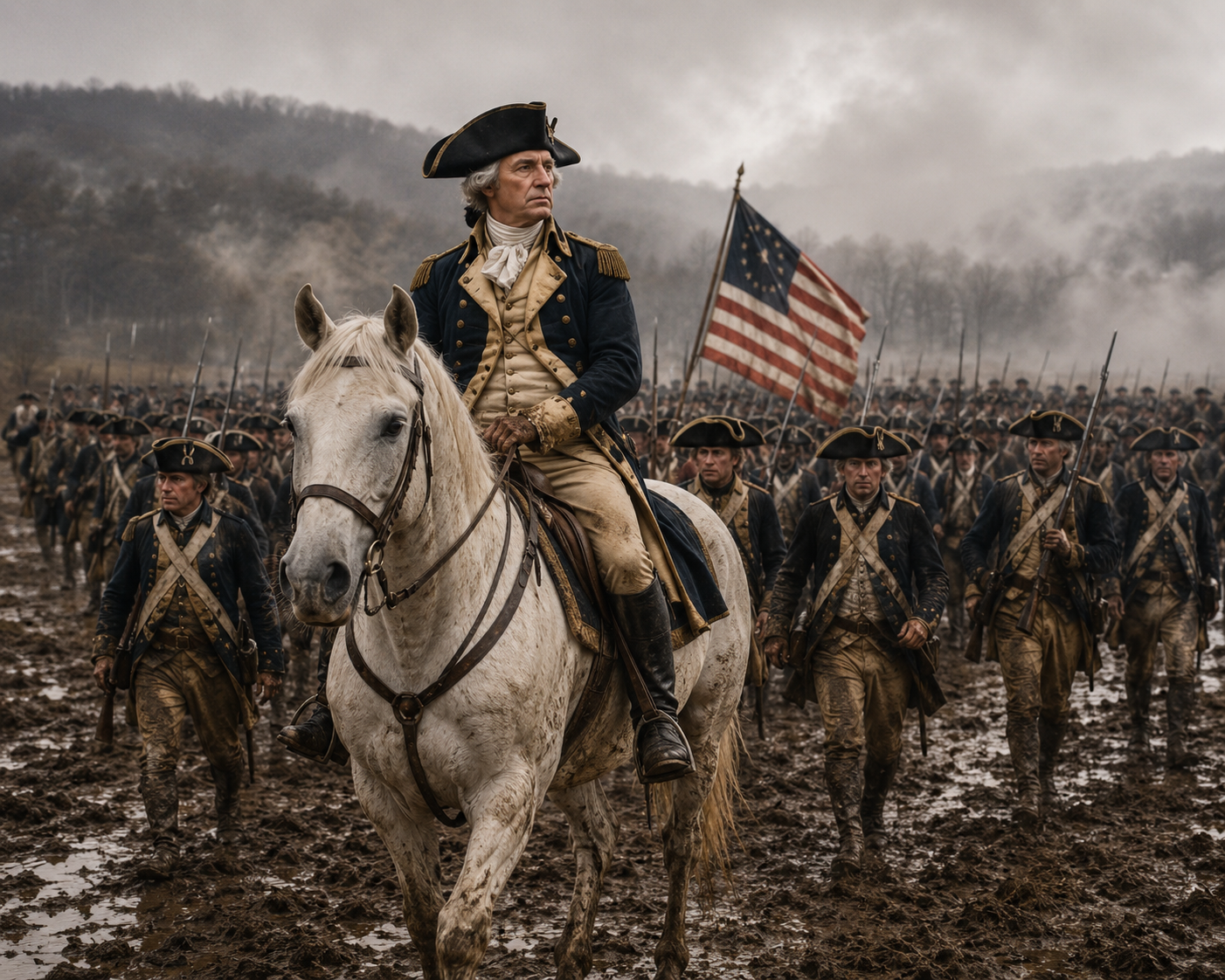
It’s 1794, and there you are, standing in a muddy field outside of Pittsburgh with roughly six thousand furious whiskey distillers, farmers, and frontier families. You knew this day might come. You knew eventually the federal government would cook up an excise tax. But eighteen percent? On your tiny still? On the side-hustle whiskey you mostly used for barter because cash was scarce west of the Appalachians?
The big Eastern distilleries could swallow the tax and pass the cost to their wealthy customers. Out here on the frontier, whiskey wasn’t a luxury. Whiskey was the economy. People paid doctors in whiskey. They paid each other in whiskey. It was liquid currency in a world where coins were rare as hen’s teeth.
So you decided this wasn’t going to stand.
THE TAX MAN HAD A BAD WEEK
Protests became raids. Raids became shootouts. One tax collector’s home was burned clean to the ground. Then a friend of yours was killed in a clash with government troops, and anger stopped being personal and started being organized.
Now you’re standing shoulder to shoulder with six thousand armed men, ready to send a message to the brand-new federal government that the frontier will not be pushed around.
But then you hear it.
Hoofbeats. Lots of them.
A wave of dust rolls over the hill and the truth hits hard. That isn’t a small detachment sent by some clerk in Philadelphia. That is an army. Thirteen thousand men. Twice the size of the force used during most of the Revolution.
And leading them…
George Washington?
YES. THAT GEORGE WASHINGTON.
The actual George Washington. The man who’d been dreaming of retirement at Mount Vernon, of farming and quiet mornings and maybe finally getting some sleep. The man who now had to saddle up and personally lead the United States Army into the field because a bunch of whiskey distillers refused to pay a tax.
It remains the only time in American history that a sitting president has personally commanded troops in the field.
An excise tax is annoying. A bullet from the Continental Army is fatal.
You drop your musket and run. Within days, the rebellion collapses. Hundreds are arrested, two are convicted of treason, and both are later pardoned by Washington himself. Not because they were innocent, but because he wanted to show mercy and build something lasting, not rule through fear.
WHAT WASHINGTON DID NEXT
Now here’s where the story gets good.
Washington rode home, hung up his sword, and apparently spent the trip back thinking. Because three years later, when he stepped down from the presidency in 1797, he did something that would’ve made every one of those angry Pittsburgh distillers choke on their own corn mash.
He opened a whiskey distillery.
His farm manager, a Scottish immigrant named James Anderson, pitched him on it almost immediately. Anderson had run distilleries back in Scotland, looked at Washington’s property, saw a gristmill, a water supply from Dogue Creek, and fields full of rye and corn, and said, “I can make you a lot of money.”
Washington admitted he knew nothing about distilling. Anderson built it anyway.
By 1799, the operation had produced nearly 11,000 gallons of whiskey. The average Virginia distillery at the time turned out around 650 gallons a year. Washington was running one of the largest whiskey operations in the country, paying that same excise tax on his own product without complaint, without protest, without burning anyone’s tax office to the ground.
YOU CAN STILL DRINK HIS WHISKEY TODAY
The distillery burned in 1814 and was never rebuilt. But in 2007, it was reconstructed at Mount Vernon using Washington’s original 1790s recipe: 60 percent rye, 35 percent corn, 5 percent malted barley, distilled in wood-fired copper stills the way his workers once did it. You can visit today and buy a bottle, if you get there before it sells out.
So the next time someone says American history is boring, tell them about the president who crushed a whiskey rebellion, went home, thought about it for three years, and quietly became one of the biggest whiskey makers in the country.
For more whiskey stories that blend history, chaos, and a little frontier madness, listen to Rob and Mark on Whiskey at Work.


