
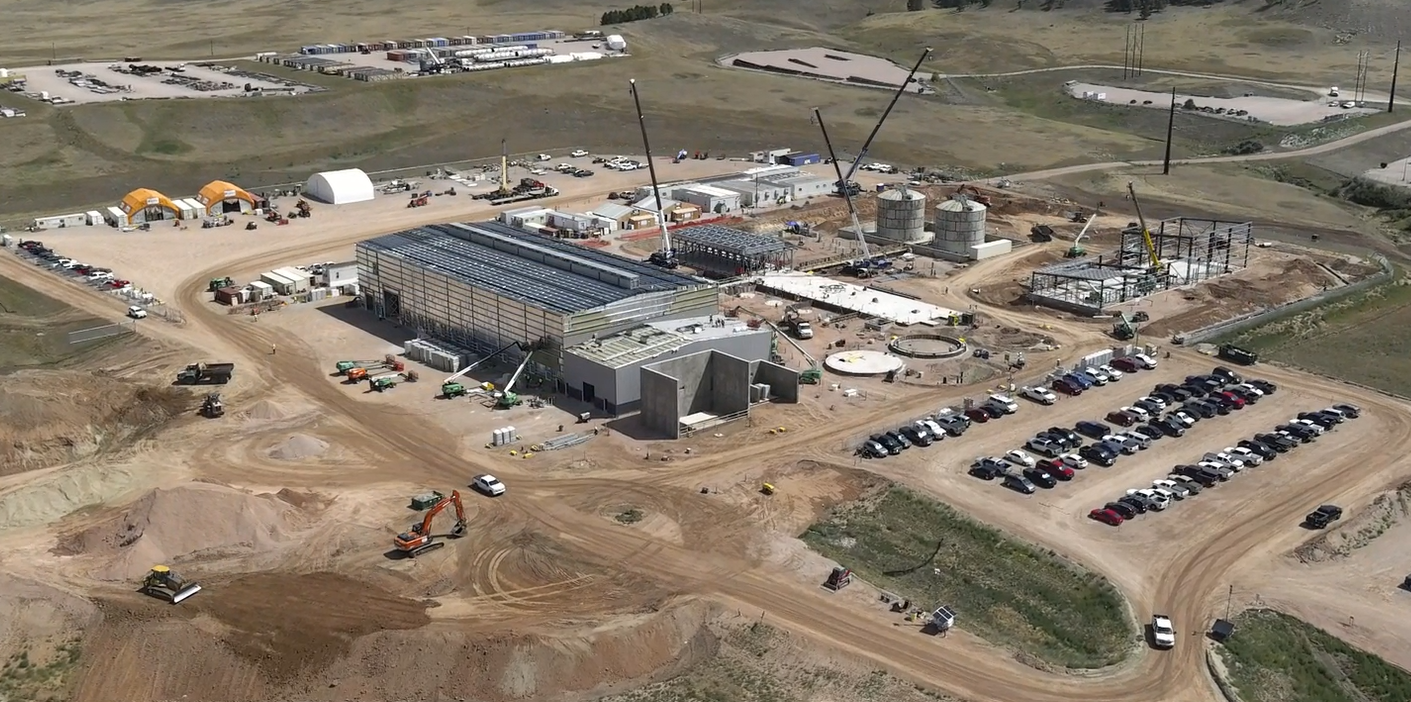
RAPID CITY, S.D. – The $320 million, 99-megawatt gas-fired Lange II Generating Station in the northern part of Rapid City should be in-service by Dec. 1, 2026.
When it is online, it will provide power for 78,000 Black Hills Energy customers in southwest South Dakota, northeast Wyoming, and a small area of southeast Montana and serve as a replacement for the aging 1960s-era Ben French Power Plant on Deadwood Avenue.
Last week, Black Hills Energy requested approval from the South Dakota Public Utilities Commission to add a new monthly surcharge to customer bills – known as a Phase-in Plan Rate (PIPR) – to cover the costs of the $320 million plant project.
“Our PIPR filing is a mechanism that is available in South Dakota for large projects that are outside of the traditional calendar or schedule,” Wes Ashton, Vice President, South Dakota and Wyoming Utilities, BHE, said. “So, what we have filed is to include cost for the associated investment with Lange II and that power plant in a PIPR filing instead of any other mechanism.”
If approved by the PUC, the Lange II surcharge will appear on customer bills starting in December. The estimated monthly bill impact of the Lange II rider will be approximately $19.70 for average residential customers and approximately $24.25 for small commercial customers.
The proposed PIPR surcharge would be a separate line item on the bill, rather than being an expense included in the rate base, providing transparency to customers about the costs associated with the Lange II project.
“If it was in the rate base it doesn’t have quite the transparency it will, so we thought it was important to have some transparency for our customers to see the cost of generation,” Ashton said.
Another benefit to customers, Ashton said, is that utility scale investments depreciate and as the project shows depreciation, there will be a decrease in the amount charged on a customer’s bill for the Lange II project.
Phase-in plan rate riders are common in South Dakota and provided under South Dakota Codified Law 49-34A-73.
“All utilities have the ability to use these riders and I believe every (utility) is to some extent,” Patrick Steffensen, Utility Analyst, South Dakota Public Utilities Commission said. “They’re very common.”
The Lange II rider is separate from the base rate review filed earlier this year with the Public Utilities Commission, seeking recovery of customer-focused investments made in upgrading and maintaining electric transmission and distribution systems over the past 12 years since the last rate update in 2014.


