
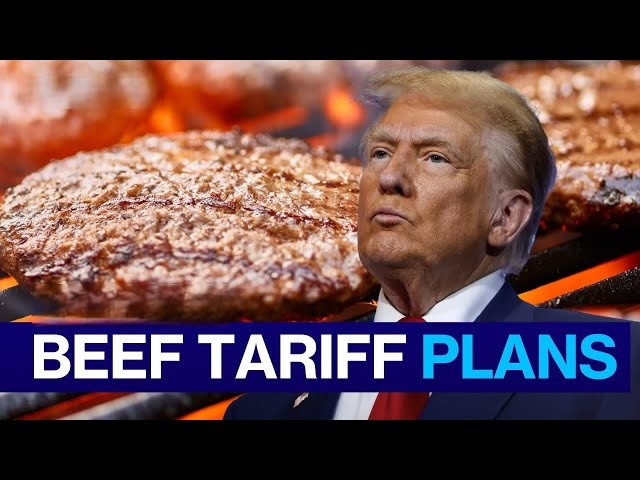
Executive orders suspending tariff-rate quotas postponed amid outcry from ranchers and GOP lawmakers. U.S. cattle herd at 75-year low as beef prices hit records
WASHINGTON, D.C. – Amid push-back from U.S. ranchers, the Trump administration is delaying a plan to suspend tariffs on imported beef, according to the Wall Street Journal.
Trump had been poised to sign executive orders on Monday, May 12, 2026, that were intended to reduce beef prices in a new push to confront American voters’ concerns about prices, Bloomberg reported earlier.
The orders aim to address short-term supply issues in the U.S. beef market by expanding imports and by supporting a rebuilding of the country’s domestic cattle herd.
But the actions were delayed as the administration finalizes details, the Journal said, citing a White House official. The newspaper added that the delay followed an outcry from cattle ranchers and some congressional Republicans.
The U.S. cattle herd has shrunk to a 75-year low, sending consumer prices to record highs while also tightening margins for meat processors. The cost of beef has been a key driver of food inflation, making it a political flashpoint for the Trump administration before November’s congressional elections.
Trump’s measures would suspend the annual tariff-rate quota, which applies a higher rate after a certain level of beef imports are reached, on all beef-exporting nations, the Journal reported, citing people familiar with the matter. It would enable more meat to enter the U.S. at low rates.
Yet increasing imports comes with political risks. Many American ranchers, a key segment of the president’s political support, have said that foreign supplies are undercutting their business. Trump triggered a fierce pushback from ranchers and farm-state Republicans last year with a decision to quadruple the tariff-free quota on Argentine beef.
The U.S. is already poised to import a record amount of beef this year, according to the U.S. Department of Agriculture. Those supplies in the first quarter of the year have come largely from Brazil, Australia and Canada, according to USDA data. Brazil, the world’s top beef exporter, in particular is poised to ship more to the U.S. as its usual buyer, China, has imposed quotas.


