
USDA has 90 days to review its authority to require mandatory Country-of-Origin Labeling for beef and determine the next steps
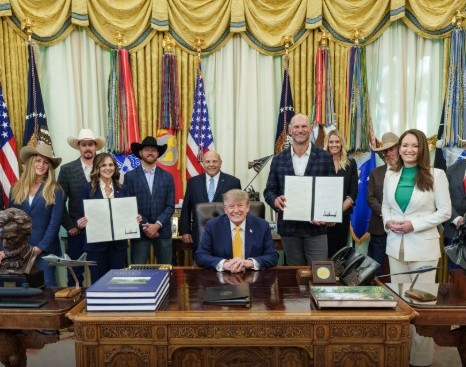
WASHINGTON, D.C. – President Trump signed a pair of executive orders Sept. 4 in a push to address ranchers’ concerns after his recent move to ease tariffs on imported beef and ease beef inspection standards ignited a backlash among supporters in major cattle-producing states.
In addition to the two Executive Orders signed by the President, USDA also announced four additional actions it is taking to follow-up on the USDA Plan to Fortify the American Beef Industry (2025 USDA Beef Plan) released last year, and the Ranchers First Initiative released earlier last week.
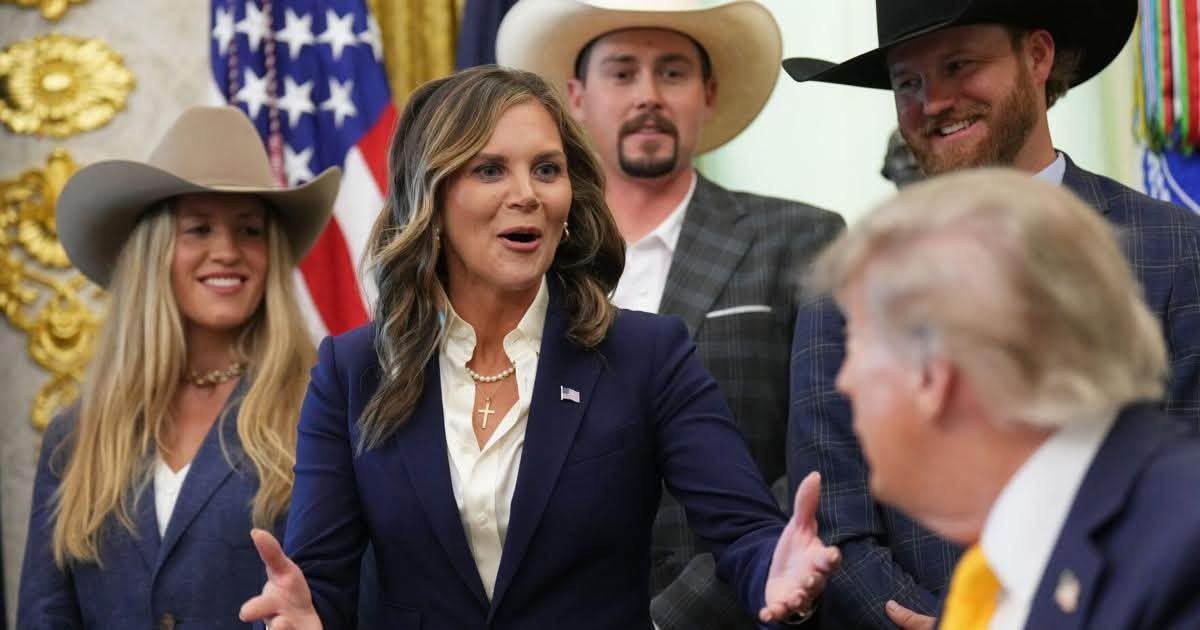
Amanda Radke, a sixth-generation cattle rancher from Mitchell, South Dakota, traveled to Washington, D.C., to witness the historic signing in the Oval Office.
Radke has called on the administration to support local producers, through Facebook posts and appearances at agricultural events.
“My ask of President Trump is to bet on the American cattle rancher,” Radke said. “We can rise to the occasion of feeding the consumers all across this country and around the world.”
After the pens were put down, those attending the signing shared their optimism for the road ahead, saying the recent actions aren’t an overnight fix to a broken system that American ranchers have had to operate under for far too long, but industry representatives are calling it an historic step in the right direction.
Last week’s Executive Orders include:
Country of Origin Labeling: American consumers deserve clear, honest labels — and country of origin labeling delivers that transparency.
Building on the voluntary Product of USA label, the Executive Order directs the Department of Agriculture, in consultation with the United States Trade Representative, to review its authorities related to mandatory country of origin labeling for beef products through new regulations and legislative recommendations.
President Trump says his new cattle industry actions will address Country-of-Origin Labeling and give ranchers more tools to protect livestock from wolves.
Trump’s executive order gives USDA 90 days to review its authority to require mandatory Country-of-Origin Labeling for beef and determine the next steps.
Senate Majority Leader John Thune of South Dakota posted on social media responding to the executive order, writing, “South Dakota ranchers deserve a fair labeling system that provides consumers with basic information on the origin of the food that’s on their family’s dinner table.”
Supporting America’s Ranchers
Combat Predation: American ranchers should be able to protect the cattle they raise.
The Executive Order directs the Secretary of the Interior to determine whether gray wolves or Mexican wolves meet the criteria for delisting or downlisting under the Endangered Species Act and begin the process of delisting or downlisting them.
The Department of the Interior and the Department of Agriculture are also directed to update their standards for compensating ranchers for losses due to predators, and to ease authorization for lethal removal when necessary.
Animal conservative groups slammed Trump’s efforts to roll back protections for gray wolves.
“Scapegoating wolves is a cynical and performative gesture given the immense harm that the Trump administration has inflicted on our nation’s ranchers with irresponsible tariffs,” Sara Amundson, president of Humane World Action Fund, said in a statement.
Amundson cited Department of Agriculture data that 1% of cows and sheep are killed by wild carnivores including wolves. She added that removing protections will lead to “untold death and cruelty” for a species that was once on the brink of extinction.
Promoting fair competition in livestock markers and expanding market access for American meat producers
Strengthening Packer Competition: American ranchers deserve fair, competitive markets that reward their hard work, not a marketplace dominated by a handful of concentrated packers, the President said.
The Executive Order directs USDA to prioritize investigations into potential violations of the Packers and Stockyards Act and increase enforcement resources and staffing.
The Executive Order also directs USDA to continue close coordination with the Department of Justice and report to the President on current enforcement actions, resource needs, and a plan to strengthen enforcement over the next year.
How Trump’s ongoing efforts to rescind Packers and Stockyards Act (P&S Act) rules – designed to strengthen meat sector competition and protect ranchers and farmers from abusive meatpacker practices – can co-exist with his recent Executive Order isn’t clear.
Expanding Processing and Market Access: Small and regional processors are critical to expanding competition and giving ranchers more options to get their cattle to market without compromising food safety.
The Executive Order directs USDA’s Food Safety and Inspection Service to expand the Cooperative Interstate Shipment and Talmadge-Aiken programs so more state-inspected meat can cross state lines.
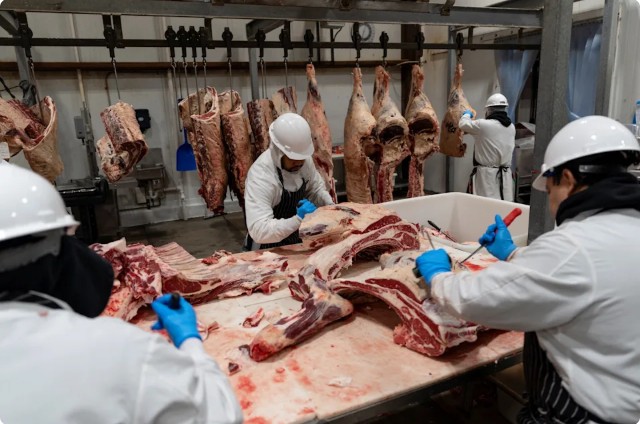
The order supports efforts to make it easier for ranchers to sell their product directly to customers, bypassing meat processing facilities where meat typically goes before being inspected, processed and sold. Four companies ‒ Cargill, Tyson Foods, JBS USA and National Beef Packing Co. ‒ currently control about 85% of U.S. meat processing, effectively giving them a monopoly over the meat industry.
“They’re not going to be happy when they hear this,” Trump said. “I don’t know who they are, but they’re going to be coming at me at different angles.”
The Executive Order further directs USDA to build a “one-stop shop” and dedicated technical assistance program for small and very small processors and modernize meat inspection regulations to cut unnecessary red tape.
“For the first time ever, we’re going to give farmers and ranchers the right to process their own food,” Trump said at the Friday signing.
Additional Ranchers First Initiative announcements:
• Increasing Grazing Lands Enrolled in the Conservation Reserve Program (CRP): USDA will enroll nearly 1 million new acres in Grasslands CRP, providing ranchers with rental payments and cost share assistance to maintain rangeland and pastureland as grazing areas.
• Growing AMS Remote Grading Program: USDA will work to nearly double the number of producers and plants in the AMS Remote Grading Program. This program matches simple technology (e.g., smartphones and a customized, easy to use app), with a data management and oversight program to enable USDA to assign grades to beef carcasses from an offsite location. Through this program, AMS is adopting emerging technology to modernize USDA beef grading services and improve efficiency, consistency, and accuracy for a more competitive and transparent marketplace.
• Expanding AMS Instrument-Enhanced Grading Program: USDA will increase adoption of the Instrument-Enhanced Grading (IEG) Program, now used on approximately 20% of fed cattle (20,000 head/day) slaughtered in the U.S. Under IEG, facilities can reduce grader staffing, sometimes by as much as half, resulting in significant cost savings.
• Leveraging USDA Lawfare Apparatus: USDA will refocus its robust strike force team dedicated to combatting instances of agricultural lawfare on the federal, state, and local levels, to address and counter abusive legal actions that threaten ranching operations, particularly cases involving unfair or excessive eminent domain claims.
Previous Ranchers First Initiative announcements:
• Rebuild the Great American Beef Herd: Developing new tools to support heifer retention, including the creation of the Beef Retention and National Development endorsement for Livestock Risk Protection.
• Risk Management Tools: Speeding up recovery after wildfires and other natural disasters by allowing producers to use the Emergency Conservation Program on acres enrolled in the Grassland Conservation Reserve Program.
• SPUR 2.0 Guaranteed Loan Program: Creating a Strengthening Processing for U.S. Ranchers (SPUR) Guaranteed Loan Program to support regional processing, including establishing processor co-ops, expanding small business footprints, and increasing the variety of animal proteins being processed.
• Buying American Beef: Prioritizing local American beef in federal spending in state and federal facilities by working with other departments including the U.S. Department of War, the U.S. Department of Health and Human Services, the U.S. Department of Justice, and the U.S. Department of Veterans Affairs.
• Focusing on the Future of American Ranching: Establishing a new initiative focused on supporting beginning and veteran farmers and ranchers.
2025 USDA Beef Plan:
• Grazing Access: Signed a USDA/DOI grazing MOU to improve coordination, expand producer access, streamline management, and prevent loss of Animal Unit Months (AUM).
• Vacant Allotments: Announced that the Forest Service is working to clarify and streamline regulatory authorities to get more animals on the landscape.
• Eliminating Delays – Streamlining Permitting and Authorizations: Announced changes to streamline permitting and better align U.S. Forest Service processes with BLM, making it easier to get more animals on the landscape.
• Elevating Rural Americans – Giving Ranchers a Voice: Prioritized gathering feedback directly from ranchers through numerous listening sessions, roundtables and meetings.
• Maximizing Flexibilities/Keeping Working Lands Working: Provided $700 million for a Regenerative Pilot Program, which seeks to enhance long-term agricultural sustainability, including rotational grazing and integrating livestock.
• Predator Management and ESA Reform: Implemented improvements to APHIS Wildlife Services predator management operations.
• Quicker Drought Grazing Loss Assistance: Lowered the threshold for producers to qualify for Livestock Forage Program payments, providing quicker access to disaster relief.
• Enhanced Payment Rate for Predation Losses: Increased payment rate for livestock losses due to predation from animals listed as endangered or protected increased to 100% of market value
• Unborn Livestock Protection: Increased payment rates for unborn livestock death losses to 85% of the lowest non-adult weight class, as applicable, of the same livestock breed.
• Broader Risk Management Access: Extended the “Beginning Farmer” definition from 5 to 10 years and increased premium subsidies—supporting more affordable insurance for ranchers.
• Product of USA Label: Launched a public awareness campaign to inform producers and consumers about what this new label means for the food supply.
• Promote Fair and Transparent Markets: Launched the National Feeder and Stocker Cattle Dashboard and publishes over 300 weekly reports through Livestock Mandatory Reporting.
• Expanding Remote Grading: Expanded AMS Remote Grading Pilot Program to include for improved access to official grading.
• Reducing Fees for Small Processors: Provided $20 million in funding for overtime and holiday inspection fee reduction for small and very small processors.
• Enhancing Local Processing: Provided $60 million in funding for a fourth round of the Meat and Poultry Processing Expansion Program.
• Enhancing Access to Data: Launched the AI Feeder Cattle project using new technologies to automate the live animal evaluation process and improve market consistency.
• Beef for Students: Issued a memo directly encouraging Child Nutrition Program operators to source and incorporate local beef.
• Updated Science-Based Dietary Guidelines: Released the 2025-2030 Dietary Guidelines for Americans that include protein as a foundation for every meal.
• Increasing Veteran Owned and Operated Ranches: Published a Notice of Funding Opportunity for AgVets that prioritizes projects expanding outreach and training to help veterans enter ranching.
• WOTUS: Issued an EPA proposed rule to establish a clear, durable, common-sense definition of “Waters of the United States” under the Clean Water Act.
Additional actions by the Trump Administration to help ranchers ihclude:
• Robust New World Screwworm Response: Coordinated strong, whole-of-government approach to combat New World Screwworm and protect the U.S. cattle supply.
• 20 New Trade Deals and Frameworks: Expanded global market options for American farmers and ranchers through new trade deals and frameworks with Jordan, China, Ecuador, United Kingdom, Indonesia, North Macedonia, Taiwan, El Salvador, Guatemala, Switzerland, Argentina, Malaysia, Cambodia, Vietnam, South Korea, European Union, Nigeria, and Australia.
• Strengthening Processing for U.S. Ranchers Program (SPUR): Provided $500 million to help small and mid‑sized beef processors, protecting regional processing capacity.
• Lower the Cost of Fertilizer: Provided $500 million to onshore fertilizer production and lower costs with the Fertilizer Investment & Expansion for Long Term Domestic Supply Program.
• Increasing Transparency in Packers and Stockyards Enforcement Actions: Launched GovDelivery sign‑ups for Packers & Stockyards enforcement actions to boost public awareness and accountability.
• Beef Grading Standards Updates: Asked for public input on updating the U.S. beef carcass grading standards to better meet the needs of producers and consumers.
• Expanding Access to Locally Raised Beef for American Students: Launched the Harvest to Hallways initiative August 2026.
• Equipment for Schools: Invested $7.5 million in cold‑chain equipment for food banks to deliver more meat and whole foods to families in need.
• Veterinarian Loan Repayment: Supported loan repayment for rural veterinarians by increasing funding for the Veterinary Medicine Loan.
• Repayment Program by $7.5 million and streamlining the application process via an online portal.
• Supporting Rural Veterinary Clinics: Increased funding for the Veterinary Services Grant Program by $7.5M and streamlined the application and reporting processes to support rural veterinary practices.
• Expanding USDA Veterinary Scholarships: Increased support for veterinary students by doubling the number of scholarships available and increasing the scholarship amount to $40,000 per year for the USDA Food Safety and Inspection Service Scholarship Program. Similarly, the USDA Animal and Plant Health Inspection Service increased the maximum scholarship amount to $50,000 per year for the Chester A. Gipson Internship Program and to $20,000 per year for undergraduates and to $40,000 per year for graduate students for the Saul T. Wilson, Jr. Internship Program.
After the pens were put down, Radke shared her optimism for the road ahead.
“These actions aren’t an overnight fix to the broken system that American beef cattle producers have had to operate under for so many years, but it’s a historic step in the right direction that we should all celebrate,” Radke noted.


