
JBS ties to Trump administration sends conflicting message
WASHINGTON, D.C. – The U.S. Department of Justice confirmed an active antitrust investigation into the country’s largest beef processors, with prosecutors having reviewed more than three million documents as they examine whether concentration in U.S. cattle and beef markets has helped drive up grocery prices.
But the Trump administration’s cozy relationship with at least one of those processors, JBS, has raised concerns that center on allegations of undue influence, political ties and a preference for corporate interests over U.S. ranchers and workers.
While producer advocacy group R-CALF USA, which sent its property rights chair Shad Sullivan to the recent briefing, called the joint appearance by DOJ, USDA, and White House officials “unprecedented”, much of the heavy lifting has been well underway since early to mid- 2021 under the former Biden administration and led by Tom Vilsack’s USDA and subsequently rescinded by the Trump administration.
*See Biden, Garland, Vilsack Meet With Ranchers, Farmers
*See DOJ Updates SD Cattle Producers
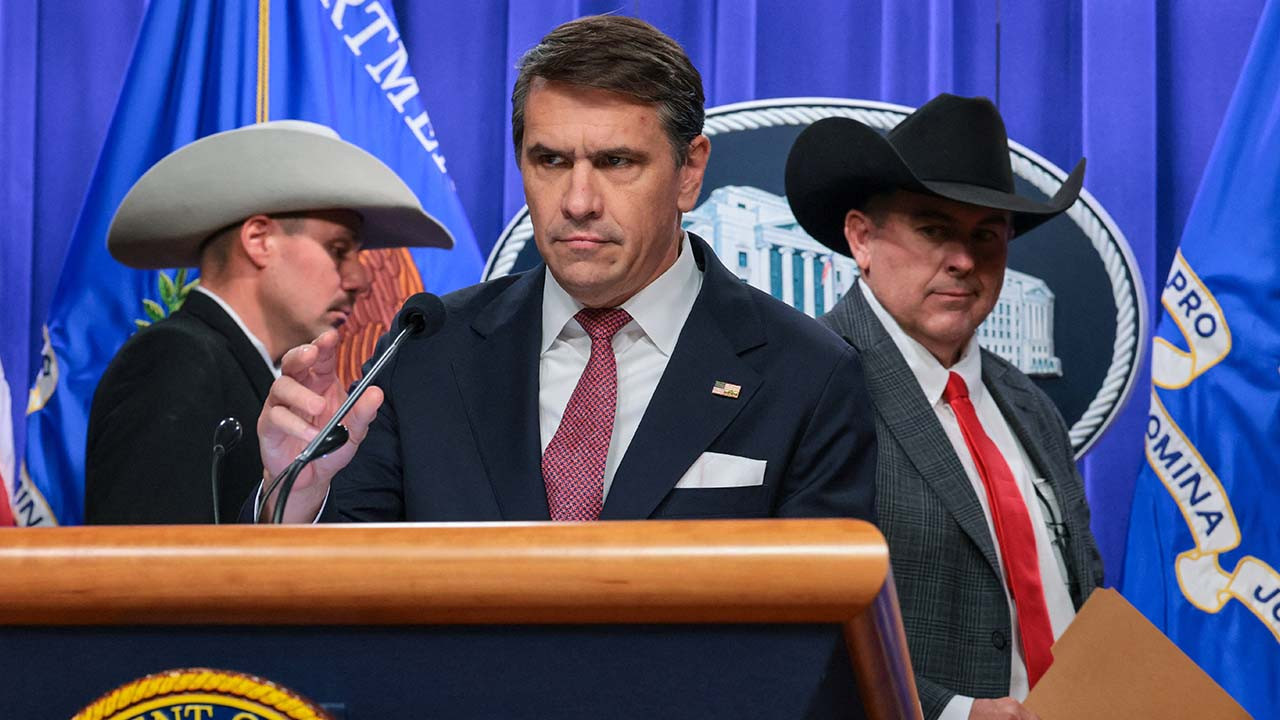
Acting Attorney General Todd Blanche, speaking at the White House news conference, said multiple plant closures, the current market structure, and high concentration in the industry all point to potentially anti-competitive activity, though he declined to name specific companies. Tyson Foods, Cargill, JBS USA, and National Beef Packing Company together slaughter roughly 85% of U.S. grain-finished cattle.
Blanche urged ranchers, purchasers, processors, and other industry insiders to report price-fixing, bid-rigging, market allocation, and procurement fraud through the DOJ’s whistleblower program, which can pay informants 15% to 30% of any criminal recovery exceeding $1 million.
But Trump has made all that harder to do. During his first term, Trump canceled a rule under the Obama administration that defined unfair practices in livestock markets and would have made it easier for ranchers to take on meatpackers over pricing and allegations of anti-competitive practices. In his second term, Trump canceled a similar Biden-era rule aimed at increasing enforcement against anticompetitive practices in the meatpacking industry.
As part of Trumps deregulatory blitz, some inspection tasks are now delegated to company employees instead of USDA inspectors that some argue puts more and more autonomy and control in the hands of big meatpackers.
Agriculture Secretary Brooke Rollins tied this most recent probe to a broader food-security concern, noting that the U.S. cattle herd stood at 86.2 million head as of January 1 — “the lowest since the 1950s.” Rollins said the country has lost more than 17% of its cattle ranchers over the past decade, including more than 100,000 ranches in total. “Growing the herd size is an immediate problem in need of solutions, and we’ve already begun implementing across the government and into the states how we’re going to solve that,” Rollins said.
Secretary Rollins also singled out the foreign ownership of two of the big four — JBS and National Beef — as a national-security concern, framing Brazilian control of major U.S. processing capacity as a strategic vulnerability.
Yet in January 2025, the Trump administration accepted a $5 million donation from Pilgrim’s Pride, a U.S. subsidiary of foreign-owned JBS for Trump’s 2025 inauguration, the single largest contribution to the event.
In April 2025, JBS’ long-stalled bid for a U.S. listing on the New York Stock Exchange was approved and the company began trading after more than a decade of being turned away by the Security Exchange Commission previously. Opponents pointed to JBS’s history of “major corruption, bribery, price-fixing, child labor violations, and environmental destruction,” arguing they should not have access to American investor capital.
Then, in November 2025, Trump signed an executive order removing 40% tariffs on imports of Brazilian beef into the U.S. JBS is headquartered in Brazil.
At the time, R-CALF USA CEO Bill Bullard strongly criticized the Trump administration’s move, saying, “Removing the 40% tariff on Brazilian beef incentivizes multinational packers to source cheaper, imported products, directly displacing American cattle producers and exacerbating the decline of the domestic herd.”
He added, “We are deeply disappointed that the President has reversed course on tariffs that are needed in order to encourage the investment by the cattle industry to rebuild and expand.”
Bullard has changed his tune at the recent announcement of the DOJ’s antitrust probe, expressing gratitude, “for the administration’s focus on market reform.”
At the press conference announcing the antitrust probe, White House senior trade adviser Peter Navarro said the combination of a historically tight cattle supply, dominant processors, and foreign ownership has fueled beef inflation, and was particularly pointed about JBS’s political spending in the United States. “I hasten to add here that the Brazilians are far more of the problem, and it’s complicated by the fact that the Brazilians, particularly JBS, hands out millions of dollars to our American political system like it’s candy,” Navarro said. “And the rate of return they get on that would make a Wall Street hedge fund blush, and we have got to put a stop to that.”
DOJ officials offered no timeline for charges or a civil suit but noted that criminal and civil antitrust inquiries can proceed in parallel.
Spokespeople for Tyson, Cargill, JBS, and National Beef did not immediately respond to requests for comment from Reuters or Fox Business.


