
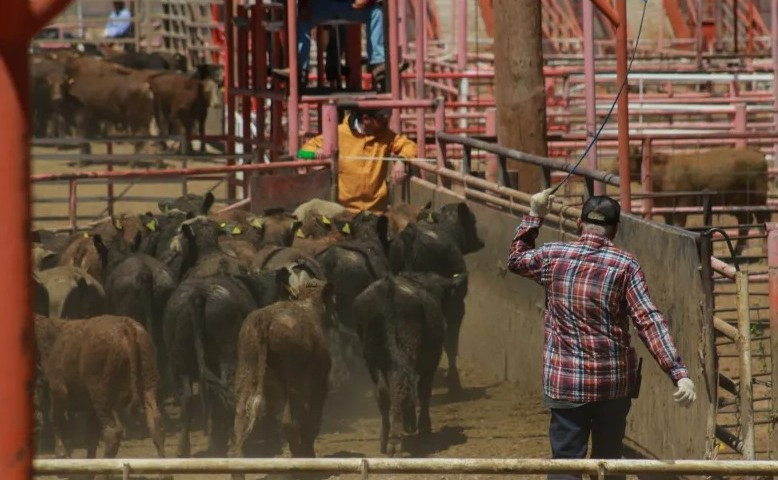
There is both support and opposition to USDA’s announcement to resume live cattle trade with Mexico within 30 days, despite the continued threat of New World Screwworm
STURGIS, S.D. – Southern ports for livestock trade with Mexico will begin to reopen August 24, 2026.
The importation of cattle from Mexico to the U.S. — which has been halted and resumed a number of times since November 2024 due to the spread of New World screwworm (NWS) — is scheduled to begin with the reopening of the Douglas, Arizona, port of entry to livestock trade on Aug. 24, 2026, according to a USDA press release. Following that port’s reopening, the department plans to consider reopening two New Mexico ports, one in Santa Teresa and the other in Columbus, to live cattle, bison, and horses.
All animals that move through the ports must undergo a full inspection for signs of NWS, according to the release. The phased reopening is contingent on Mexico’s adherence to the USDA’s Joint Action Plan.
The USDA has tracked 42 confirmed cases of screwworm in the U.S. Thirty-one of these cases were reported in June, while 11 were reported in July. One case was reported in New Mexico, while the rest occurred in Texas.
As of Tuesday, July 21, 2026, the Centers for Disease Control and Prevention (CDC) characterizes the health risk of NWS to humans and animals in the U.S. as “very low.” The CDC noted that there have been zero reported human infestations tied to this outbreak.
That’s counter to an announcement made August 25, 2025, when CDC officials did confirm the first U.S. human case of New World screwworm in a Maryland resident who had recently traveled from El Salvador. An earlier report placed the discovery in a person in Maryland who had traveled to the United States from Guatemala.
Industry groups including the Meat Institute and National Cattlemen’s Beef Association (NCBA) are supportive of the reopening.
Texas Department of Agriculture (TDA) Commissioner Sid Miller while supporting the decision to resume limited cattle imports from Mexico, said it could have happened sooner if not for federal agencies spending over a year reacting rather than getting ahead of the problem. And that the USDA’s approach to the threat of NWS has not gone far enough.
“While there have been important steps in the right direction, the pace and scale of the screwworm response have not matched the threat. USDA has spent more than a year reacting instead of getting ahead of the problem, and our producers have paid the price. We cannot afford to rely on half-measures when billions of dollars in livestock production are on the line.”
R-CALF USA strongly opposes the USDA’s phased reopening of the Mexican border to live cattle imports, arguing that the decision prematurely exposes the U.S. herd to the deadly New World screwworm. The group warns that an open border will encourage the northward transport and illegal trafficking of cattle from southern Mexico and Central America, where the screwworm remains endemic. R-CALF noted that tens of thousands of screwworm cases have been detected in Mexico during the outbreak, with recent cases popping up relatively close to the U.S. border.
In a statement from R-CALF USA, “The opening the border to livestock from Mexico will likely further incentivize the south-to-north movement of cattle within Mexico, which is known to facilitate the northward migration of the pest.
“Our position has not changed since Mexico’s initial announcement that the New World screwworm had entered its borders. Until Mexico can demonstrate it has fully eradicated the pest from within its borders, the USDA should maintain and strengthen all of its defenses against the pest, including keeping the border closed.”
The United States Cattlemen’s Association (USCA) has stated that moving forward with reopening the border is premature while unresolved biological and biosecurity risks remain.


