RAPID CITY, S.D. — United Way of the Black Hills embarked on an effort this week to launch a nationally-recognized initiative to help communities better understand the financial challenges facing working households.
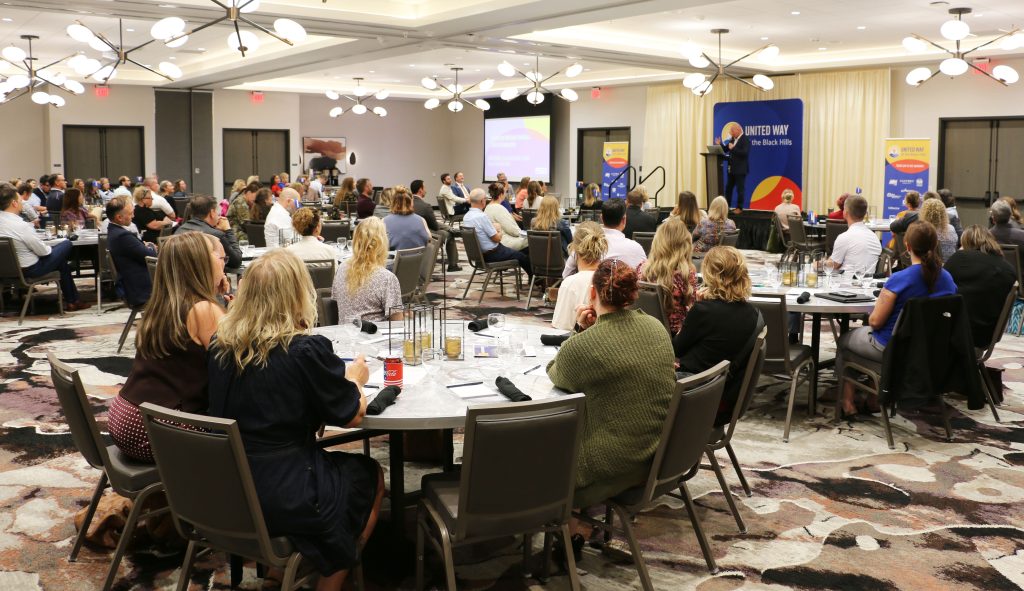
On Tuesday, United Way hosted about 200 community and government leaders at the Hyatt Rapid City to introduce the ALICE framework – Asset Limited, Income Constrained, Employed –that will aid in the discussion of the wage earners that don’t meet poverty guidelines but aren’t making enough to get by.
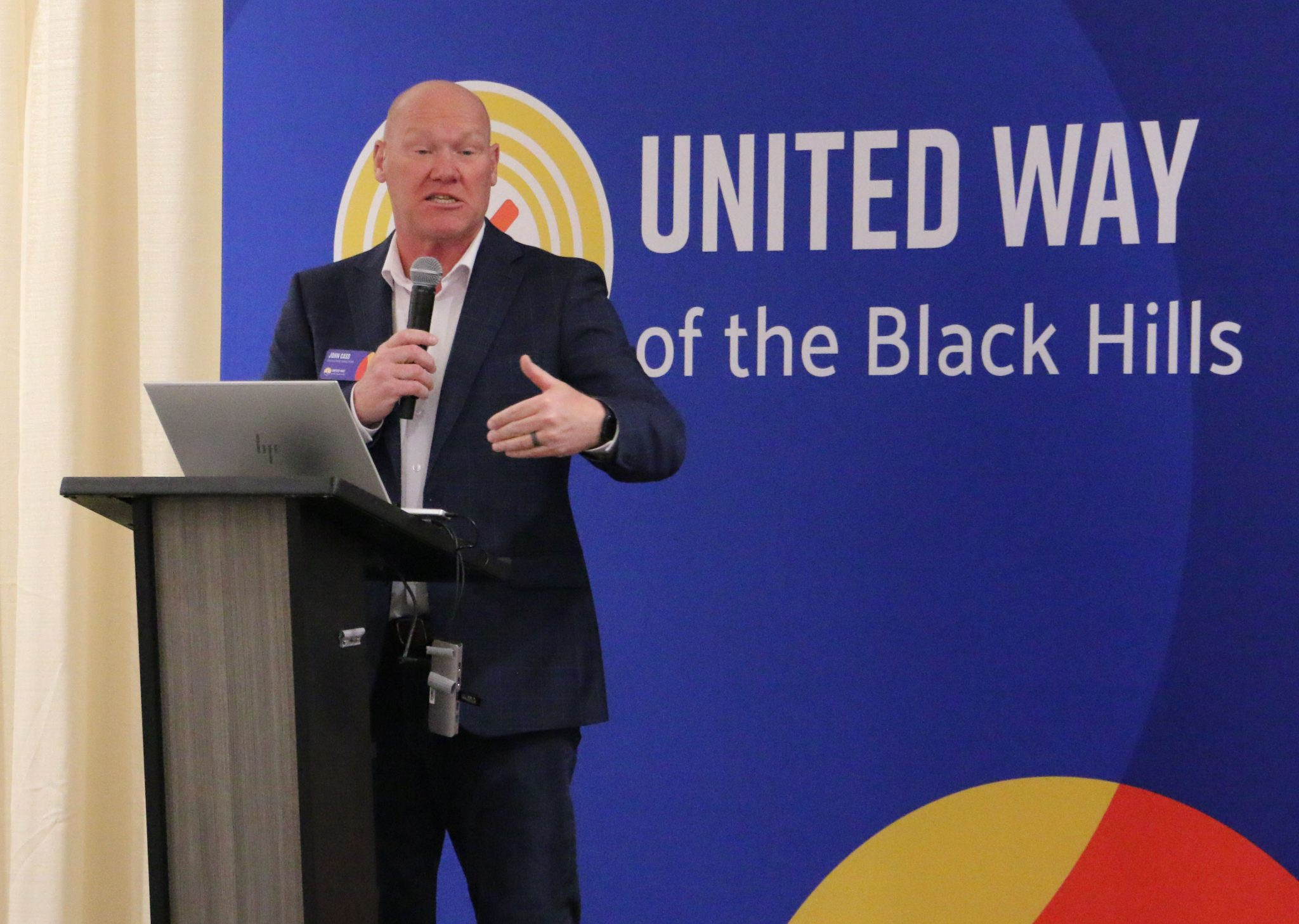
“It’s about gaining a common language,” said John Cass, executive director of United Way of the Black Hills. “Not just here in the Black Hills but across the state. A common understanding so businesses, non-profits, educators, health care providers, elected officials, and community leaders can finally begin looking at the same picture.”
ALICE households earn above the federal poverty level but less than the basic cost of living in their communities. These families often work essential jobs and contribute to the local economy while still struggling to afford necessities such as housing, childcare, food, health care and transportation.
“We’re trying to provide a much better understanding of financial hardship community by community,” said Stephanie Hoops, National Director, United For ALICE. “And currently the federal poverty level is the same number across the country – so for a family of four it’s about $31,000… But we know the cost of living is super different between Rapid City and San Francisco.”
Hoops said her group creates a “household survival budget” for every county in the country and from there measure how many households have incomes below that. She said the household survival budget is often more than $31,000.
For instance, the ALICE household survival budget for a family of four in Elk County, Kansas comes in just less than $70,000 but in New York, NY, the same family would need $164,376 for the same quality of life.
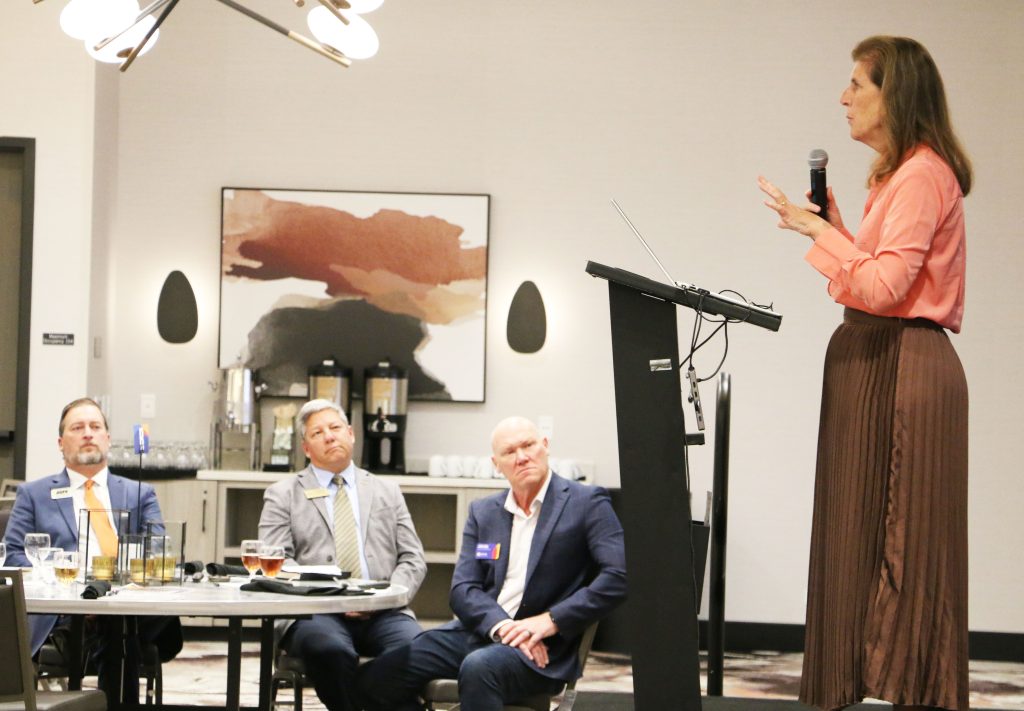
Stephanie Hoops, National Director, United for Alice, addresses about 200 people Tuesday during the United Way of the Black Hills summit to present ALICE to local leaders.
The ALICE research framework provides data and insights that help communities better understand financial hardship among working households and develop informed, collaborative solutions to improve economic stability and opportunity.
“I think it opens (conversations) up,” Hoops said. “We try to dispel a lot of stereotypes about who’s struggling with the data and by using the language around ALICE rather than poverty try to take away some of the judgement and stereotypes people have about people who are struggling.”
South Dakota will be the forty-second state United for ALICE has developed data in. The data collected is used in multiple ways by a variety of organizations and companies, non-profit organizations, state agencies and universities.
“So, it’s not for just one group it’s really for every stakeholder in a community,” Hoops said. “It provides a common language, it provides common metrics that you can use to measure tuition assistance, or childcare scholarships, or progress in workforce development.”
Eleven United Ways across South Dakota are working with United for ALICE to bring the statewide inaugural ALICE report to fruition. Once developed around mid-2027, the report will be publicly available.
“To solve some of these ALICE challenges it’s going to take work from all different angles,” Hoops said. “So that’s part of the bringing folks together today – we need all stakeholders to be recognizing this.”