
South Dakota is part of a broader Midwest staffing problem
STURGIS, S.D. – Staffing cuts and a planned reorganization of the U.S. Department of Agriculture are raising concerns among farmers, ranchers and conservation groups that producers could have a harder time accessing federal conservation programs, even as billions of dollars remain available for work on the nation’s farms and ranches.
The concern is particularly significant in the Midwest, where farmers and ranchers rely on the Natural Resources Conservation Service for both financial assistance and the technical expertise needed to put conservation projects on the ground.
In South Dakota, USDA budget documents projected a steep reduction in NRCS technical-assistance positions, from 113 full-time-equivalent positions to 40. The figures are projections contained in USDA budget documents and do not mean that all 73 positions had already been eliminated.
At an April meeting of South Dakota’s State Technical Committee, NRCS Acting State Conservationist Jessica Michalski reported that the agency had about 260 employees statewide and was working to maintain field-office coverage with acting district conservationists.
The staffing changes come at a time when the agency continues to process conservation applications from South Dakota producers.
For fiscal year 2027, South Dakota NRCS accepted applications for programs including the Environmental Quality Incentives Program, Conservation Stewardship Program, Agricultural Conservation Easement Program and selected Regional Conservation Partnership Program projects. Those programs provide both financial and technical assistance to farmers and ranchers.
‘None of it would have ever occurred without federal funding’
For Mitchell-area farmer Gene Stehly, federal conservation programs have played a major role in how he has managed his farm over the past four decades.
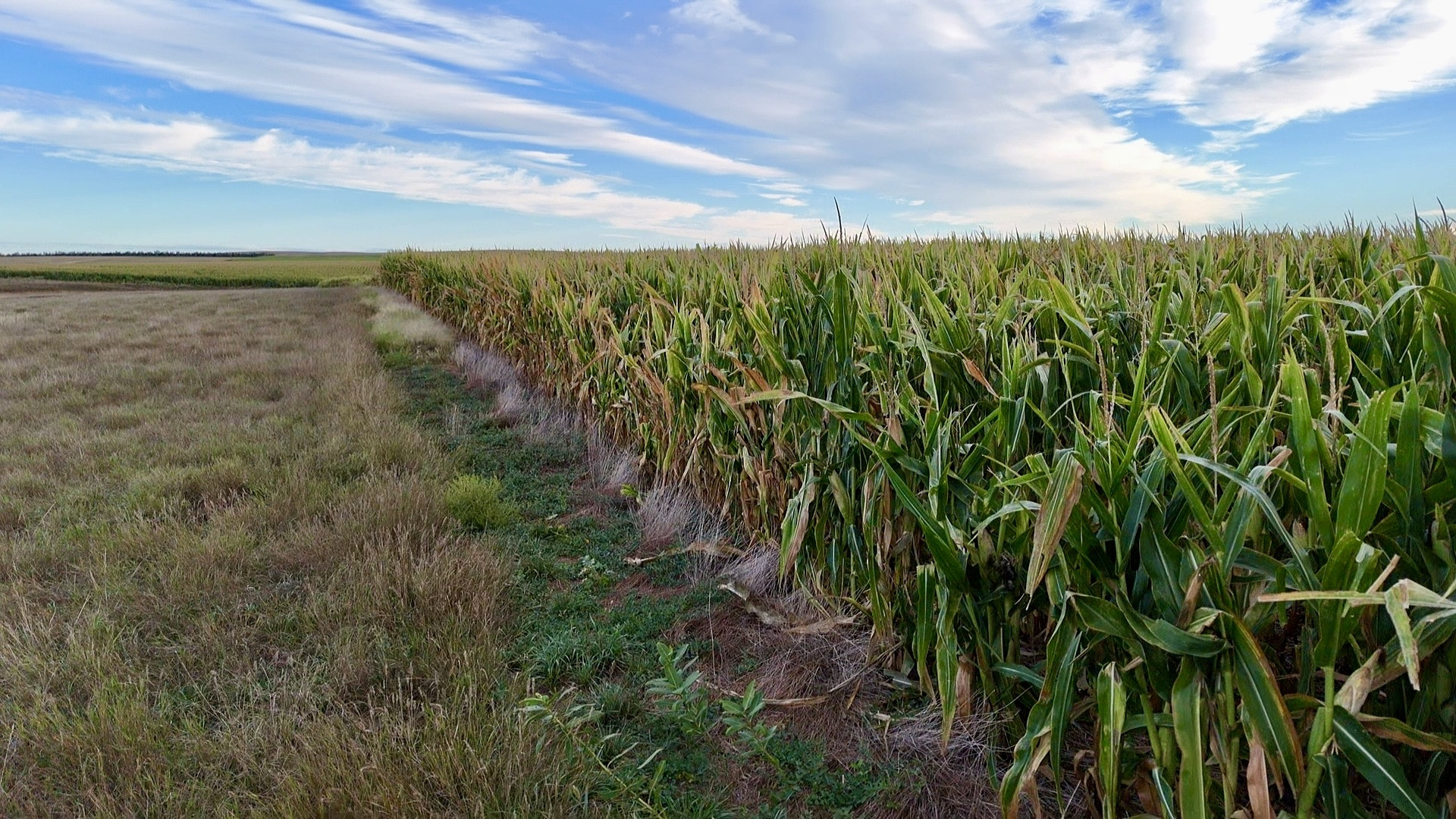
Stehly has used no-till farming, cover crops, a riparian buffer and the Conservation Reserve Program on his operation. He told South Dakota Searchlight that the federal programs helped make those changes possible.
“None of it would have ever occurred without federal funding,” Stehly said.
Stehly also said the Conservation Reserve Program increased profitability on his farm.
His experience illustrates why conservation advocates are concerned about reductions in the USDA workforce. The programs do not simply involve writing checks to producers. NRCS employees work with farmers and ranchers to assess their land, develop conservation plans, design practices and determine whether a project qualifies for financial assistance.
South Dakota NRCS says its employees developed more than 3,500 conservation plans covering more than 2.5 million acres during fiscal year 2025. Nearly half of the state’s NRCS employees were certified at a level allowing them to develop and certify conservation plans.
Those employees provide expertise that can be particularly important for projects involving grazing management, soil health, water development, erosion control and wildlife habitat.
Concern extends beyond South Dakota
South Dakota is part of a broader Midwest staffing problem.
Nationally, NRCS lost about 23% of its workforce between January 2025 and January 2026, according to an analysis of federal workforce data. Illinois, Iowa, Minnesota and Wisconsin were among Midwestern states experiencing significant reductions.
The concern among conservation advocates is that a reduction in technical staff could eventually limit how many producers the agency can serve, regardless of how much money Congress makes available for conservation.
That is especially important because many NRCS programs depend on one-on-one assistance.
For example, South Dakota NRCS says an EQIP applicant begins by working with a conservation planner, who visits the operation, reviews resource concerns and develops a conservation plan. The plan then becomes part of the process for determining whether financial assistance is appropriate.
CSP works similarly, with an NRCS conservation planner working directly with producers to develop a plan tailored to the operation.
If fewer conservation planners are available, advocates worry that producers could face longer waits or have difficulty getting projects designed and approved.
USDA says reorganization will improve service
USDA officials have defended the department’s restructuring efforts, saying the changes are intended to reduce bureaucracy and move resources closer to the farmers and ranchers USDA serves.
The department has been reorganizing its Farm Production and Conservation mission area, which includes NRCS, the Farm Service Agency and other agencies that directly interact with producers.
USDA has argued that restructuring can improve efficiency and direct more resources toward field operations.
South Dakota NRCS continues to emphasize that its field presence remains important. The agency maintains field offices across the state and directs producers seeking conservation assistance to their local USDA service centers.
But conservation advocates say the question is whether there will be enough experienced people available to deliver the programs.
The issue is not necessarily a lack of conservation funding.
Congress has increased the amount of money available for several conservation programs, while changes to federal conservation policy have shifted some funding into traditional farm bill programs.
The potential disconnect is between the amount of money available and the agency’s capacity to help producers use it.
A critical role for technical assistance
South Dakota’s agricultural landscape makes technical assistance particularly important.
The state’s producers face challenges ranging from drought and wind erosion to grazing management, water development, salinity and soil health. NRCS programs can help address those problems, but many projects require detailed planning before construction or implementation can begin.
At an April State Technical Committee meeting, South Dakota NRCS officials discussed EQIP, CSP, RCPP and ACEP funding and acknowledged questions from conservation partners about program selection, administrative costs, technical assistance and efficiency.
The agency has also begun using outside partners and technical service providers to expand the pool of people who can help producers plan and implement conservation practices. NRCS says technical service providers can include private businesses, nonprofit organizations, tribes and public agencies.
But those partnerships do not entirely replace the institutional knowledge held by NRCS employees who work with producers year after year.
That relationship can be particularly important for ranchers.
Caden and Jori Smiley, who ranch near Red Owl, South Dakota, began working more closely with NRCS after participating in a grazing school. NRCS says that relationship helped them pursue practices aimed at improving soil health and plant diversity while maintaining productivity on their operation.
In Piedmont, Riley and Jimmie Kammerer are using NRCS assistance through the agency’s Regenerative Pilot Program to address soil health, grazing, livestock water, wind erosion and other challenges over a five-year period.
Those examples demonstrate the type of long-term technical relationship conservation advocates say could be threatened if staffing reductions make it harder for producers to get help.
For farmers such as Stehly, the value of conservation programs ultimately comes down to whether the programs can be accessed and applied to working land.
The federal government can appropriate billions of dollars for conservation, but producers still need someone on the ground who can help turn that funding into a conservation plan, a contract and ultimately work completed on the farm or ranch.
As USDA reorganizes its workforce, the question facing producers across the Midwest is whether the agency will have enough people in local offices to deliver the conservation assistance that Congress has funded.


