
CAPUTA, S.D. – Each morning this summer, Gordon and Connie Howie have awoken on their cattle ranch in central Pennington County and turned on the kitchen faucet, unsure if any water will come out.
“We can’t do laundry or dishes or take showers other than with a little trickle,” said Connie Howie, 76. “Other times we have a little water because it seems to come and go.”
Like many ranchers and residents in rural areas of western South Dakota, the Howie family relies on a well to provide them with water for their lives and livelihood.
But this year, perhaps the worst in recent memory, many shallow wells are running slow or have gone completely dry, forcing people to go to great lengths and expense to provide clean water for themselves or their livestock.
Experts say several consecutive years of limited winter snow pack and a shortage of rainfall have combined with increased consumption of water to cause a decrease in the levels of some underground aquifers that are a main source of water for a large swath of the Black Hills region. The problem is most acute in areas outside the reach of pipes from municipal and rural water systems.
High heat during the summer of 2026 has exacerbated the problem as people, crops and animals all require more water than usual to survive.
“We have a well at the house, but it’s just not keeping up because the aquifer is dry,” said Gordon Howie. “For 20 years you could trust that well 24/7, and it never quit on us, but now it’s not providing enough water for everything we need.”
The Howies are buying bottled water for drinking and positioning jugs of fresh water throughout the house for daily uses.
“I’ve lived here my whole life and I’ve never seen it this dry, this hot, this long,” said Gordon Howie, who served in the Legislature from 2009-2011 and ran for governor in 2010.
All across the plains of western South Dakota, residents who rely on shallow wells — generally 1,000 feet deep or less — are being forced to find alternative water sources.
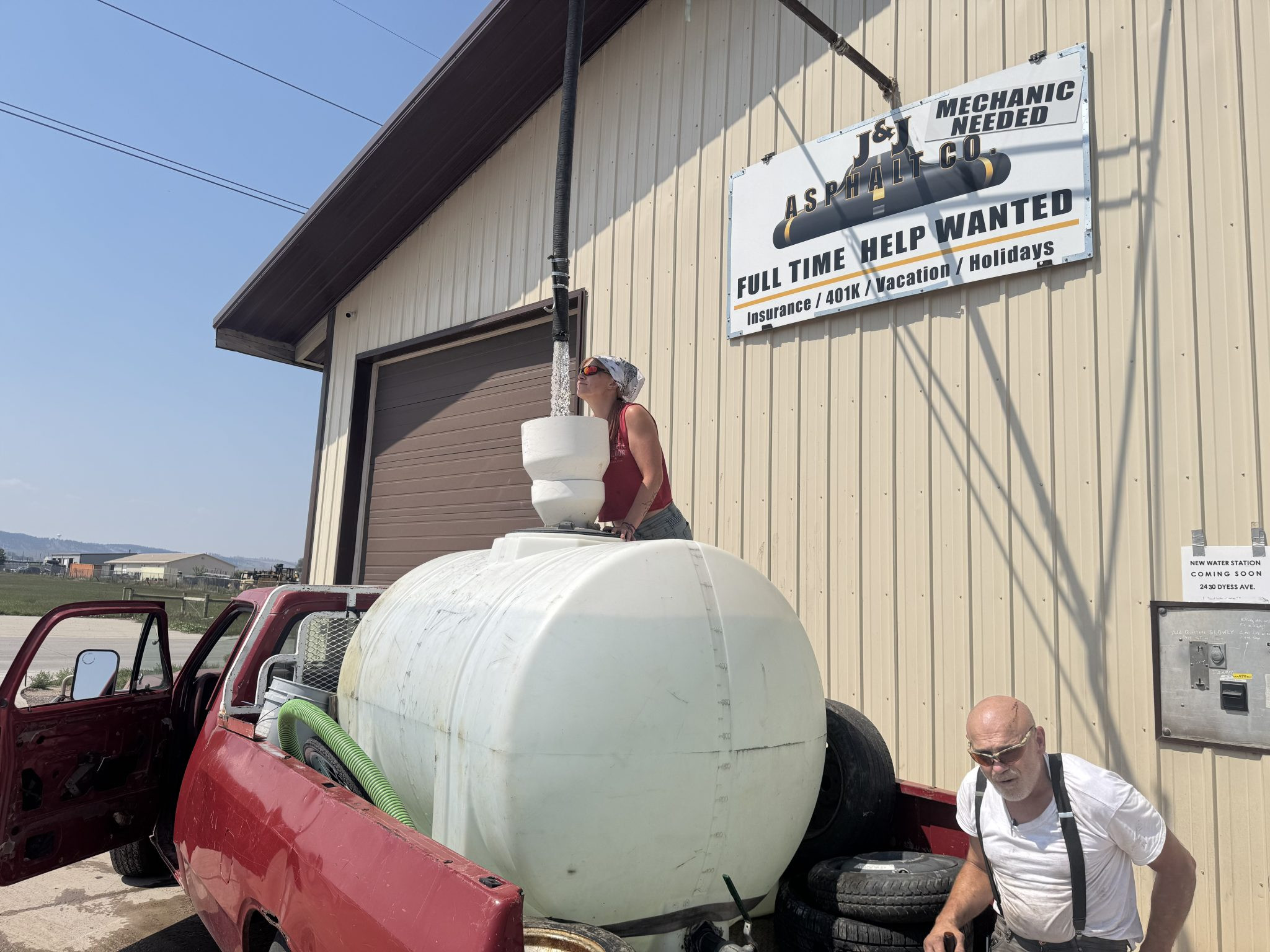
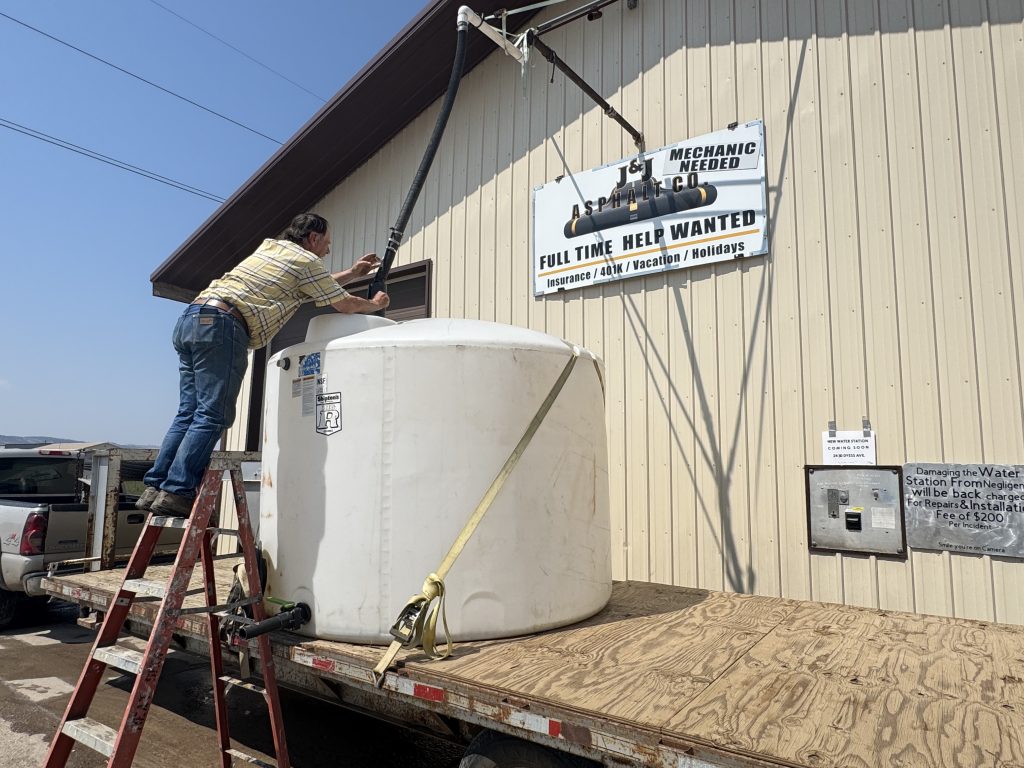
Some are utilizing a somewhat obscure system of obtaining water in which users insert quarters or bills into a vending machine that triggers a hanging water spout to provide fresh water that is collected in tanks in pickups or on trailers. Such water stations are available in Black Hawk, Deadwood, Piedmont, Rapid City, Spearfish and Sturgis.
Those self-serve water stations are much busier than usual this summer, particularly in Rapid City, where the spout at J&J Asphalt is the only bulk water available in town and is often accessible only after a long wait.
“Everybody is hauling water these days,” said Nick Randall, shop foreman at J&J Asphalt, whose shop and water station are located in an industrial area off Dyess Avenue.
Many rural residents have clean water delivered by truck, which requires planning and expense.
Businesses such as Frontier Water in Rapid City are extremely busy this summer.
“With all these shallow wells going dry, it’s really boosted my business,” said Darin Klapperich, the owner of Frontier who also ranches northwest of Rapid City.
Klapperich gathers purified fresh water from municipal systems across the Black Hills and delivers it to customers.
On arrival, the water is dumped into a cattle tank or a holding tank for household use. At some locations, he fills underground concrete cisterns people use to store water on their properties and occasionally drains the water into a well to fill it part way, Klapperich said.
To avoid future dry spells, the Howies plan to drill a new, deeper well to replace the 30-foot well that has run dry. The couple will continue to use a reverse osmosis system in the house to purify the well water for drinking and other uses.
Until then, he’ll continue his twice-weekly water-gathering ritual, positioning his trailer below the J&J spigot, climbing a ladder to connect an extension pipe to the spout, unfurling bills into the payment slot and filling the tank on his trailer.
“I let every last dribble go in, because those cattle have got to have water,” he said.
South Dakota News Watch is an independent nonprofit. Read, subscribe for free and donate at sdnewswatch.org. Contact content director Bart Pfankuch:605-937-9398/bart.pfankuch@sdnewswatch.org.


