
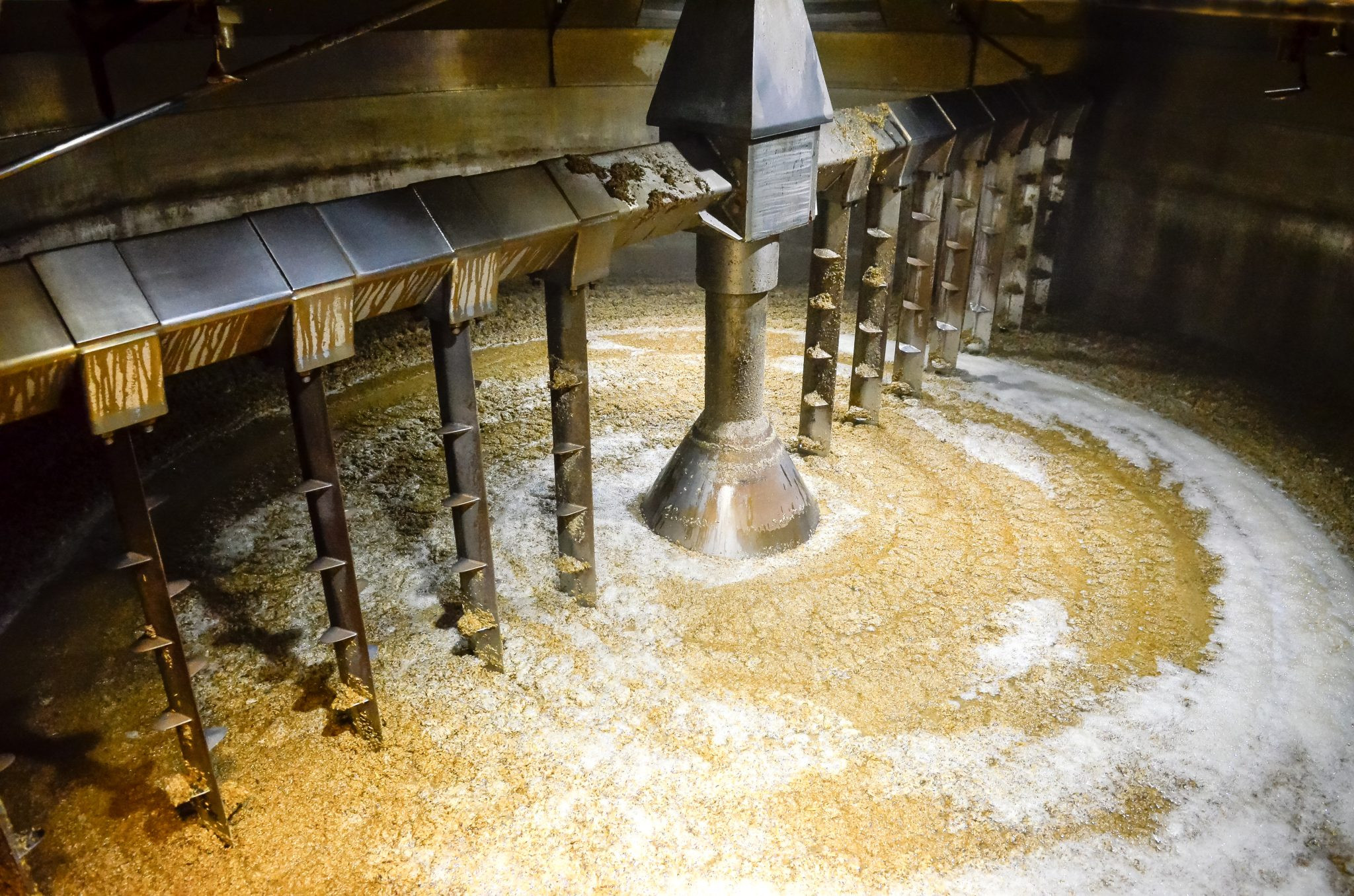
You’ve probably picked up a bottle of bourbon, spotted the words “sour mash” on the label, and thought… sour? That sounds a little off-putting. Maybe a little funky. Maybe you’ve even wondered if you accidentally grabbed something that went bad.
You didn’t. Actually, the phrase has nothing to do with how the whiskey tastes.
Sour mash describes how distillers make the whiskey, long before it ever reaches your glass.
What mash actually is
Every whiskey starts with mash. Basically, it’s a mixture of grain, water, and yeast that ferments into alcohol before it ever sees a still. Think of it like the dough in bread baking. You can’t skip it, and how you handle it matters a lot. In fact, the mash recipe shapes almost every flavor decision that follows.
With a sour mash process, distillers take a portion of the previous batch’s spent mash, called backset, and stir it into the new batch. That’s it. That’s the whole idea. The old stuff jumpstarts the new stuff, which keeps the pH low and creates an acidic environment. The process works a lot like sourdough bread, where bakers use a starter from the last batch to get the next one going.
That acidic environment does two. First, it keeps bacteria from moving in and ruining the fermentation. Second, it locks in a consistent flavor profile from bottle to bottle, year after year. As a result, pretty much every major bourbon and Tennessee whiskey producer leans on this method today. The law doesn’t require it. However, if you run a large distillery and you care about your product tasting the same in January as it does in October, sour mash whiskey production is your best friend.
The Kentucky chemist who changed everything
The technique gained traction in the 1800s thanks to a Scottish chemist and physician named Dr. James C. Crow. He worked at the Old Oscar Pepper Distillery in Woodford County, Kentucky, the same site that now houses Woodford Reserve. Crow was ahead of his time. Most distillers of his era eyeballed their work and guessed proof by shaking jars. Crow reached for litmus paper and hydrometers to test acidity and track sugar levels.
In other words, he understood what was actually happening inside the mash, and he used that knowledge to produce whiskey more consistent and reliable than anything else of the era. Eventually, his competitors followed suit, and the method spread across the industry. Today, walk into any Kentucky distillery and you’ll find his fingerprints all over the process.
So… does sweet mash exist?
It does, though you won’t spot it nearly as often.
Sweet mash skips the backset entirely. Every fermentation cycle starts completely fresh, with new grain, new water, and new yeast. Nothing carries over from the previous batch. Consequently, distillers gain full control over each individual run, and subtle variations in grain quality or fermentation temperature can actually show up in the final whiskey.
The catch? Sweet mash has a higher pH, which makes it more vulnerable to bacterial contamination. Therefore, distillers using this method have to stay incredibly disciplined about sanitation, cleaning and sterilizing equipment between every single run. The extra labor, extra risk, and extra cost explain why most large distilleries don’t bother.
Why Peerless bet the farm on sweet mash
Meanwhile, Kentucky Peerless Distilling in Louisville is one of those rare exceptions. Master Distiller Caleb Kilburn built the entire Peerless process around sweet mash from day one, and he’s talked openly about why. Starting fresh every time produces a sweeter, more floral fermentation, and that cleaner base lets him distill at a lower proof and pull more delicate flavor out of the grain. For example, Peerless prints “Strictly Sweet Mash” right on the label, treating the method as a point of pride. Sure, the tradeoff is obsessive sanitation, though Kilburn considers that part of the craft. In addition, the distillery distills at a slower pace than most, which gives the grain more time to express itself.
Whether the approach produces a better whiskey? That’s up for debate. Kilburn himself describes sweet mash as a different conversation in the glass, with its own set of flavors to explore.
So, choosing between the two comes down to something like the old pickup truck argument. Sour mash is Ford. Sweet mash is Chevy. Both get the job done. Honestly, the only way to pick a side is to actually taste them, ideally with a friend who’s willing to argue the other corner. Pour a glass of each, sit back, and let your tongue cast a vote.
One thing’s for sure. Neither method has anything to do with the whiskey tasting sour. Your palate is safe.


