
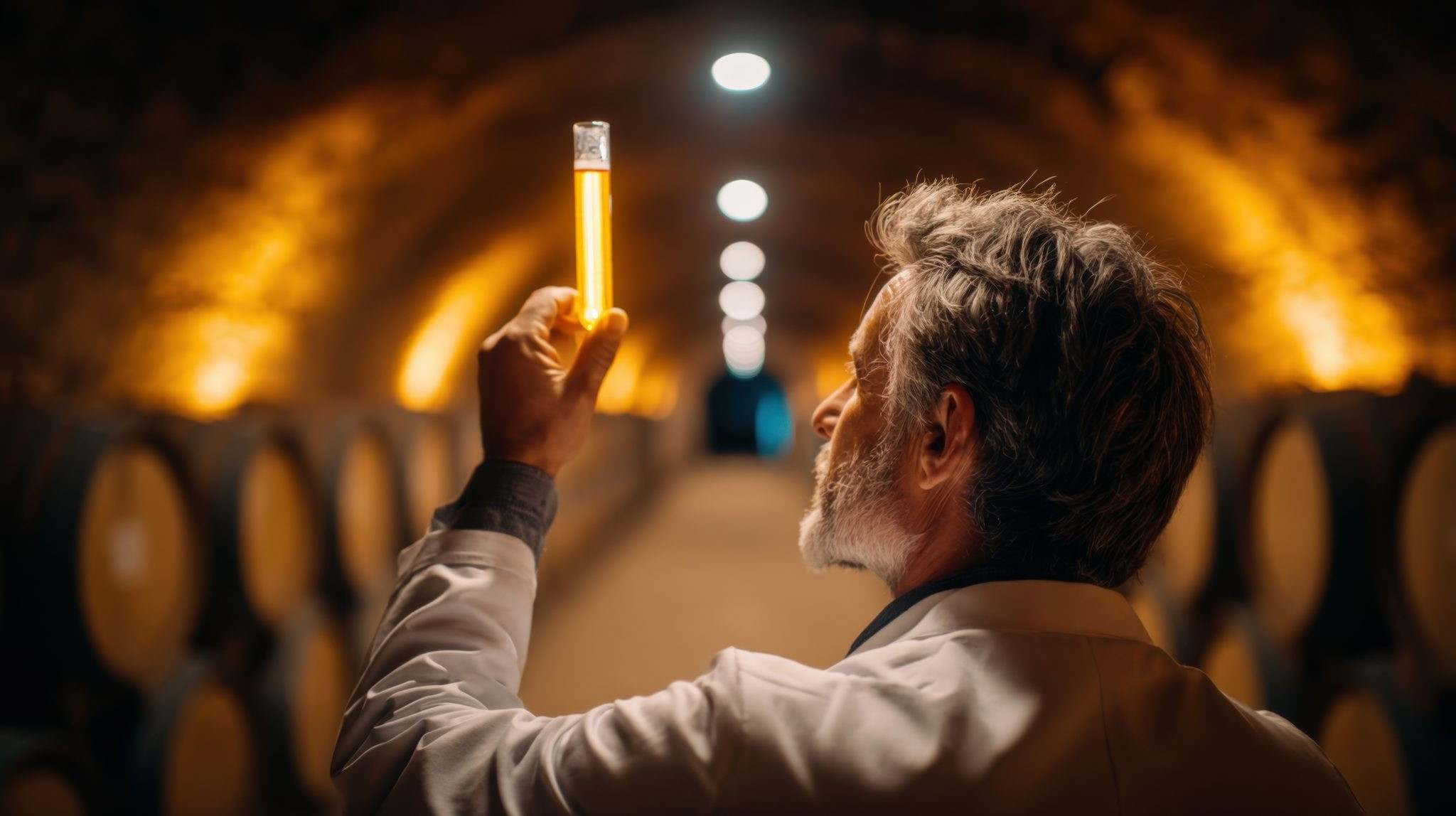
Whiskey aging carries nearly all of the flavor load, and it starts after the fast part is over. Mashing, fermenting, and distilling take about a week from grain to finished spirit, with fermentation alone running two to five days at most distilleries. The years, sometimes decades, belong to the barrel.
Fresh off the still, the spirit is clear, harsh, and grainy. Think cheap vodka crossed with a bowl of wet cereal. The amber color, the vanilla, the caramel and smoke that make a whiskey worth sipping on a Tuesday night all come from the wood. Most distillers estimate the barrel accounts for 60 to 80 percent of the final flavor. Time is what lets the wood do its work.
Does more time mean better whiskey?
Sometimes. Whiskey doesn’t age on a single universal clock, and climate does most of the heavy lifting. A bourbon in a Kentucky rickhouse and a scotch in a damp coastal warehouse can spend the same number of years in oak and come out tasting nothing alike.
In Kentucky and Tennessee, summer warehouse temperatures can climb past 100 degrees Fahrenheit. That heat forces the spirit deep into the wood, pulling out sugars, spice, and color fast. Because of that pace, bourbon can hit its stride at six to ten years. Push it much past twelve or fifteen, and you start getting something closer to chewing on a plank.
Even within one warehouse, position changes everything. Barrels on the top floors of a rickhouse bake through the summer and mature quickly. Down near the ground floor, the same spirit takes a slower, gentler road. Some distilleries blend across floors to even things out.
Scotland runs cool and damp, rarely dramatic. There, the whiskey eases in and out of the wood slowly, building complexity at its own pace. That climate is why 12 to 18 years gets cited as the scotch sweet spot, though the range hides a lot of variation. A heavily peated Islay might peak around ten years old. Meanwhile, a sherried Highland expression could need 25 to fully open up.
One detail a lot of drinkers miss: the char level inside the barrel matters enormously. A deeply charred barrel, what coopers call a level 4 or alligator char, acts almost like a filter. It strips out harsh sulfur compounds and lets the sweeter wood flavors through faster. Distillers choose that char level based on the flavor profile they’re chasing.
The case for young whiskey
Young whiskey gets a bad reputation it doesn’t always deserve. A two to four year old spirit shows you the grain in its most unfiltered form: what rye actually tastes like, what good corn contributes, how malted barley behaves before oak takes over the conversation. For that reason, some distilleries now bottle new make spirit, unaged and straight from the still, specifically to show off grain quality and fermentation craft.
Cocktails are another place young whiskey earns its keep. Those rough edges that feel sharp on their own anchor an Old Fashioned or a Manhattan, cutting through bitters and sugar without getting lost.
What age actually buys you
With older bottles, the mouthfeel smooths out, the oak and vanilla deepen, and the flavors start layering in ways that take a few seconds to fully land.
One thing to keep straight: whiskey stops developing the moment it leaves the barrel. A 12-year scotch bottled a decade ago and one bottled this year can taste noticeably different, even though they share the same age statement on the label.
Price tracks with age because the math is brutal. In Scotland, a barrel loses roughly 2 percent of its volume to evaporation every year, the loss distillers call the angel’s share. After 20 years, that barrel may have given up nearly a third of what was originally poured in. Fewer bottles come out of it, so each one costs more.
Where to start
If you want a starting point, plenty of whiskey writers loosely point toward eight years for bourbon and around 16 for scotch. Those numbers make a decent map. Personal taste will always matter more than what’s printed on a label, and your palate might land somewhere the experts never mention.
Pour a young one next to an old one on the same night. Notice what changes between glasses, which flavors show up, which ones fade. Figure out what you actually like. The label can wait.


