
Most of us don’t think about our feet until they hurt. And by then, we’re limping around the kitchen, skipping the hike, or sitting out the pickleball game because something has gone sideways down there. Sound familiar?
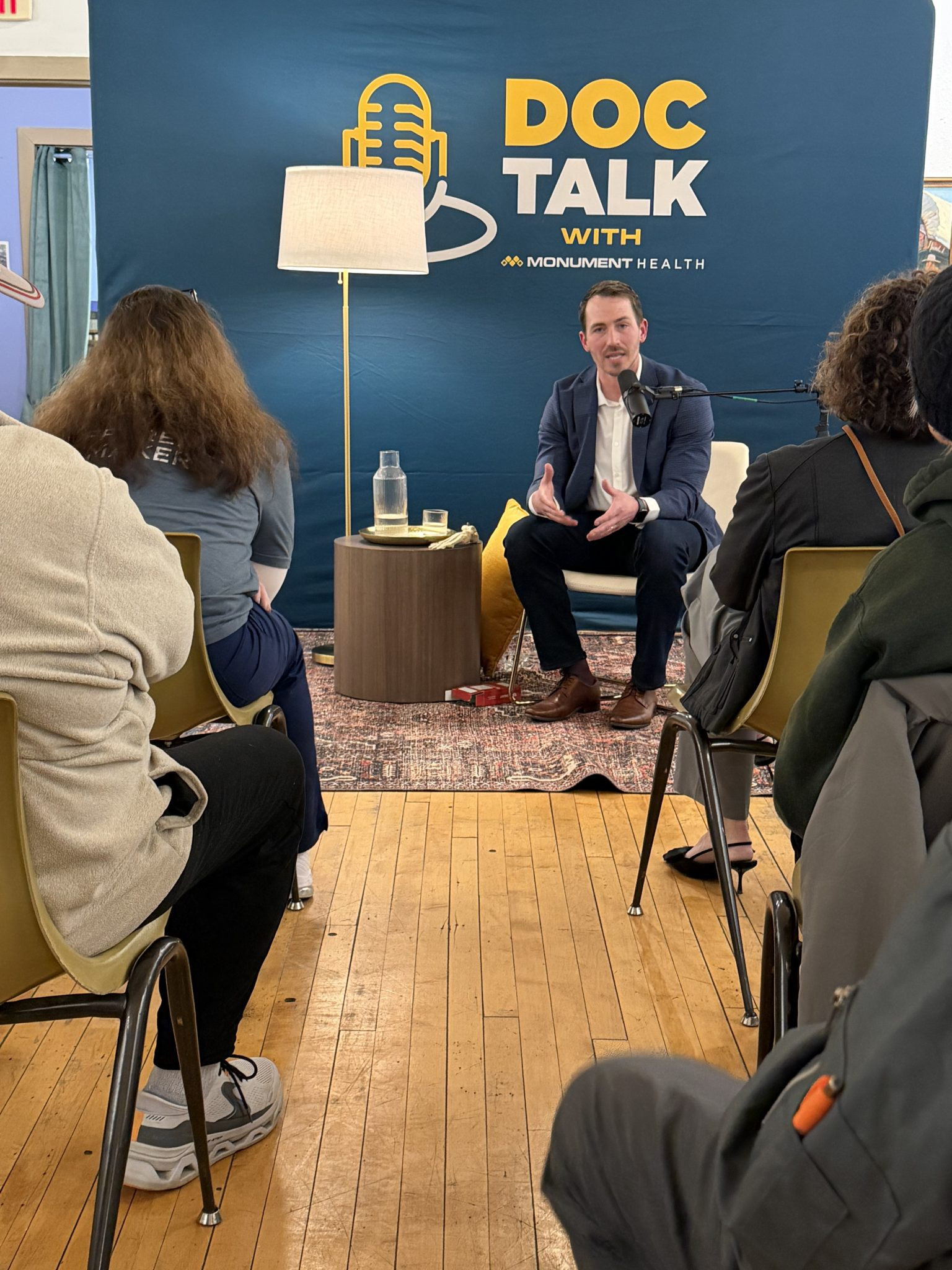
Dr. Colin Zdenek, a fellowship-trained foot and ankle specialist at Spearfish Clinic, sat down with a room full of curious locals at the Matthews Art Center to talk about something a lot of people deal with but not many people fully understand: bunions, flat feet, and ankle pain. What he shared was equal parts reassuring and eye-opening.
Bunions Aren’t Your Fault (Blame Your Grandma)
Here’s something most people get wrong about bunions. They think tight shoes caused the whole thing. Dr. Zdenek sets the record straight: “A lot of people can blame it on, particularly like an honor or uncle or grandma or grandpa. That’s how you got the bunion.”
Shoes can make things worse, sure. High heels push the toe inward repeatedly, which is part of why bunions show up more often in women. But the root cause is usually genetic, tied to hypermobility in the joints that causes the metatarsal to kick outward over time. You’re not growing extra bone. The joint is shifting, and the bump you see is actually the bone being exposed.
The good news is that most flare-ups settle down on their own. Dr. Zdenek’s advice is pretty straightforward: rest, ice, and find a shoe with enough room across the toe box. Mesh uppers help. Silicone spacers can take the edge off during a flare-up. And if someone swears by their Crocs or Hey Dudes? “As long as your pain is going away, I would keep wearing that.”
Surgery isn’t the first step, and Dr. Zdenek is upfront about that. “I try to talk people out of surgery because I don’t want it either.” The threshold he uses: if you can’t do the everyday things a person your age should reasonably be able to do, that’s when it becomes a real conversation.
Flat Feet and What Parents Should Watch For
Flat feet are incredibly common, especially in kids. And here’s something most parents don’t know: between zero and seven years old, flat feet are totally normal. The bones are still rotating and repositioning as the child grows. No cause for alarm.
After age seven, though, it’s worth paying attention. Kids with painful flat feet often don’t say “my feet hurt.” Instead, they fall behind on family hikes. They skip gym class. They’d rather play video games than run around outside. Dr. Zdenek makes the point gently but directly: “It’s not that they’re lazy or want to just be the last one in line. It’s because it’s extremely painful for them.”
One thing he almost always sees with flat feet, in both kids and adults, is a tight Achilles tendon. It’s actually why some kids walk on their tiptoes. They’re not being quirky, they’re avoiding the pain that comes from stretching that tight calf muscle.
Custom orthotics can help slow the progression of flat foot deformity, even though they won’t correct it. He recommends them for adults with flat feet even when there’s no pain yet, because the goal is to get ahead of the problem rather than chase it.
Ankle Pain and the Wear-and-Tear No One Talks About
Sprained ankles feel like a minor inconvenience at the time, but they add up. If you were the kid who rolled an ankle every time you stepped on a pebble, that repetitive instability quietly wears down your cartilage over the years, and cartilage doesn’t regenerate. Once it’s gone, it’s gone.
That’s a big driver of ankle arthritis. And because the ankle joint is smaller and bears more load than a knee, it’s a tricky one to manage. Physical therapy, bracing, and anti-inflammatories help buy time. But when the joint deteriorates to a certain point, the conversation shifts toward either ankle fusion or, increasingly, total ankle replacement.
The technology around ankle replacements has genuinely changed the picture. Custom CT-guided implants now let surgeons map the exact alignment of the patient’s leg before they ever make an incision. “It takes the guessing game out of a joint replacement,” Dr. Zdenek explains. Recovery is also dramatically shorter than old-style fusion: patients are up and walking in about three weeks versus two to three months off their feet.
The Best Thing You Can Do Right Now
Dr. Zdenek’s advice for keeping your feet healthy is pretty low-key. Let kids go barefoot as long as possible, because shoes weaken the intrinsic muscles of the foot over time. Strengthen your ankles with stability work, especially if you live somewhere with uneven terrain. And if you want to try barefoot or minimalist shoes, go slow. Stress fractures are the most common injury when people change too much too fast.
When someone in the audience asked about jumping for bone health, he was a fan. “I like the jumping stuff. The impact forces bone to grow because now it’s bearing more weight than it typically does.” His suggested starting point: a few bunny hops, not a full trampoline circuit.
Most importantly, don’t wait until the pain is unbearable. “A lot of things are easily treatable,” he says. “The longer you wait, the worse it can get and the harder it is to address.” If something feels off, getting a baseline X-ray and a set of eyes on the problem sooner rather than later almost always leads to more options, not fewer.
Frequently Asked Questions
Do shoes cause bunions? Shoes can make a bunion worse, but they don’t cause it. Bunions are mostly genetic and tied to joint hypermobility. High heels speed up the process, but the underlying tendency comes from your family tree.
At what age should I worry about my child’s flat feet? Flat feet are normal from birth through age seven. After that, if your child seems to avoid physical activity or lags behind on walks and hikes, it’s worth bringing them in for an evaluation.
Can a bunion or flat foot be corrected without surgery? Conservative treatment, including orthotics, supportive footwear, icing, and activity modifications, can manage pain very effectively. However, they won’t reverse the structural deformity. Surgery is only recommended when quality of life is consistently affected.
What’s the difference between ankle fusion and ankle replacement? Fusion locks the joint permanently to eliminate pain, but you lose mobility. Ankle replacement preserves movement using a custom implant. Replacements have improved significantly and now allow patients to walk within a few weeks of surgery.
How do I know if a lump on the bottom of my foot is serious? Most lumps on the foot bottom are plantar fibromas, which are scar tissue buildups from small tears in the fascia. They’re usually harmless. That said, Dr. Zdenek recommends an MRI for any soft tissue mass, largely to rule out anything more serious and give you peace of mind.
To hear the entire interview, click here.


